
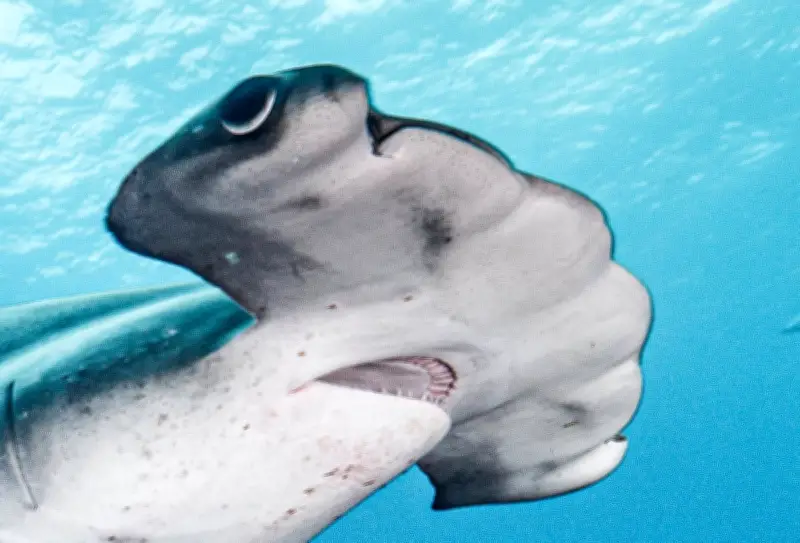
A new study has revealed that industrial fishing vessels are killing pregnant scalloped hammerhead sharks and their newborns in a critical nursery area near the Galapagos Islands, raising alarm among conservationists.
Nursery Under Threat
The research, published in the journal Nature Communications, identified a key nursery for scalloped hammerhead sharks off the coast of San Cristobal Island in the Galapagos. This area is vital for the species' reproduction, as pregnant females give birth there and juveniles spend their early years before migrating offshore.
However, satellite tracking data showed that industrial longline fishing vessels frequently operate within the nursery, catching both pregnant females and young sharks. The study estimates that up to 50% of the scalloped hammerheads caught by these vessels are pregnant or juvenile.
Alarming Decline
Scalloped hammerhead sharks are listed as critically endangered by the International Union for Conservation of Nature (IUCN). Their global population has declined by over 80% in the past 30 years, primarily due to overfishing for their fins, which are used in shark fin soup.
The Galapagos Marine Reserve, a UNESCO World Heritage site, was established to protect the region's unique biodiversity. However, the study highlights that industrial fishing within the reserve's boundaries continues to threaten marine life.
Call for Action
Conservation groups are urging the Ecuadorian government to strengthen enforcement of fishing regulations in the Galapagos Marine Reserve. They also call for the expansion of no-take zones to protect critical habitats like the hammerhead nursery.
Lead author Dr. Alex Hearn, a marine biologist at the University of the Sunshine Coast, said: "This nursery is a lifeline for scalloped hammerheads in the Eastern Pacific. If we lose it, the species' chances of recovery are severely diminished."
The study's findings underscore the need for improved monitoring and management of industrial fishing activities to safeguard vulnerable shark populations and the ecosystems they inhabit.




