Gray Whale Deaths Surge in San Francisco Bay Due to Vessel Collisions
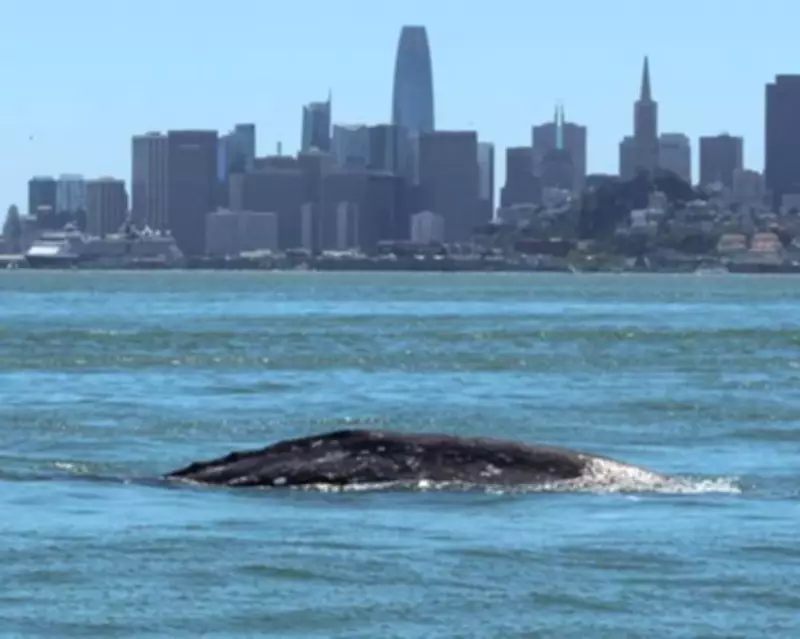
Gray whales, once a rare sight in San Francisco Bay, are now dying at alarming rates, according to a new study published in the journal Frontiers in Marine Science. The research highlights a dramatic shift in whale behavior, with Eastern North Pacific gray whales increasingly entering the bay since 2018, only to face fatal encounters with vessels on this busy shipping route.
Historical Rarity Turns to Tragic Trend
Historically, gray whales have been uncommon in San Francisco Bay, as they migrate over 10,000 miles from the warm lagoons of Mexico's Baja California to the Arctic to feed during summers. However, since 2018, their presence has grown, accompanied by a distressing mortality rate. Researchers found that at least 18% of gray whales entering the bay from 2018 to 2025 have died, with over 40% of carcasses showing blunt force trauma consistent with vessel strikes.
Josie Slaathaug, lead author of the study, noted, "It was historically very unusual for them to enter the bay, especially for longer amounts of time or consistently year after year." This change is believed to be driven by Arctic warming, which disrupts food availability, pushing whales to hunt in new areas like the bay, though their specific diet there remains unclear.

Underestimated Mortality and Climate Impacts
The true mortality rate may be even higher, estimated between 40% and 50%, due to challenges in matching photographs of living whales to decayed or lost carcasses. Slaathaug explained that the Eastern North Pacific gray whale population has been declining, with malnutrition and starvation from climate-driven prey shifts in the Arctic contributing to a current estimate of about 13,000 whales—the lowest since 1970.
"It's not unique to their migratory corridor that a lot of whales are dying," Slaathaug said. "What is unique about San Francisco Bay and this study was that there was such a clear emerging cause of death."
Conservation Efforts and Legal Challenges
In response, local initiatives are underway to mitigate vessel collisions. The Marine Mammal Center has launched the Whale Smart program to educate vessel operators on interpreting whale behavior to avoid close encounters. In Alaska, companies like WhaleSpotter use AI and thermal imaging to detect whales and alter vessel courses.
However, voluntary measures may not suffice. Catherine Kilduff, senior attorney at the Center for Biological Diversity, emphasized the need for federal action. "This most recent study about the gray whales reaffirms that we have way underestimated the problem and we are not managing human activities well enough to avoid the whales," she said.
Kilduff pointed to the Endangered Species Act, arguing that the U.S. Coast Guard should consult with the National Marine Fisheries Service when setting shipping lanes to assess impacts on marine wildlife. She also advocated for mandatory speed limits, citing a 2022 study that found voluntary speed reduction zones had only a 50% compliance rate—insufficient to sustain whale populations.
Looking Ahead
As gray whales adapt to changing environments, their survival hinges on improved human practices. Kilduff expressed hope, stating, "These whales are using the oceans in such a sophisticated way. We can learn so much from them, and if we can figure out ways to avoid killing them, I know that they'll come back to healthy population levels." The study underscores the urgent need for coordinated efforts to protect these majestic creatures in an increasingly trafficked maritime corridor.