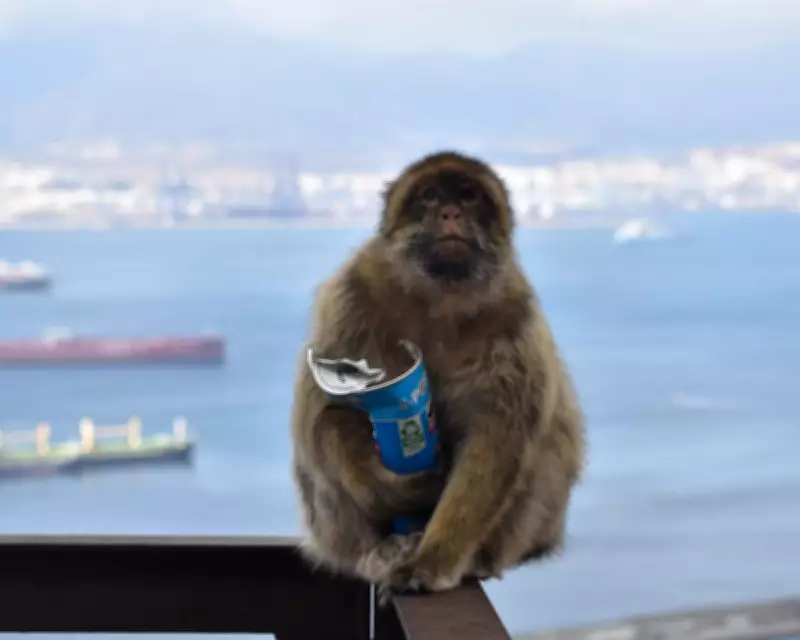
Troops of Barbary macaques residing on the Rock of Gibraltar have adopted a peculiar dietary habit: consuming soil, which scientists believe helps settle their stomachs after indulging in junk food provided or stolen from tourists. This intentional mud-eating, known as geophagy, was observed by researchers studying the monkeys, with those having the most tourist contact eating the most soil, particularly during peak holiday periods.
Junk Food Intake and Soil Consumption Patterns
Approximately 230 macaques inhabit Gibraltar, divided into eight distinct groups. While local authorities supply daily rations of fruits, vegetables, and seeds, tourists frequently offer snacks such as chips, chocolate bars, M&M's, and ice cream. Observations from summer 2022 to spring 2024 indicated that nearly 20% of the monkeys' diet consisted of tourist-provided junk food. Monkeys living near the rock's summit, a tourist hotspot, were over twice as likely to consume these snacks and also showed the highest soil intake.
Protective Effects of Soil on Digestive Health
Dr. Sylvain Lemoine, a primate behavioural ecologist at the University of Cambridge, suggests that soil consumption may rebalance the gut microbiome, which is disrupted by fatty, salty, and sugary foods. He explained, "We think that eating this junk food disrupts the composition of the microbiome, and we know that bacteria and minerals in soil can help recompose it and alleviate negative effects." The only group not observed eating soil was one isolated from visitors, supporting the theory that geophagy is a response to tourist interactions.

Variations in Soil Preferences and Human Parallels
The macaques appear to learn soil-eating from others, with different troops favouring specific types. Most prefer terra rossa, or red clay, found across Gibraltar, while the Ape's Den troop opts for tar-clogged soil from asphalt road potholes. Interestingly, no increase in soil consumption was noted among pregnant or lactating monkeys, indicating the behaviour is not for mineral supplementation, unlike in some human populations where pregnant women eat soil for nausea relief or nutrients.
Risks and Management Concerns
Despite potential benefits, both junk food and soil pose risks. Tourists are advised not to feed the monkeys, but enforcement is lax. Additionally, much of the soil is near busy roads, raising concerns about pollutants from vehicle emissions. Dr. Lemoine emphasised the need for soil analysis to assess contamination levels. Dr. Paula Pebsworth, a primatologist at the University of Texas at San Antonio, noted that while geophagy might help monkeys cope, reducing human food provisioning is a more effective management strategy, as seen in similar cases at Japan's Arashiyama Monkey Park.
Overall, this research highlights how Gibraltar's macaques are adapting to human influences, using soil as a natural remedy for digestive issues caused by an unhealthy diet, underscoring the broader impacts of tourism on wildlife behaviour.