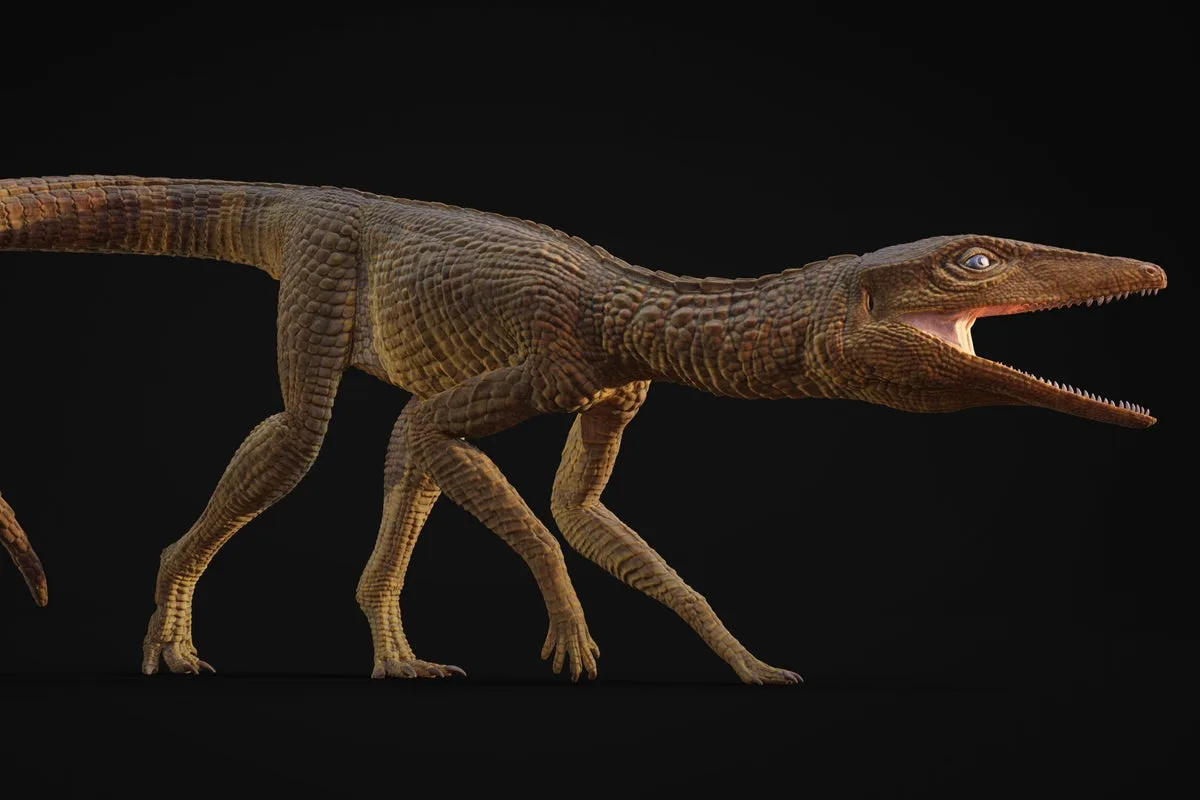
A new species of prehistoric crocodile, dating back to the Triassic period, has been identified from fossils found near Gloucester. The creature, named Galahadosuchus jonesi, has been described as a fast-moving, land-dwelling predator resembling a reptilian greyhound.
The first part of its name, Galahadosuchus, references the Arthurian knight Galahad, known for his upright posture, which mirrors the animal's stance. The second part, jonesi, honours David Rhys Jones, a physics teacher at Ysgol Uwchradd Aberteifi in Cardigan, Wales, who taught the study's lead author, Ewan Bodenham.
Bodenham, a PhD student at the Natural History Museum London and University College London, praised Mr Jones as an excellent teacher who challenged students and fostered their interest in science. The fossils were recovered from fissure deposits on both sides of the Bristol Channel, in southern Wales and south-west England.

Initially thought to be Terrestrisuchus, an early crocodylomorph, detailed anatomical analysis revealed 13 key differences, leading to the classification of a new species. Unlike modern crocodiles, these early relatives had long limbs and lived entirely on land, hunting small reptiles, amphibians, and early mammals.
The discovery adds to evidence of diverse animal life in the region during the Late Triassic, just before the Triassic–Jurassic mass extinction. Understanding how species responded to past environmental changes may offer insights into current climate challenges. The research is published in The Anatomical Record.