Walk through any natural history museum, and you will encounter a familiar narrative of our planet's story, told through fossils, dinosaur skeletons, primate displays, bird specimens, and butterfly collections. Flowering plants, however, are conspicuously absent from this zoocentric focus, relegated to mere background decoration.
The Floral Revolution That Reshaped Our Planet
In his compelling new book, biologist David George Haskell challenges this longstanding bias, arguing that flowers are not merely decorative elements but revolutionary forces that fundamentally altered Earth's biological order. According to Haskell, flowering plants provided the essential building blocks for the world we inhabit today, orchestrating ecological transformations on a global scale.
A Late Arrival With Immediate Impact
Flowers emerged relatively late in Earth's history, appearing approximately 200 million years ago, long after vertebrates, insects, and crustaceans had already evolved. Yet once they arrived, their impact was immediate and profound. Flowering plants became catalysts for explosive evolutionary diversification across numerous animal groups.

Consider bees, which evolved from wasps around 120 million years ago specifically to feed on floral pollen and nectar. These industrious pollinators now sustain countless fruits and vegetables in our modern diets. Similarly, brightly coloured butterflies evolved from moths in direct response to the new floral abundance, their vibrant hues mirroring the blossoms they depended upon.
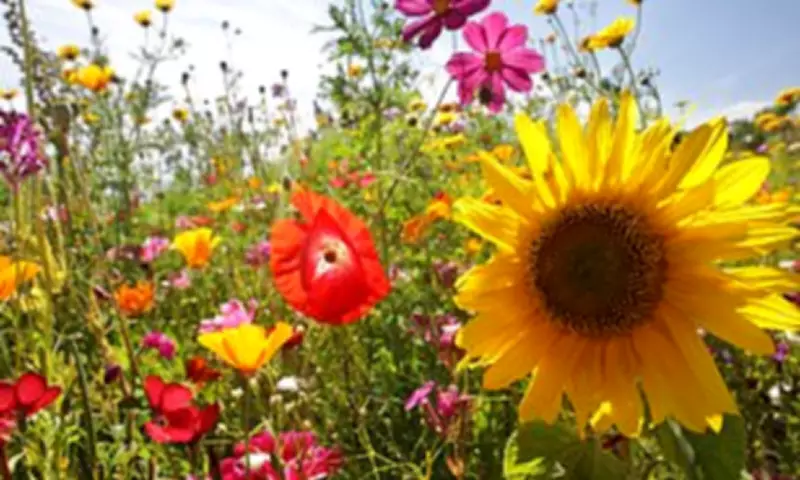
Even insects like beetles, wasps, and flies, which existed long before flowers, experienced dramatic diversification once blooms began dominating terrestrial landscapes. The pre-floral world was a monochromatic realm of sludgy browns, greens, and greys, dominated by the earthy scents of leaves, mushrooms, and mud. Flowers introduced colour and fragrance to the planet, but their true superpower lay in creating intricate partnerships between species.
Weaving Together Separate Worlds
Flowering plants masterfully connected the below-ground universe of soil microbes and fungi with the above-ground world of pollinating insects and fruit-dispersing birds. This integration created resilient, productive ecosystems that supported unprecedented biological diversity. As Haskell writes in his book, "Take away the flowers' relationships with animals, and almost all modern animals and most ecosystems would disappear."
This floral influence extends to grasses, which many people don't recognize as flowering plants. Grasses actually bear clusters of small flowers along their stalks, and these humble plants—particularly rice, maize, and wheat—now provide two-thirds of human calories worldwide, plus much of the food for livestock. Without grasses, Haskell suggests, humans would likely still be small-brained apes foraging for forest fruits, leaves, and occasional animal prey in tree canopies.
From Ancient Magnolias to Modern Conservation
Haskell explores how flowers have built and sustained diverse ecosystems, from dense rainforests to expansive prairies. He delves into the ancient history of magnolias, examines why orchids employ "sexually deceptive" pollination strategies, and highlights the crucial role of coastal plants like seagrass, which sequester carbon far more effectively than woodlands or rainforests.
While Haskell writes with an engaging, accessible style, his message carries serious weight: flowers represent "the astonishing creativity and productivity" of nature's systems. These botanical revolutionaries are not merely beautiful ornaments but vital components of our survival, whose habitats demand urgent protection and conservation efforts.
The evidence is clear: flowers transformed Earth's ecosystems, drove evolutionary innovation across animal kingdoms, and ultimately made human civilization possible. Their story deserves equal billing alongside dinosaurs and primates in our museums and our understanding of natural history.