
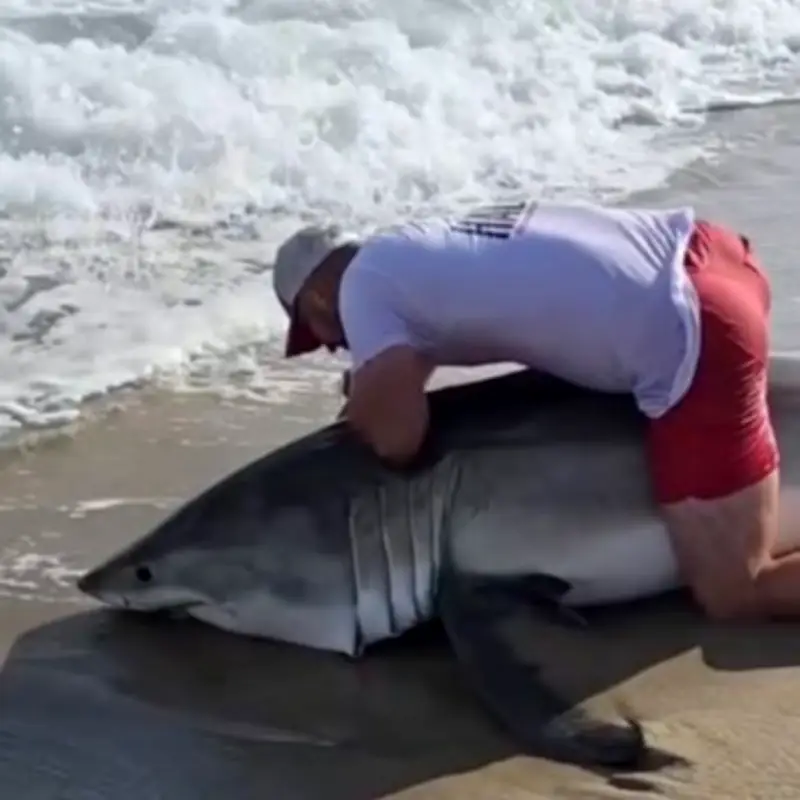
A fearless boat captain wrestled a Great White shark with his bare hands to retrieve his fishing hook from the jaws of the beast. Elliot Sudal accidentally reeled in the apex predator while fishing at Nantucket, Massachusetts. Shocked onlookers watched in disbelief as the seaman dragged the 8ft long beast from the water by the tail before jumping on top of the animal to retrieve his fishing hook.
In an astonishing 15 seconds he successfully rescued the item from the shark's jaws with his bare hands. Elliot revealed he and his team reeled in the fish after they felt a tug at the end of their fishing line. Despite catching over 200 sharks in his time, Elliot has said he has never caught a great white before. On the staggering catch Elliot said: “By no means expected this to happen. Definitely not.”
Recounting the nail-biting ordeal Elliot said: “Shark was in the surf, removed the hook and sent her back to sea in about 15 seconds.” He added: “[I] saw the spotted pectoral fin flash in a wave and just focused.” The seaman stated he quickly realised the “gravity of the situation” and worked to release the shark “quickly and safely.” Elliot has urged other fishermen to take online courses and to “respect the animal and be safe.”
The development comes as a great white shark has been spotted in European waters putting beachgoers on high alert. The monstrous predator, caught on camera between Sicily and Tunisia, is understood to have been the first great white filmed in the Mediterranean. Dr Lauren Smith, a shark expert at Saltwater Life, told the Daily Mail: "This shark was filmed far from coastal beach resorts and there is no reason for the public to be alarmed. The ocean is their domain, and encounters like this should inspire respect and appreciation rather than fear."
Despite great whites venturing closer to Europe, global shark numbers are actually crashing due to overfishing and climate change. Mr Naylor added: "Out of the 1,200 species, 30 per cent of them are categorised as endangered. That's a lot, especially because these animals have managed to persist for about 330 million years."




