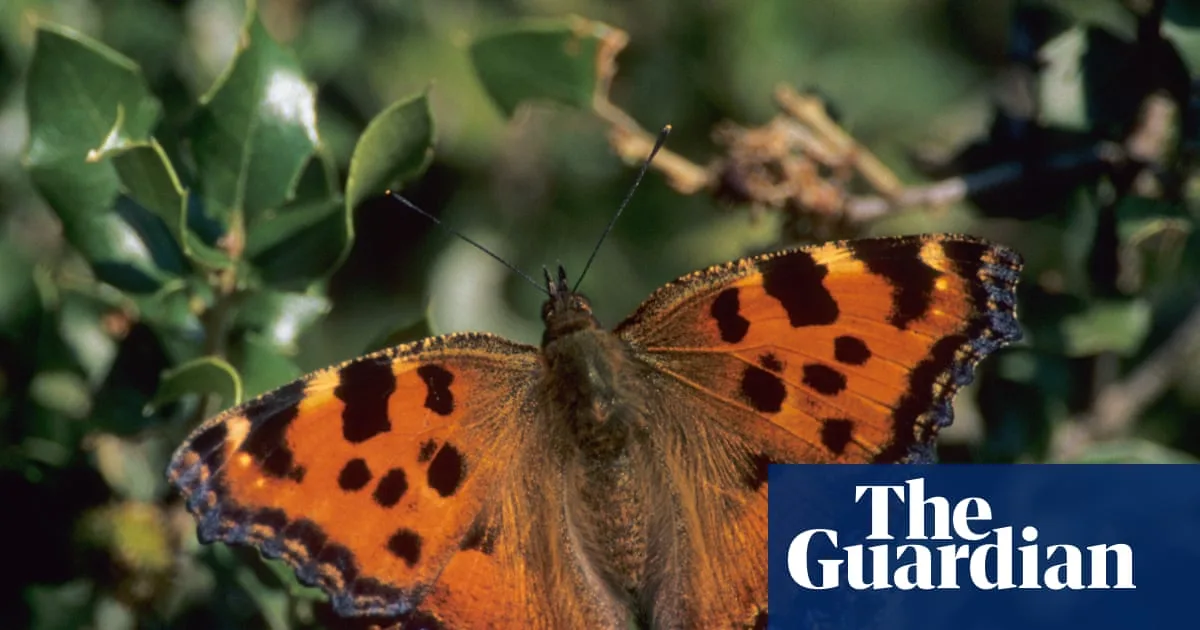
Large Tortoiseshell Butterfly, Extinct for 30 Years, Spotted Across England
A stunning butterfly, classified as extinct for three decades, has been observed across various parts of England, with experts hailing the sightings as great news and noting there is no downside to its potential return. The Large Tortoiseshell, a colourful species with orange, black, and blue wings, has only had rare appearances over the last 30 years, but recent reports suggest it may no longer be considered extinct.
Recent Sightings and Expert Analysis
According to Butterfly Conservation, nature enthusiasts have captured photographs of the Large Tortoiseshell in Kent, Hampshire, Sussex, Dorset, Cornwall, and the Isle of Wight over the past two weeks. While there have been occasional sightings since its extinction, these occurrences are becoming increasingly common. Professor Richard Fox, Head of Science at Butterfly Conservation, stated that if the charity updated its official endangered species list tomorrow, it would likely reclassify the Large Tortoiseshell as no longer extinct.
Professor Fox remarked: This is great news about a beautiful and charismatic butterfly. If the individuals being seen can survive and reproduce, then there's no downside to the Large Tortoiseshell coming back, and we can explore ways to assist its recovery.
Historical Context and Population Trends
The Large Tortoiseshell, scientifically known as Nymphalis polychloros, is a large, vibrant butterfly closely related to the Small Tortoiseshell but with distinct markings. Once widespread across England and Wales, it was last recorded as a resident, breeding species in the UK during the 1980s. Its population decline has been linked to the spread of Dutch elm disease across Europe in the 20th century, as adults primarily lay eggs on elm trees.
Despite sporadic sightings over the decades, there has been no evidence of a stable breeding population to classify it as a resident species. However, in recent years, the butterfly's population has grown significantly in the Netherlands, leading ecologists to believe that increasing numbers might be migrating across the sea to England.
Current Observations and Future Prospects
The Large Tortoiseshell overwinters as an adult and emerges from hibernation on the first warm days of spring, explaining why lepidopterists have reported sightings recently when few other butterflies are active. Last week, Butterfly Conservation added the species to its First Sightings web page, which records initial dates and locations for all UK species. The first reported sighting this year was on the Isle of Wight on 24 February, with at least 20 more sightings reported by the public in areas like Kent and Hampshire, and multiple reports from Sussex Branch members.
Currently, the species is officially classed as regionally extinct in Great Britain on Butterfly Conservation's GB Butterfly Red List, last updated in 2022, though the report noted possible recent colonisation in southern England. Professor Fox anticipates that if current trends continue, the next Red List assessment in a few years will not classify the Large Tortoiseshell as regionally extinct, suggesting it may now be established in several parts of Britain.
He added: When a new species colonises, there is a period of uncertainty. Many colonising species become common, but some remain highly localised and can even be lost. For the Large Tortoiseshell, we are currently in that wait-and-see phase.