
Scientists have discovered the oldest, deepest, and most extensive whale graveyard yet known in the southeastern Indian Ocean. The site contains fossils dating back more than 5 million years and reveals species and ecosystems previously unknown to science.
Discovery Details
Whale falls—the term for dead whales that sink to the ocean floor—are not uncommon, but most have been found at depths less than 4 kilometers. In contrast, this newly discovered necropolis reaches depths exceeding 7 kilometers and extends hundreds of miles across the seafloor. Researchers also found decaying carcasses teeming with life.
Dr. Giovanni Bianucci, a co-author of the study based at the University of Pisa, said: "This discovery demonstrates that these extreme and unexplored environments are home to species and ecosystems still unknown to science, and that we are therefore still far from understanding the true biodiversity of our planet. Furthermore, it shows us that life can adapt and evolve even in extreme environments where light is absent and pressure is extremely high." He added that the study also provides unique information on creatures including the "mysterious and elusive" beaked whales.
Research Expedition
A team of researchers from China, Italy, and New Zealand used a submersible to explore the Diamantina fracture zone, an area of trenches and ridges formed between 60 and 50 million years ago as Australia and Antarctica drifted apart. They discovered whale fossils at depths up to 7,002 meters—near the deepest point of the fracture zone. Subsequently, they conducted 32 dives to the seafloor, finding 485 whale-fossil sites and five modern natural whale falls in advanced decomposition.
The team noted: "Aligned along a northwest-southeast axis for 1,200 kilometers, these falls may form a previously unrecognised 'whale-fall community supercorridor.'"
Fossil Finds
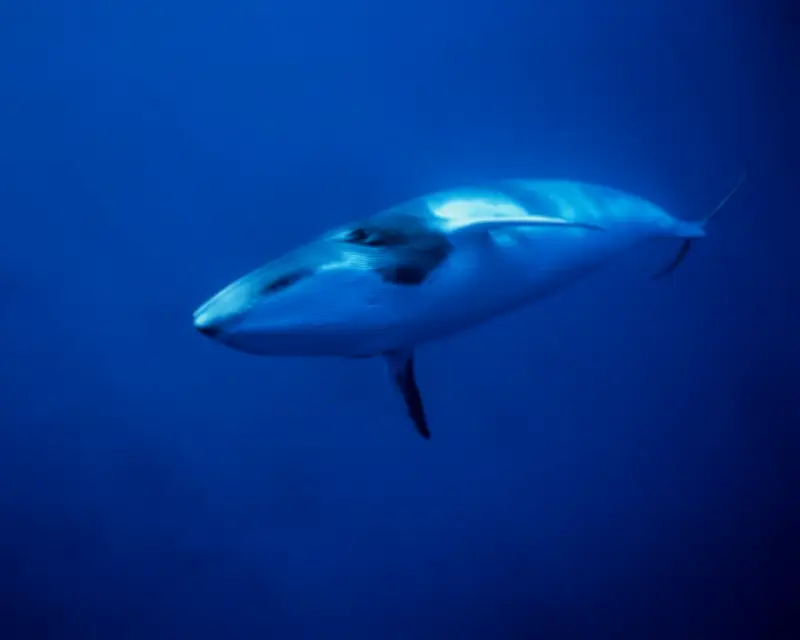
The largest carcass discovered was a five-meter-long skeleton of an Antarctic minke whale. They also encountered remains of extinct species, including a fossilized skull from a beaked whale called Pterocetus benguelae, dated to 5.3 million years ago, and another skull from a new species they named Pterocetus diamantinae.
The decaying whale carcasses hosted a diverse array of life, including crustaceans, molluscs, bone-eating worms, and brittle stars. Many species may be new to science.
Expert Commentary
Jon Copley, professor of ocean exploration and science communication at the University of Southampton, who was not involved in the work, said: "It's an exciting and rare discovery—not only the world's deepest known 'whale-fall' colony of deep sea animals, but also such an abundance of modern whale skeletons and fossils in this particular location."
Copley explained that whale falls are island-like habitats for deep sea animals, including species related to those thriving at hydrothermal vents. However, whale falls are harder to find than undersea hot springs because they cannot be detected remotely. "Finding a 'whale necropolis' where there are nearly 800 skeletons per square kilometer is a surprise, and the mix of whale types is a puzzle," he said, noting that it includes shallow-diving filter-feeders like minke whales as well as bones of deep-diving beaked whales.
In an accompanying article, Stephen J. Godfrey of the Calvert Marine Museum in the US described the graveyard as "a truly unique discovery," saying the site could yield many more exciting finds. "[The research] reminded me of a trailer for the first in a series of epic movies," he wrote.




