Dawn Search for the Rare Black Grouse on Ruabon Moor
On the expansive Ruabon grouse moor in Wrexham, the arrival of spring signals the beginning of the mating season for one of Britain's most enigmatic birds. I embarked on a pre-dawn mission, not with a shotgun, but with a camera, hoping to capture a glimpse of the rare black grouse. This larger cousin of the red grouse is theoretically protected by a voluntary ban, yet its populations have suffered catastrophic declines in recent decades.
The Lekking Ritual of Spring
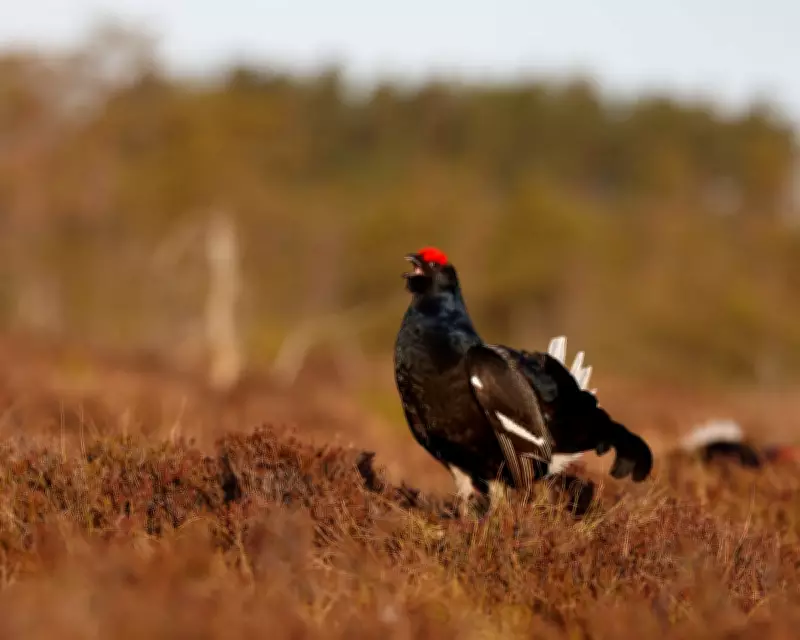
Spring is the time when black grouse engage in their courtship displays, known as lekking. At dawn, males gather to fan their tails, peck, and scuffle with rivals in a dramatic dance to attract females. Arriving before first light, I hoped to witness this rare spectacle on the moor, a vast estate of over 7,000 acres that stands as the largest grouse moor in Wales.
Historically, Ruabon was a hub for driven grouse shoots, with records from 1912 showing 1,774 grouse shot in a single day. Today, such large-scale shoots are rare in Wales, but the moor remains meticulously managed for the red grouse, which lives only a single summer before being hunted. This management has broader ecological impacts; last year, illegal snares were discovered arranged around a pit filled with dead partridge, and hen harriers have mysteriously vanished from the area.

A Landscape Shaped for Game
Both red and black grouse thrive on heather of varied maturity, which provides food, shelter, and nesting sites. Traditionally, this habitat was maintained through controlled burning, but modern techniques involve flailing the vegetation, creating sharp, neat contrasts in the landscape. As I traversed the wet, unscorched ground, my feet soaked in the dampness of this brown patchwork quilt, the sun began to rise, casting long shadows across the bilberry.
The initial wittering of birds faded into silence, and I nearly gave up hope. Then, in the fresh morning light, a creature appeared in the middle distance, accompanied by the faint burble of a "rookooo" call. Dark wings took flight, with pale undertail feathers gleaming and tail fanned—a black grouse. Triumphantly, I raised my camera, only to realize I had mistakenly picked up my wide-angle lens instead of my zoom. The bird vanished into the distance, leaving me with a view of Wrexham county's twinkling city lights instead.
Though my chance to photograph the black grouse was lost, I reflected that I likely won't be the only shooter to miss their quarry here this year. The moor's legacy of game management continues, balancing conservation efforts with a history of hunting that shapes both the landscape and its wildlife.