Cyclone Narelle's Aftermath: A Harrowing Scene of Marine Devastation
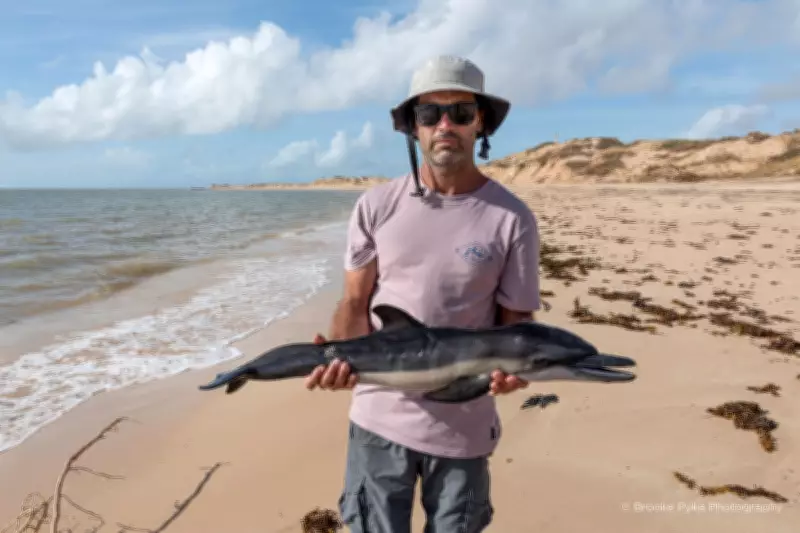
As the violent winds and flooding from Tropical Cyclone Narelle subsided in Exmouth, Western Australia, the true extent of the devastation became starkly visible. Graveyards beach, a remote stretch of sand, was transformed into a literal graveyard, littered with thousands of dead baby turtles, turtle eggs, fish, sea snakes, dolphins, and seabirds. The scene, described as "harrowing" by locals, has left conservationists and residents struggling to comprehend the scale of loss.
Local Responses and Rescue Efforts
Brinkley Davies, a free diver and founder of the Balu Blue Foundation, rushed to the beach to rescue whatever animals she could. "The sheer amount of animals was just disturbing. I'm a pretty positive person, but it was so bad," she recounted. In the days following the cyclone, Davies took in over 70 seabirds and other animals into her home and driveway, nursing more than 20 back to health with the help of volunteers. She emphasized the urgent need for a sustainable wildlife care facility in the area, stating, "It's insane what we just went through."
Photographer Brooke Pyke, who visited Graveyards beach, echoed these sentiments, calling the scene "devastating" and "hard to put into words." She theorized that marine animals needing to surface for breath faced exhausting conditions during the storm, potentially explaining the absence of sharks and rays, which can dive deeper.

Widespread Impact and Official Assessments
The Western Australian government reported similar scenes across hundreds of kilometres of the world heritage-listed Ningaloo coastline. Riley Carter, a wildlife officer at the Department of Biodiversity, Conservation and Attractions, confirmed hundreds of dead shorebirds and about 30 dead cetaceans, including dolphins. Helicopters have been deployed to assess the situation, with vets on standby to euthanize animals if necessary. Despite the devastation, Carter noted some positive signs, such as 19 fresh turtle tracks observed post-cyclone.
Climate Context and Coral Concerns
Cyclone Narelle was a historic storm, marking the first severe system to make landfall in three different states and territories since 2005. Climate experts suggest global heating likely intensified the storm before it hit Exmouth with wind gusts of approximately 250 km/h. The cyclone's track directly affected the Ningaloo coral reefs, which are already vulnerable after last year's mass bleaching event killed two-thirds of corals.
Dr. James Gilmour, a senior research scientist at the Australian Institute of Marine Science, explained that cyclones can smother corals in sediment, increasing disease risk. The large-scale death of marine life also raises the threat of algal blooms harmful to corals. With corals in their spawning season, energy reserves are low, making recovery more challenging. Gilmour expressed concern about shrinking recovery windows, noting, "We worry greatly how many of these windows will remain."
Broader Implications and Community Resilience
The event has sparked discussions about climate change's role in such natural disasters. Davies remarked, "A lot of people have been saying this is just nature. But I think we've affected the climate so much that I don't think this is just nature." As the community grapples with the aftermath, efforts continue to rehabilitate injured wildlife and assess long-term environmental impacts, highlighting the urgent need for enhanced conservation strategies in the face of escalating climate crises.