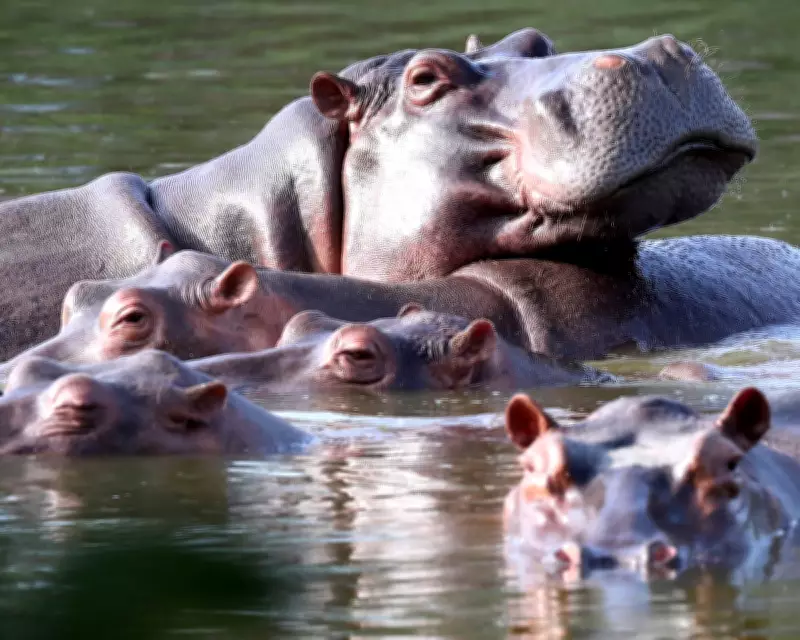
Colombian environmental authorities have sanctioned a controversial plan to cull dozens of feral hippos, with up to 80 animals targeted for elimination. These hippos are direct descendants of four individuals imported by the notorious drug lord Pablo Escobar during the 1980s for his private zoo at Hacienda Nápoles, a vast ranch in the Magdalena River valley.
Escobar's Unintended Legacy
Colombia stands as the only nation outside Africa with a wild hippopotamus population, entirely originating from Escobar's original quartet. Following his death, the hippos escaped or were released, establishing a breeding population that has since expanded dramatically. A study from Colombia's National University estimated approximately 170 hippos roaming freely across the country in 2022.
Environmental and Human Threats
Environment Minister Irene Vélez announced the culling decision, emphasising that previous control methods have proven both costly and ineffective. These included attempts at neutering some animals and relocating others to zoos. "If we don't do this we will not be able to control the population," Vélez stated. "We have to take this action to preserve our ecosystems."

The large mammals now pose significant threats to native species and local communities. They compete directly for food and habitat with indigenous animals like river manatees. More alarmingly, hippos have been encountered by villagers on farms and in rivers, creating dangerous situations for human populations.
Geographic Expansion
The hippos' range has expanded considerably beyond their original introduction site. Recent sightings have occurred more than 100 kilometres north of Hacienda Nápoles, demonstrating their successful adaptation to Colombian environments and their potential to spread further across the country.
Tourism Versus Conservation
Despite the environmental challenges they present, the hippos have paradoxically become a tourist attraction. Local residents near Hacienda Nápoles now offer hippo-spotting tours and sell hippo-themed souvenirs. The Nápoles ranch itself, confiscated by the government after Escobar's death, operates as a theme park featuring swimming pools, water slides, and a zoo containing various African species, with the hippos remaining a primary attraction.
Animal Welfare Opposition
The culling plan has faced strong opposition from animal rights activists. Senator Andrea Padilla, who helped draft Colombia's anti-bullfighting legislation, described the decision as "cruel" and accused officials of taking "the easy way out." On social media platform X, Padilla wrote: "Killings and massacres will never be acceptable. These are healthy creatures who are victims of the negligence of government entities."
Activists argue that addressing the problem through lethal means sets a poor precedent for a nation that has endured decades of internal conflict and violence.
Failed Control Efforts
Over the past twelve years, spanning three different presidential administrations, Colombia has attempted to control the hippo population through sterilization programs. However, these initiatives achieved limited success due to the substantial costs and dangers associated with capturing and performing surgery on the massive, potentially aggressive animals.
Limited Options
Relocation to Africa presents another unfeasible solution. The Colombian hippos originate from a restricted gene pool and could potentially carry diseases, making reintroduction to their native continent impractical and potentially harmful to African hippo populations.
The government has not specified when the hunting operations will commence, but officials maintain that decisive action is necessary to prevent further ecological disruption and protect Colombian citizens from potentially dangerous encounters with the growing hippo population.