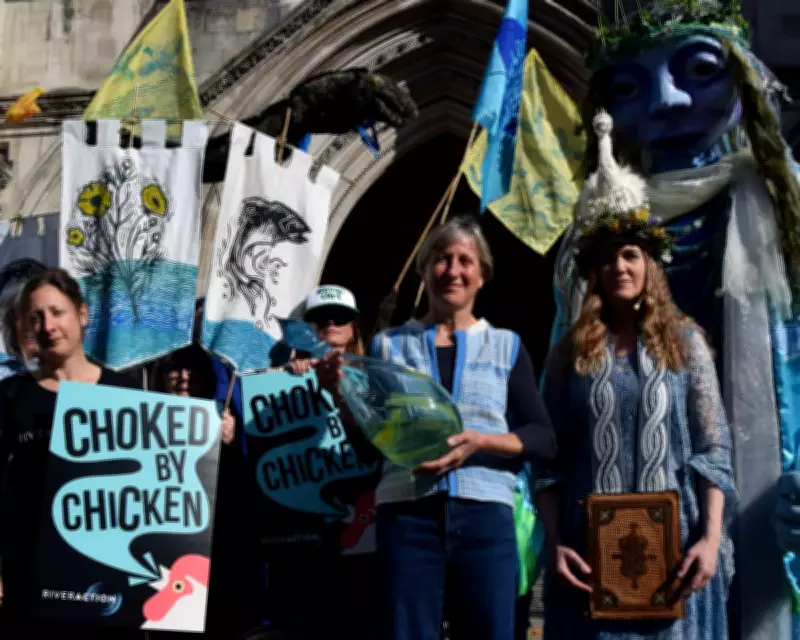
Lawyers representing one of the UK's largest industrial chicken producers have strongly contested allegations that the company is responsible for pollution in the Rivers Wye and Usk. Over 1,300 individuals have initiated legal proceedings against Avara Foods, its subsidiary Freemans of Newent, and Welsh Water, accusing them of causing extensive and widespread environmental damage to the rivers and their surrounding catchment areas.
Legal Challenge Described as 'Entirely Inferential'
During a preliminary hearing at the High Court in London on Monday, Charles Gibson KC, counsel for Avara and Freemans, dismissed the claim as lacking a proper foundation. He argued that the assertion linking their operations to river pollution was 'entirely inferential and an oversimplification'. In written submissions, Gibson stated: 'Their claim is fundamentally misconceived in law and in fact, lacking in any proper scientific basis, and misunderstands how poultry farms in fact operate.'
The barrister emphasised that each claimant must demonstrate personal harm caused by the pollution, rather than relying on generalised allegations. He noted: 'In all of these causes of action, it will be critical for each claimant to establish not merely that some parts of the River Wye and its tributaries had been polluted, but that the claimant himself or herself was personally affected by that pollution, and that such pollution actually caused him or her actionable loss and damage.'

Environmental Allegations and Scientific Basis
The claim, described by lawyers as the UK's largest ever environmental pollution lawsuit, alleges that pollution stems from water runoff containing high levels of phosphorus, nitrogen, and bacteria. This runoff is attributed to the spreading of thousands of tonnes of poultry manure from chicken farms, as well as sewage bio solids. Approximately 24 million chickens—roughly a quarter of the UK's total chicken population—are raised in the Wye catchment area, predominantly in large battery farms.
According to the claimants, high concentrations of phosphorus and nitrogen have led to excessive algae growth, which depletes oxygen levels, suffocates fish, and harms other aquatic life. The decay of algae also produces unpleasant odours and reduces biodiversity. Anneliese Day KC, representing the claimants, argued in written submissions: 'As a result of pollution for which the defendants are responsible through their agricultural/sewage-related activities, the health of the River Wye, the River Usk and their tributaries has declined. The ecological decline of the rivers has caused harm to the claimants, who bring claims for substantial damages and injunctive relief against the defendants.'
Day confirmed that 1,309 people have joined the claim so far, noting that around 300,000 residents in the Wye and Usk catchments depend on the rivers as a shared environmental resource.
Judge's Remarks and Next Steps
Judge Cook described the claim as an 'omnibus' on which 'anybody can get on board', adding that he was 'quite frankly taken aback by how the claimants have gone about this.' The hearing concluded on Monday, with a further hearing expected at a later date.