Capercaillie Bird Shows Signs of Recovery in Scottish Highlands
After decades of severe decline, there are emerging signs of hope for the capercaillie, one of Britain's most endangered bird species. Populations of this charismatic grouse, found exclusively in the Caledonian pine forests of the Scottish Highlands, have increased by 50% at RSPB Abernethy, rising from 20 males in 2020 to 30 in 2025. This uptick offers a critical lifeline for the "horse of the woods," whose numbers have plummeted to approximately 532 in the wild, marking the lowest recorded levels since surveys began over 30 years ago. In stark contrast, there were more than 20,000 capercaillies in Scotland during the 1970s.
Conservation Efforts and Habitat Improvements
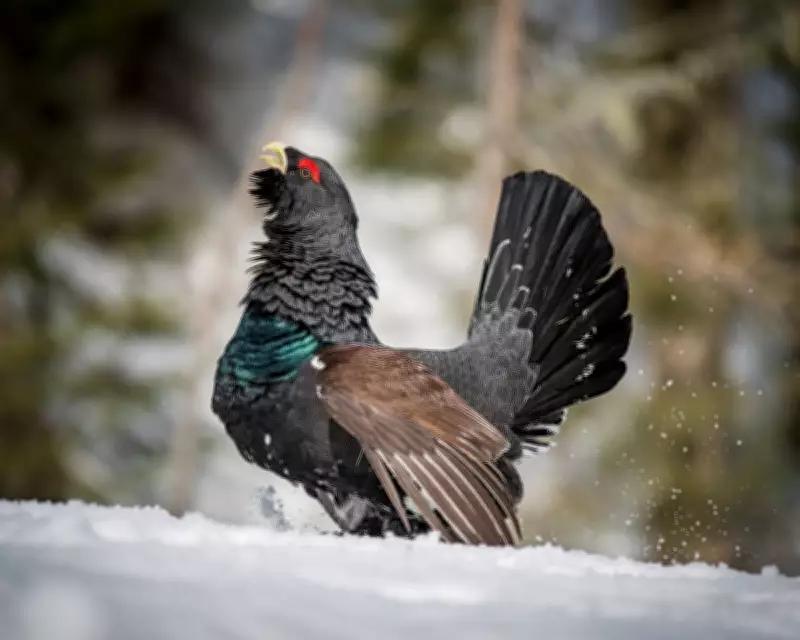
The males were counted at spring lekking sites, where these showy black and red birds perform spectacular "flutter jumps" and produce popping and clicking sounds to attract smaller, camouflaged females. The capercaillie's decline has been attributed to multiple factors, including wetter springs and summers, loss of high-quality forest habitat, increased predation of eggs and chicks, collisions with deer fences, and human disturbance, with concerns even raised about social media attention disrupting the birds. Low genetic diversity in the surviving population may also contribute to the challenges.
At RSPB Abernethy, conservationists have implemented innovative techniques to support recovery. They trialled a remote-controlled mower to remove dominant heather in inaccessible terrain, allowing blaeberry to thrive. This plant is an important food source for capercaillies and hosts moth caterpillars that provide vital protein for young chicks. Additionally, the mower creates open bare areas where chicks can stay warm after rain. Virtual fence collars on cattle have enabled targeted forest grazing in areas where traditional fencing would be difficult to install or could pose collision threats to the flying birds.

Hopeful Outlook and Broader Implications
Abernethy now holds more than 20% of the 143 lekking males recorded in the 2025 national lek count. Richard Mason, conservation manager at RSPB Abernethy, expressed optimism, stating, "The increase in the number of lekking male capercaillie is thanks to the huge amount of work we are undertaking to improve habitat quality. The combination of cutting and extensive cattle grazing has dramatically improved conditions in the forest. We are seeing many chicks reaching full size and whilst the future of capercaillie remains in the balance, we are hopeful that these techniques can support their recovery in Scotland."
He emphasized that there is still significant work to be done, not just at RSPB Abernethy but across all capercaillie sites in Scotland. By enhancing these native pinewood forests, conservationists aim to collectively work towards the recovery of this incredible bird. Recent hopeful counts have also been recorded in other forests, such as Strathspey, which saw an increase in male capercaillies in 2023, further bolstering prospects for the species' survival.