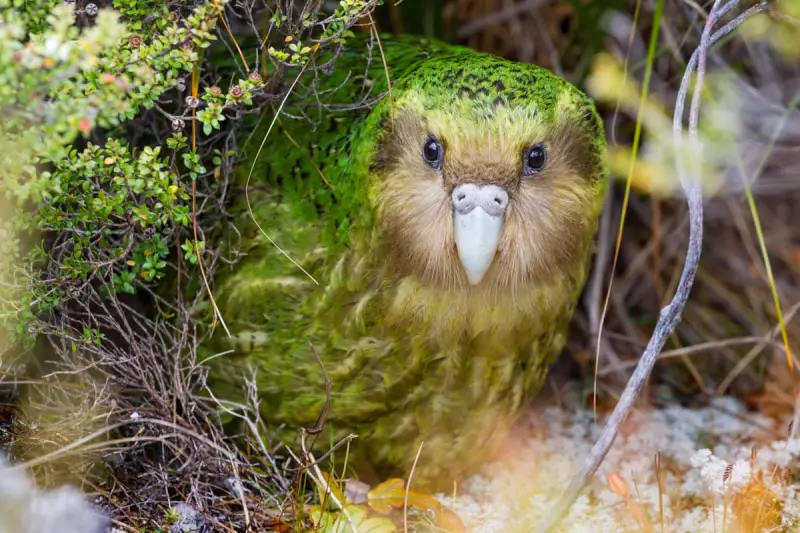
Conservationists in New Zealand are on high alert for a potential population boom of the world's heaviest parrot, the critically endangered kākāpō. The trigger is a rare natural event: a 'mega-mast' of the native rimu tree, which is set to produce a bountiful harvest of berries for the first time in four years.
A Rare Event for a Rare Bird
These unique, nocturnal and flightless parrots breed only every two to four years, synchronising their mating cycles with the mass fruiting, or 'masting', of the rimu. This year's abundant crop is expected to provide the high nutrition needed for females to raise chicks, potentially prompting more eggs than usual. Deidre Vercoe, operations manager for the Department of Conservation's kākāpō recovery programme, said her team is hopeful for major activity this summer.
"We've got a really big rimu crop developing on the trees and the birds haven't bred for four years so we're hoping that they will all get into the action," Vercoe explained. The programme has been a remarkable success, rebuilding the population from a perilous low of just 51 birds in 1995 to 236 today, including 83 breeding-age females.
The 'Crazy' Rituals of a Chunky Parrot
Kākāpō are famously charismatic birds, known for their longevity of 60-80 years and their substantial weight of up to 4kg. Their mating rituals are particularly extraordinary. Males gather in arenas known as 'leks' where they excavate bowls in the ground. From there, they inflate thoracic air sacs to produce a deep, booming call that can travel up to 5 kilometres—a sound often compared to a softly plucked cello string.
After a female chooses a partner, she will typically lay between one and four eggs. She then becomes solely responsible for incubating the eggs and raising the chicks for approximately six months. To fuel this immense effort, the rimu berries are crucial. Kākāpō are adept climbers, scaling the 20-30 metre high trees repeatedly throughout the night to feast on the fruit for months on end.
Challenges and Hope for the Future
While the conditions are promising, conservationists remain cautiously optimistic. Each breeding season brings new challenges. This year, a higher number of younger, less experienced females are of breeding age, and their success rate may be lower than that of older birds. Historically, breeding seasons have yielded an average of one chick per breeding female.
"I never like to count our chickens before they hatch, but we're really hopeful that the majority of the females breed and we will get some good numbers of chicks through," Vercoe stated. The growing population is also creating a new, positive problem: a shortage of space. All kākāpō live on three predator-free islands near the bottom of New Zealand's South Island, and finding new, suitable habitats is becoming a pressing issue.
"We are actually running out of space for kākāpō and predator-free, good-quality habitat," Vercoe noted, highlighting an exciting turning point for the programme. The success of this potential mega-mast season could accelerate the need for New Zealand to find new safe havens for its most charismatic, chunky parrot.