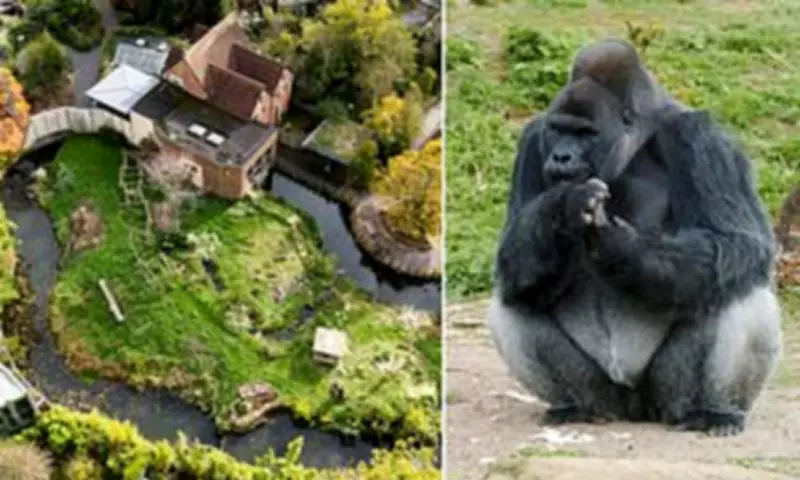
Bristol Zoo's Oldest Silverback Gorilla Dies After Controversial Move to New Habitat
Bristol Zoo's oldest silverback gorilla, Jock, has died just days after being moved to a new home amid controversy and public concern. The 45-year-old western lowland gorilla was euthanised on Thursday after his health deteriorated rapidly following the relocation.
Controversial Move from Old Site
Jock had been living with a troop of eight other gorillas at Bristol Zoo Gardens in Clifton, a site that was closed to the public in September 2022. The closure followed multiple break-ins and persistent rumours that the animals were not being properly cared for and had been effectively 'abandoned' by zoo authorities.
The gorillas were moved just two weeks ago to a newly completed Central African forest habitat at the Bristol Zoo Project, the sister site of Bristol Zoo Gardens located in north Bristol. Despite initial reports that Jock had settled in well to his new environment, his condition declined sharply just ten days after arrival.

Health Issues and Difficult Decision
A spokesperson for Bristol Zoo Project stated that euthanasia represented 'the best outcome for his welfare,' explaining that Jock had several pre-existing health conditions common for gorillas of his advanced age. Silverback gorillas typically live 35-40 years in the wild, facing threats including poaching, habitat destruction, and age-related health problems like tooth loss.
'It is too early to determine the cause of Jock's illness, but we will conduct a full review as soon as possible,' the spokesperson added, emphasising that the decision was made with Jock's comfort and quality of life as the primary considerations.
Jock's Legacy and Conservation Impact
Born in France on May 31, 1983, Jock arrived at Bristol Zoo in 2003 and became a central figure in the gorilla troop for more than two decades. Over the years, he played a vital role in the European co-ordinated breeding programme for critically endangered western lowland gorillas, fathering several infants including Namoki, Komale, Kukena, Juni, and Hasani.
Sarah Gedman, Curator of Mammals at the zoo, said: 'The decision to let Jock go peacefully was made with his comfort and quality of life in mind, a testament to the deep bonds between him and the people who cared for him every day.'
'Jock's legacy at Bristol Zoo, as a leader, father, and ambassador for his species, will live on through the gorillas he helped raise and the countless people he inspired,' Gedman continued. 'His life was a reminder of both the beauty and fragility of wildlife, and the importance of conservation efforts everywhere.'
Impact on Zoo Staff and Other Animals
The zoo acknowledged that this has been 'a really difficult time for the keepers and all colleagues and volunteers here. We all feel we have lost a friend in Jock and will always remember him so fondly.'
Officials noted that gorillas have 'strong social bonds and are sensitive to change,' adding that the remaining animals in the troop will be closely monitored and given 'extra enrichment' activities to help them adjust to both the new environment and the loss of their senior member.
Broader Context of Animal Losses
The news follows a particularly challenging week for animal enthusiasts, who had been following the sad plight of baby Punch the monkey in Japan. Additionally, Newquay Zoo recently announced they had euthanised a pair of unlikely animal best friends - Johnson, a nine-year-old capybara, and Al, a 20-year-old Brazilian tapir - on the same day so neither would have to 'face life alone.'
Keepers at the Cornish zoo said the 'difficult decision' was taken after both animals experienced age-related health issues, ensuring 'neither animal would experience isolation following the loss of a companion.' The two social species had become inseparable over years of sharing an enclosure.