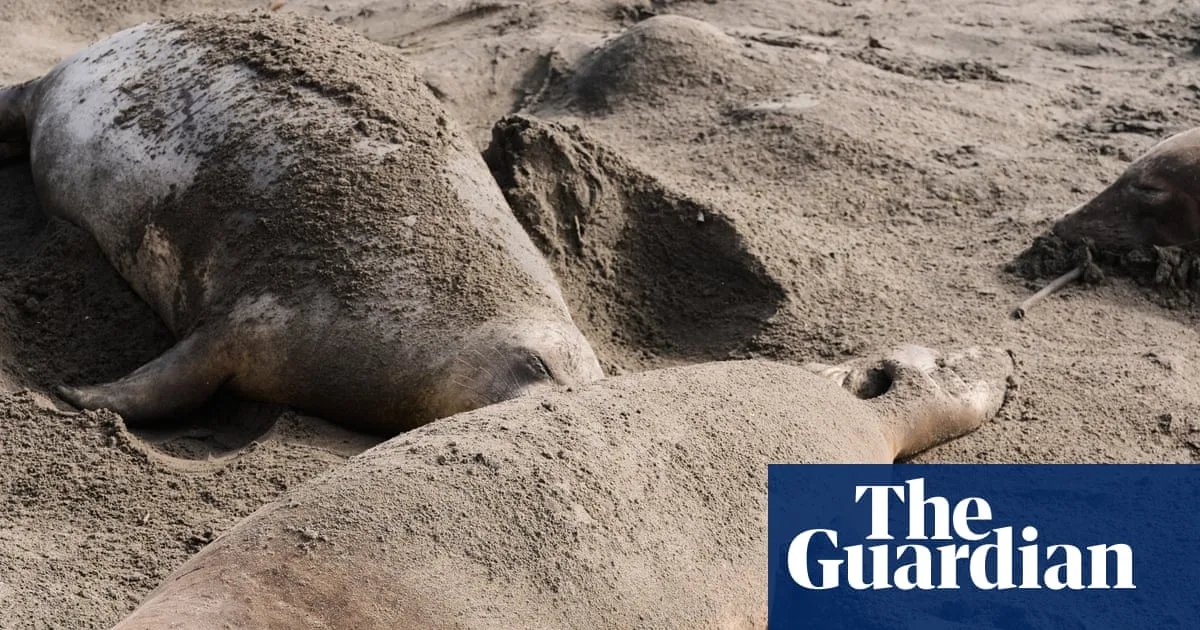
An outbreak of highly pathogenic avian influenza has killed more than two dozen elephant seal pups at Año Nuevo State Park in California, prompting the temporary closure of seal-viewing areas. As of Thursday, around 30 seals had died, nearly all of them weaned pups, according to researchers from the University of California at Davis and UC Santa Cruz.
The colony at Año Nuevo, which hosts about 5,000 seals during the breeding season from mid-December to March, is one of the most intensively studied in the world. Scientists have monitored it for over six decades, amassing more than 380,000 observations of 55,000 seals. “We know an extraordinary amount about what’s typical for those seals,” said Roxanne Beltran, leader of UC Santa Cruz’s northern elephant seal research programme at the park.
This is the first detection of HPAI H5N1 in marine mammals in California. The strain caused catastrophic losses in Argentina, where pup mortality reached 70% during the 2023 breeding season. Beltran noted that deaths in California have so far remained steady at a relatively low number, rather than increasing exponentially.
The source of infection remains unclear. “We don’t yet know where the seals got the virus, and we don’t know if, for example, they got it from birds, if the birds move in a way that could transmit the virus outside of California,” Beltran said. It is also unknown why weaned pups appear more susceptible.
The park remains open with restrictions, but seal-viewing tours have been cancelled through the end of March. A spokesperson for California state parks said more than 400 tours, including 1,547 reservations and 4,363 tickets, have been cancelled, along with over 50 school tours. “Out of an abundance of caution, access is being paused to give wildlife space and allow for ongoing monitoring,” the park’s website states.