
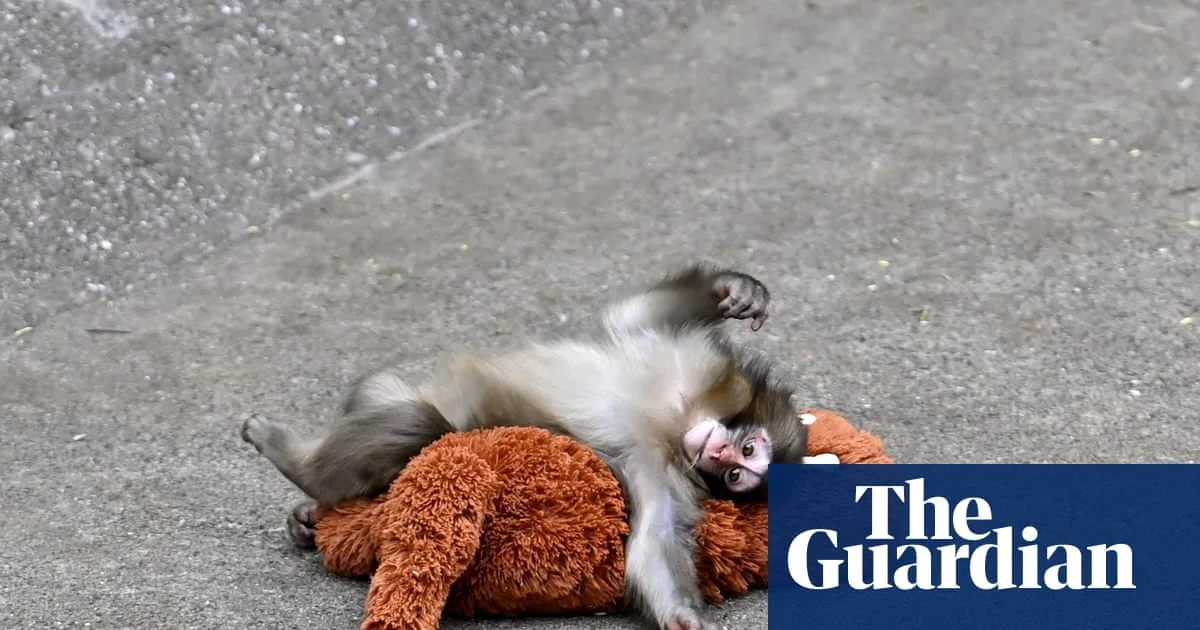
A seven-month-old Japanese macaque named Punch has become an internet sensation after footage of him being rejected by his mother and bullied by other monkeys at Ichikawa Zoo in Japan went viral. Zookeepers gave him a stuffed orangutan toy to compensate for the lack of maternal care, and he has been seen clinging to it for comfort while being harassed by older monkeys.
Kosuke Shikano, a zookeeper at the facility, explained that baby macaques cling to their mother's body after birth to build muscle strength and gain a sense of security. Since Punch was abandoned, he had nothing to grip onto, so the toy was introduced. The keepers initially tried rolled towels of varying thickness, but the orangutan toy proved more suitable, as they hoped its monkey-like appearance might help Punch integrate back into the troop.
Professor Alison Behie, a primatology expert at Australian National University, said such abandonment is unusual but can occur due to factors such as the mother's age, health, or inexperience. In Punch's case, his mother was a first-time mother, and the zoo suggested he was born during a heatwave, which would have been a stressful environment. Behie noted that under stressful conditions, mothers may prioritise their own health and future reproduction over caring for an infant whose survival may be compromised.
Despite the toy offering comfort, Punch has faced aggression from other monkeys. Behie clarified that this behaviour is not abnormal, but rather regular social interaction within the strict matrilineal hierarchy of Japanese macaques. However, she warned that without his mother, Punch may fail to learn appropriate subordinate responses, which could affect his integration into the group as an adult.
The zoo has seen a surge in visitors wanting to see Punch, prompting officials to enforce stricter barriers and ask people to remain quiet, avoid stepladders and tripods, and limit viewing time. Conservation psychologist Carla Litchfield of Adelaide University highlighted the broader issues behind Punch's story, including habitat loss, climate change, and zoo animal welfare. She cautioned that the viral attention could inadvertently fuel the illegal exotic pet trade, reminding the public that monkeys are social beings that belong with their own species to thrive.




