A monumental civil engineering project in the North African desert, described as the world's largest artificial river, is poised for a significant new phase of expansion worth billions. The Great Man-Made River (GMMR) in Libya, a vast network designed to channel ancient underground water to arid coastal regions, is reportedly close to completing its latest development stage.
The Eighth Wonder in the Desert
Conceived as a solution to chronic water scarcity, the GMMR is a staggering feat of infrastructure. The late Libyan leader Muammar Gaddafi, who bankrolled the venture, famously hailed it as the "eighth wonder of the world." The project's total estimated cost has reached a colossal $25 billion, equivalent to roughly £18.5 billion. The new fifth phase alone carries a projected price tag of $7 billion, or approximately £5.1 billion.
The system's primary function is to tap into the Nubian Sandstone Aquifer System (NSAS), a massive subterranean reservoir of "fossil water" believed to date from the last ice age. This aquifer lies beneath the Sahara Desert, spanning parts of Libya, Egypt, Chad, and Sudan. Libya first discovered these water reserves during oil exploration in 1953, with plans for the GMMR forming in the late 1960s.

A Colossal Scale of Construction
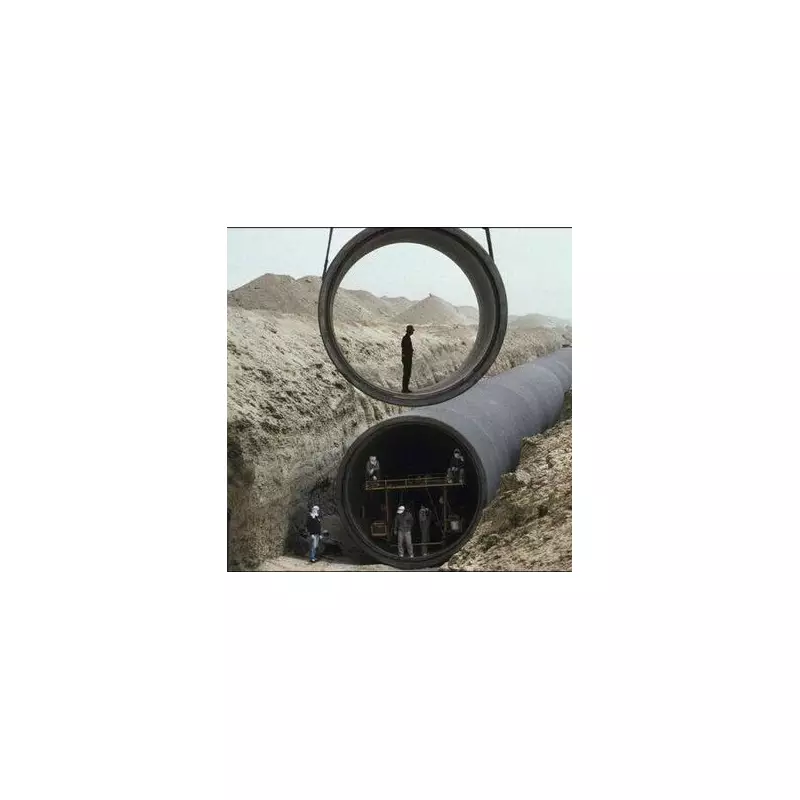
The statistics surrounding the GMMR's construction are mind-boggling. The functional pipeline network already stretches for 1,750 miles, with a further 2,485 miles in various stages of development. It can transport approximately 1.7 billion gallons of water daily to Libya's populated coastal belt.
The sheer volume of materials used underscores its scale. The Great Man-Made River Authority (GMMRA) estimates the project used around five million tonnes of cement. Furthermore, it reportedly contains enough raw materials to construct "20 Great Pyramids of Giza" and uses steel wires "long enough to circle the earth 280 times."
Expansion Amidst Challenges
The imminent fifth phase, which authorities state is "close to completion" as of December 2025, aims to extend the river's reach. This expansion will connect rural and northern areas of Libya that remain unserved by the existing network. For a nation reliant on overexploited coastal aquifers and expensive desalination, the GMMR has been a strategic alternative.
However, the project's journey has not been without severe obstacles. The 2011 civil war led to significant disruptions, including cuts in public funding, power failures, infrastructure damage, and challenges in importing vital spare parts. Beyond political instability, concerns linger over the scheme's long-term economic sustainability, highlighted by a gap between production costs and what consumers pay.
Perhaps the most pressing issue is the resource itself. The fossil water is a non-renewable reserve. Worrying estimates suggest the aquifer supplies could be depleted within this century, raising critical questions about Libya's future water security despite this engineering marvel.