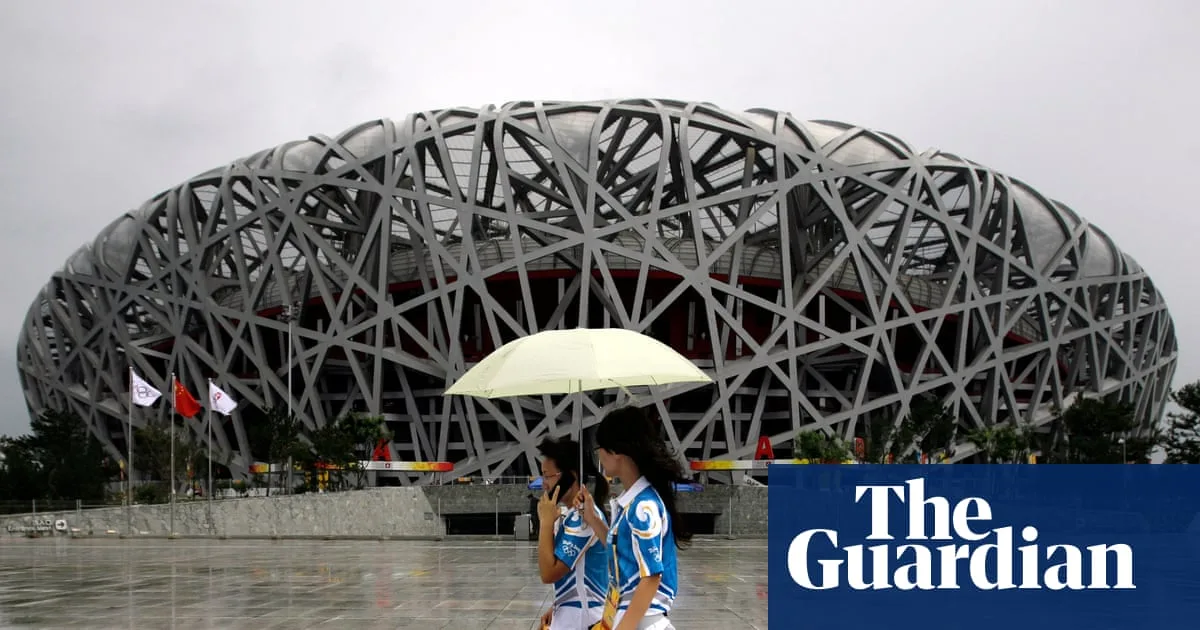
Architects and designers in China are reviving the ancient practice of collecting rainwater to make buildings more ecologically friendly. The Beijing National Stadium, known as the Bird's Nest, is a pioneering example. Built for the 2008 Olympics, its steel lattice contains a network of pipes that channel rainfall into underwater storage tanks for filtration and reuse. According to China's ministry of water resources, at least 50% of the stadium's water needs—from flushing toilets to watering lawns—can be met with recycled rainwater. The system treats 58,000 tonnes of rainwater annually.
Other major buildings also incorporate urban rainwater harvesting (URWH). The National Aquatics Centre across the road collects about 10,000 tonnes of rainwater per year, equivalent to the usage of 100 households. In 2022, drone company DJI unveiled a headquarters in Shenzhen with sky gardens and an integrated rainwater harvesting system for irrigation. Beijing's local government reports that the city reuses 50 million cubic metres of rainwater each year, meeting over 30% of its water needs alongside other reused sources.
China's URWH efforts are linked to the 'sponge city' concept, an urban planning strategy based on ancient water systems modernised by landscape architect Yu Kongjian. Sponge cities use green spaces, wetlands and permeable paving to mitigate flood risks, particularly in the humid south. In the dry north, reusing captured rainwater helps address seasonal droughts. Managing water flows has challenged China for millennia; records from the Qin and Han dynasties show ponds were built to store domestic rainwater.
'Chinese people have long highly valued the utilisation of water resources, it is deeply embedded in our DNA,' says Wang Dong, director general of the ecological city studio at Turenscape. In traditional homes, rooftops were designed to collect water, symbolising wealth, and divert it into the home's interior. In 1995, the Chinese Communist Party hosted the first modern national seminar on rainwater utilisation in Lanzhou. URWH was later incorporated into official engineering codes, with the 2008 Olympics showcasing these designs. The sponge city concept became an official government strategy in 2014, and the target is now for 70% of rainfall in sponge cities to be reused.