The United States Environmental Protection Agency (EPA) has announced it will propose a federal drinking water limit for perchlorate, a chemical used in rocket fuel and explosives. However, the agency stated it is taking this action only because a federal court ordered it to do so, and it maintains that the regulation will not significantly benefit public health overall.
A Reluctant Proposal After a Decade of Dispute
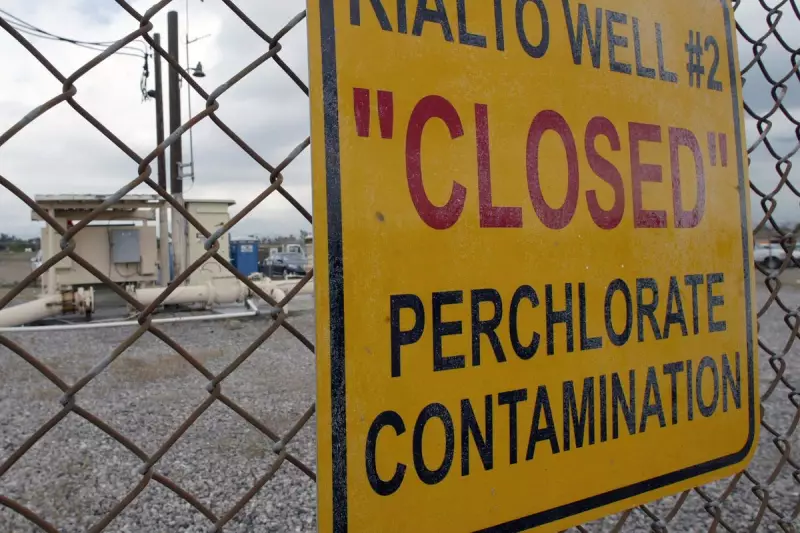
The move marks the latest development in a regulatory battle spanning more than ten years. Perchlorate, which can occur naturally but is also a component of munitions, fireworks, and aerospace manufacturing, can seep into groundwater. Contamination has been notably concentrated in the Southwestern US and parts of the East Coast.
The chemical is considered dangerous because it disrupts thyroid function, which is particularly harmful to infant and child development, potentially lowering IQ scores and increasing behavioural problems. In 2011, the EPA determined perchlorate was a sufficient public health threat to require regulation under the Safe Drinking Water Act, estimating it could be in the water of roughly 16 million people.

Cost Versus Benefit: The EPA's Stance
Despite the initial finding, the agency failed to meet statutory deadlines. Its position shifted, culminating in a 2020 reversal where it concluded no standard was needed. The EPA reiterated this view on Monday, 5 January 2026, stating its data shows perchlorate is not widespread in drinking water.
"We anticipate that fewer than one‑tenth of 1% of regulated water systems are likely to find perchlorate above the proposed limits," the agency wrote. It argued that the vast majority of the approximately 66,000 affected water systems would face substantial monitoring costs with little to no health benefit.
Legal Pressure and Next Steps
The non-profit Natural Resources Defense Council (NRDC) sued to force action. A federal appeals court subsequently ruled that the EPA must propose a regulation, finding perchlorate remains a significant public health threat. Complying with this order, the EPA will now seek public comment on potential limits of 20, 40, and 80 parts per billion.
"Members of the public deserve to know whether there’s rocket fuel in their tap water. We’re pleased to see that, however reluctantly, EPA is moving one step closer to providing the public with that information," said Sarah Fort, a senior NRDC attorney.
In a related move on water policy, the EPA under Administrator Lee Zeldin confirmed it would retain strict Biden-era limits on two common "forever chemicals" (PFAS), while extending compliance deadlines for utilities and scrapping limits on other PFAS types.