Afghanistan's Water Emergency Intensifies as Population Swells
Afghanistan is grappling with a spiralling water catastrophe, driven by the forced return of millions of its citizens from neighbouring countries and compounded by brutal cuts in international aid. The situation is further strained by the Taliban's management of the crisis, with groundwater levels plummeting and critical infrastructure at risk of collapse.
Climate and Infrastructure Collapse in Kabul
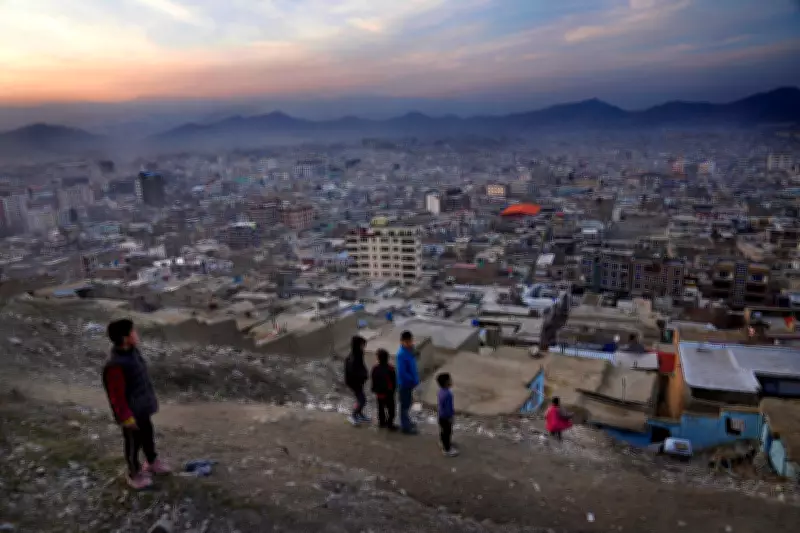
Recent observations highlight a dire scenario in the Afghan capital. Arshad Malilk, regional director for Save the Children Asia, notes that snowfall in the Hindu Kush mountains surrounding Kabul is at a 25-year low for this season. This weak precipitation threatens groundwater reserves, risking the drying up of wells and boreholes. The Qargha Dam, a crumbling structure from the 1930s essential for supplying water to six million residents, faces reduced capacity.
According to a Mercy Corps report, households in Kabul now spend up to 30 per cent of their income on water, with nearly half of the city's wells already dry. Aquifers are being drained twice as fast as natural replenishment rates, and projections indicate they could run dry by 2030. Marianna von Zahn, Mercy Corps' director of programmes for Afghanistan, warns that groundwater levels have dropped by 25 to 30 metres in the past decade, sparking health, economic, and protection crises. She notes that around 40 per cent of tribal conflicts in Afghanistan are now centred on water access.

Global Context of Water Bankruptcy
This crisis is part of a broader global trend, as highlighted by a recent UN report declaring an "era of water bankruptcy." Four billion people experience severe water scarcity annually, with many regions unable to recover from droughts. Lead author Kaveh Madani compares it to financial bankruptcy, where initial manageable withdrawals lead to irreversible damage like shrinking lakes and sinking land. Cities such as Jakarta, Mexico City, and Bangkok face similar risks, underscoring the worldwide scale of water insecurity.
Impact of Mass Returns from Iran and Pakistan
Since 2023, over five million Afghans have returned from Iran and Pakistan, increasing the country's population by more than 10 per cent. This influx, driven by political sensitivities and expulsion programmes in neighbouring nations, has placed immense pressure on water infrastructure. In 2025 alone, 2.9 million returnees arrived, with daily numbers peaking at 40,000 last summer.
A Mercy Corps assessment of 292 households in key districts found that three-quarters report accessing clean water as "difficult" or "very difficult," with 70 per cent citing worsened conditions due to returnees. Von Zahn describes this as one of Asia's largest migration crises, often overlooked internationally.
Human Stories of Drought and Displacement
The crisis has devastated communities like that of Wasiq, a 60-year-old farmer with 14 children. Prolonged droughts in Kandahar province forced his family to abandon their land, transforming once-fertile areas into deserts. He calls drought a "silent killer" that destroys everything. After years of displacement, a solar-powered water system installed by Save the Children brought relief, delivering 25,000 litres of clean water daily and allowing his family to return home. However, Wasiq's hope for a new dam to prevent future droughts is dimmed by aid cuts.
Severe Aid Reductions and NGO Struggles
Humanitarian aid to Afghanistan fell by 37 per cent in 2025 compared to 2024, following cuts from donors like the US and UK. Save the Children has impacted 700,000 people through reduced health services, disrupted education for over 100,000 children, and affected water, sanitation, and hygiene support for 400,000 individuals. Mercy Corps reduced its footprint by 50 per cent, abandoning water projects mid-construction until private funding was secured.
Von Zahn criticises donors for acknowledging the crisis without providing financial support, warning that without intervention, whole neighbourhoods in Kabul may be forced to relocate. She adds that aid cuts, justified by human rights concerns, actually deepen misery for all, including women.

Taliban's Role and Future Prospects
The Taliban has been accused of downplaying the crisis while promising solutions, such as supplying water from the Shah Toot Dam and Panjshir River. However, construction on the dam has not begun, and India's funding commitment predates the Taliban's return. NGOs stress that with adequate funding and large-scale infrastructure investments, adaptation is possible. Community-level efforts, like water rationing and private sector involvement in water-saving technologies, offer some hope, but von Zahn emphasises that significantly more international funding is crucial to address the scale of the emergency.
As advocacy is hampered by limited diplomatic presence post-Taliban takeover, the situation remains precarious, with several large NGOs at risk of closing offices in Kabul. The resilience of Afghans is evident, but without urgent action, the water crisis threatens to escalate into a full-blown humanitarian disaster.