Niscemi Landslide: A Town on the Brink of Collapse
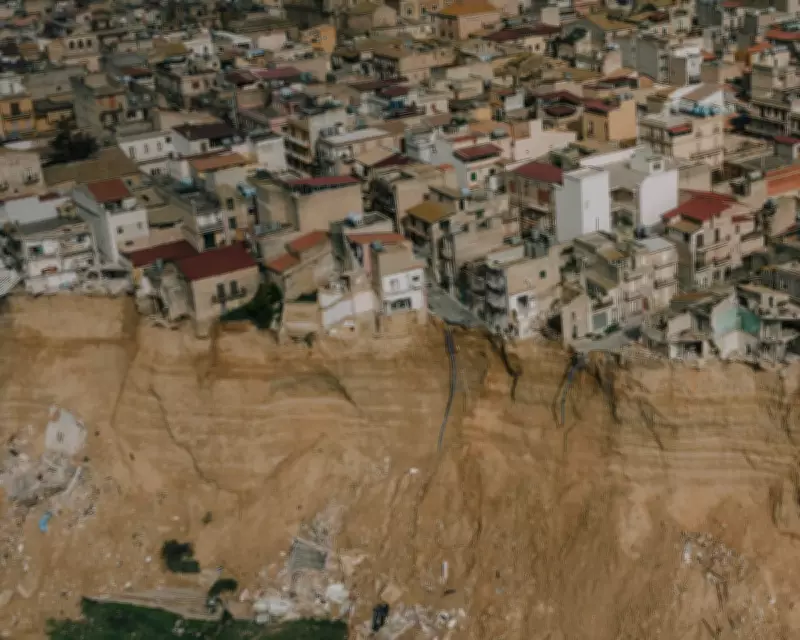
The Sicilian town of Niscemi, home to 25,000 people, has been plunged into chaos following a devastating landslide on January 25. Triggered by torrential rains from Cyclone Harry, the event carved a 4km-long chasm into the landscape, swallowing roads, vehicles, and entire sections of the urban fabric. Dozens of houses now hang precariously over a 25-metre abyss, with the unstable ground continuing to give way hour by hour.
Mass Evacuations and Personal Tragedies
Authorities have evacuated more than 1,600 residents, with many forced to abandon their homes with only essential belongings. Salvatrice Disca, 70, described the suddenness of the disaster: "The power went out, and a few minutes later the police knocked on our door. They told us to leave immediately, to abandon everything." Evacuees are staying with relatives, in care homes, or temporary accommodations, while firefighters escort some to retrieve valuables from the danger zone.
Among the losses is the well-known pizzeria A Barunissa, whose owner, Benedetta Ragusa, 41, had mere minutes to salvage equipment before her business was condemned. "We've lost everything," she lamented, echoing the despair felt across the community. The town has become a ghostly silence, with historic 17th-century churches and a public library housing 4,000 rare books now teetering on the edge of collapse.

Historical Negligence and Climate Emergency
Residents express anger that this disaster could have been prevented. The area has a history of landslides, with events recorded in 1790 and 1997, yet construction continued unabated. Sofia Salvo, 61, a primary school teacher, lost her family home built legally over three generations: "I keep asking why the authorities allowed it in a risk area. Someone has to take responsibility." The public prosecutor's office in Gela has opened an investigation into negligent disaster, vowing to leave no stone unturned.
Geologists and environmental experts point to decades of reckless urbanisation as the root cause. Italy's post-World War II building boom, fueled by Marshall Plan funds, ignored the country's hydrogeological vulnerabilities. Christian Mulder, a professor at the University of Catania, explained: "Money from the European recovery programme was badly spent, fuelling a reckless model of urbanisation that ignored environmental risk." This is compounded by the climate emergency, with warmer Mediterranean seas intensifying extreme weather events like Cyclone Harry.
Broader Implications and Future Risks
Niscemi is not an isolated case. Italy has built extensively in fragile areas, leading to about 17,000 major landslides in over a century, resulting in nearly 6,000 deaths. A 2024 report by Istat revealed that 15% of new homes lack necessary authorisations, highlighting systemic failures. Cyclone Harry caused an estimated €2 billion in damages across Sicily, with 45 extreme weather events recorded on the island in 2025 alone.
As residents like an elderly couple wait in vain to retrieve belongings, the emotional toll is profound. Davide Cascio, a volunteer, noted: "People are traumatised. Within those walls was their entire life, their memories." With the landslide still advancing and the ground unstable, many fear they may never return home, underscoring the urgent need for policy reform and climate action to prevent future tragedies.