After a five-year, multi-million pound transformation, the historic Zando market in Kinshasa, capital of the Democratic Republic of the Congo (DRC), is poised to reopen its doors in February. The project, which has completely reimagined a once overcrowded and unsanitary city landmark, will now accommodate 10,000 traders and is expected to welcome back up to a million shoppers daily.
From Humble Stalls to a Blueprint for Modern Africa
The market's rebirth is spearheaded by a man with a deep personal connection to the site. Dieudonné Bakarani, a 57-year-old entrepreneur, began his career decades ago selling vegetables from a small stall at the old Kinshasa Central Market. He now leads the company behind its redevelopment, Sogema (Société de gestion des marchés Africains). "I started out getting vegetables from Goma and selling them in this market," Bakarani recalls. "I never expected to be the one rebuilding it decades later."
The original market, inaugurated in 1944 under Belgian colonial rule, was demolished and rebuilt in 1968. By the time it was closed in January 2021 due to critical issues with safety, sanitation, and waste disposal, it was a shadow of its former self. It housed 3,500 traders but had only nine toilets and generated up to nine tonnes of waste daily, all under a blistering sun that made conditions unbearable.

Award-Winning Sustainable Design
The new market is a stark contrast. Designed by the Paris-based firm Think Tank Architecture Paysage Urbanisme, the project has already won international acclaim, securing a Holcim Foundation award for sustainable design in December. The architects focused on creating a modern yet culturally resonant space.
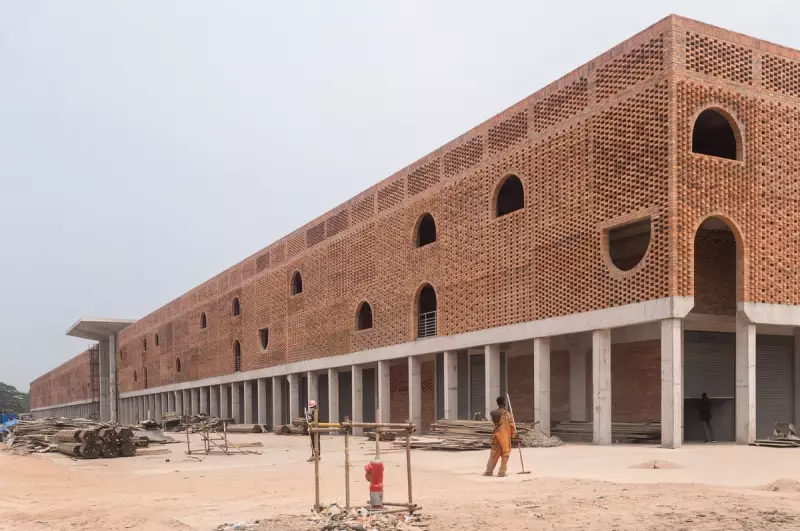
"We really wanted to keep the quality and characteristics of the African market," explains Marine de la Guerrande from the design team. The structure uses concrete and locally produced terracotta bricks, supporting regional craftsmanship. Perforated brick facades provide natural ventilation and shade, creating a cooler environment that Bakarani describes as feeling "like it has air conditioning."
Spread across 92,000 square metres (23 acres), the new Zando is a model of modern infrastructure. It will feature:
- 10,000 stalls and 630 shops
- 272 toilets (up from just nine)
- 40 cold rooms, 22 banking units, and two food courts
- A dedicated fire station, CCTV, and high-speed wifi
- Rainwater harvesting systems and landscaped courtyards to boost biodiversity
Economic and Cultural Heartbeat
Nigerian architect and Holcim awards judge Tosin Oshinowo praised the design for successfully modernising a traditional African market without losing its essence. "Most people in Africa today will still go to the market because it’s cheaper but it’s also interwoven into culture," she says, highlighting the social, economic, and political sustainability of such hubs.
The £56m redevelopment was financed by a loan from the DRC's SofiBanque and constructed by the Chinese company SZTC, overseen by French engineers Egis. It operates under a 25-year public-private partnership between city authorities and Bakarani's Sogema, after which control will revert to the government.
The project has not been without controversy. A May 2024 report by DRC anti-corruption groups Odep and Licoco cited inconsistencies in the contract, criticising a "lack of transparency" and a "culture of corruption." Bakarani firmly denies any allegations of corruption.
Looking ahead, Bakarani hopes the new Zando will serve as a blueprint for similar projects across Africa and help change international perceptions of the DRC. "I hope we can attract international partners to come and see that in DRC, regardless of the situation in the east... there are opportunities that can be explored," he states, acknowledging the nation's ongoing conflicts while championing its potential. "It’s our duty to build it."