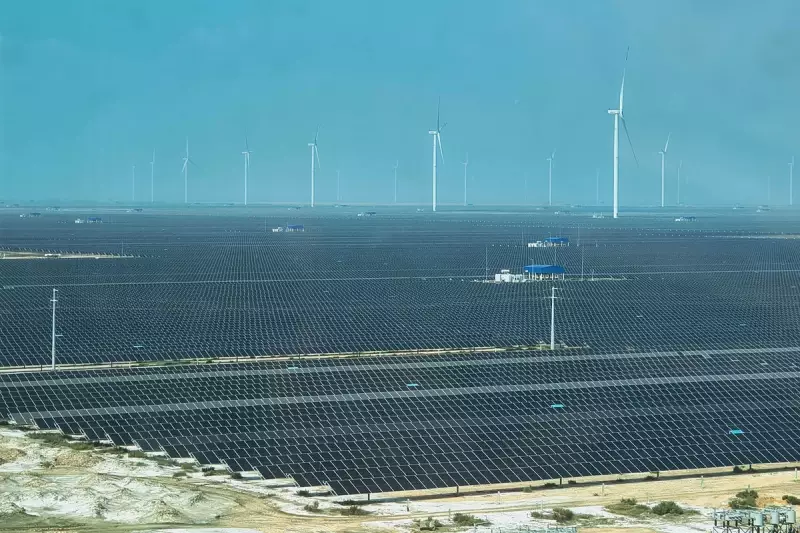
On the ground in western India lies a monumental testament to the ongoing global energy transformation. The Khavda Renewable Energy Park, spanning a staggering 726 square kilometres – approximately seven times the size of Paris – stands as the world's largest single-site renewable energy project. This colossal development in Gujarat's salt flats combines solar and wind power to produce energy continuously, offering tangible proof that the green transition remains very much alive and accelerating.
A Landscape Transformed
The journey to Khavda traverses impossibly flat, white salt plains where even mobile phone signals struggle to penetrate. This once-uninhabitable marshland, deemed useless due to extreme salinity, has undergone a remarkable metamorphosis. Suddenly, the horizon reveals rows of towering electricity structures stretching into the distance, convoys transporting turbine blades longer than aircraft wings, and vast arrays of solar panels emerging from the marshy terrain.
When fully operational, this engineering marvel is projected to generate 30 gigawatts of clean electricity – sufficient to power nations like Chile or the Netherlands. While China maintains global leadership in renewable capacity expansion, no comparable single-site project exists anywhere else on Earth, positioning Khavda as a unique landmark in sustainable energy development.

Engineering Against Extreme Conditions
The construction challenges at Khavda are as immense as the project itself. Each wind turbine reaches approximately 200 metres tall with blades measuring 78 metres, requiring specialised dawn transportation before heat and wind make operations hazardous. The site will eventually host nearly 60 million solar panels, many equipped with tracking systems that follow the sun's path throughout the day.
Extreme environmental conditions demanded innovative engineering solutions. The saline, unstable soil necessitated deep stone-column foundations reinforced with concrete for each turbine, with soil composition varying so significantly that every location required individual geological assessment. Summer temperatures soaring to 50°C required turbines specifically designed to operate without efficiency loss, unlike many models designed for temperate climates.
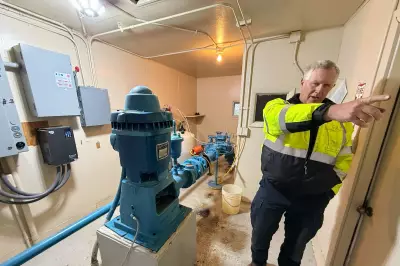
Perhaps most challenging was the water situation – groundwater contains salt concentrations exceeding seawater, with total dissolved solids approaching 30,000 milligrams per litre. The solution involved constructing desalination plants to provide both drinking water for workers and cooling water for operations, while waterless robotic systems clean solar panels to conserve this precious resource.
India's Energy Balancing Act
Khavda emerges as India's power system expands rapidly to compete with China, which commands about 40% of global installed renewable capacity alongside dominant positions in solar panel and battery supply chains. India achieved a significant milestone last year by adding 50 gigawatts of renewable energy capacity – among the largest annual increases worldwide – bringing its total non-fossil fuel capacity to approximately 262 gigawatts.
Yet critical questions persist about India's energy future. Can renewables scale sufficiently to provide reliable power for a rapidly growing economy still heavily dependent on coal? Will transmission infrastructure upgrades keep pace to deliver this renewable energy to homes and industries? And how will India navigate potential supply chain independence from Chinese imports?
The Adani Group's Dual Energy Strategy
Most Khavda development is led by Adani Green Energy, representing substantial investment for the broader Adani Group – India's largest coal importer and operator of controversial mining operations worldwide. This isn't a straightforward pivot from fossil fuels to renewables, but rather a strategic diversification of energy portfolios.

Ashish Khanna, CEO of Adani Green Energy, emphasises that India's soaring energy demands – with electricity consumption growing at approximately 9% annually against 6-7% GDP growth – require a mixed-source approach. "India cannot yet meet its energy needs with renewables alone," Khanna explains. "We need base load from traditional sources and renewables – they must coexist. The question isn't one versus the other, but what proportion comes from where, and at what cost."
Addressing Renewable Energy's Intermittency Challenge
Khavda's design directly confronts renewable energy's fundamental weakness: intermittency. By combining solar and wind generation on a single site, the project leverages complementary patterns – solar peaking during daylight hours while winds strengthen at night – creating smoother overall supply.
The remaining gaps will be addressed through energy storage solutions. Adani recently announced plans for India's largest battery energy storage system at Khavda: a 1,126-megawatt facility with 3,530 megawatt-hours capacity, scheduled for commissioning by March 2026. This system will store excess power for release during low-generation periods, stabilising the grid and reducing fossil-fuel backup dependence.
"Energy storage is the cornerstone of a renewable-powered future," stated Gautam Adani, multibillionaire head of the Adani conglomerate, announcing plans to scale battery storage capacity to 50 gigawatt-hours within five years.
A Global Context of Shifting Energy Priorities
The Khavda project unfolds against a complex global backdrop. While 2025 marked a potential turning point with coal-fired generation declining in both India and China for the first time in over five decades, Western climate action has slowed. The United States under Donald Trump has rolled back clean-energy commitments, while European governments increasingly prioritise energy security over emissions reductions.
Chris Wright, principal analyst at CarbonBridge, notes that while Adani's international reputation remains influenced by coal business concerns, recent financial reporting indicates renewable investments are "holding up the company's weakening coal trading business." Wright observes that Adani has positioned himself "as one of the truly global industrial tycoons of the 21st century, and their rollout of solar power is simply incredible."
Perhaps most significantly, India's energy transition appears driven less by international pressure or vulnerable political pledges like the Paris Agreement, and more by cold economic realities. Standing amidst Khavda's vast turbine forests and solar arrays, one undeniable truth emerges: the clean energy race hasn't stalled – it has simply shifted to more challenging terrain where growth imperatives, rather than climate ambition alone, are setting the pace.