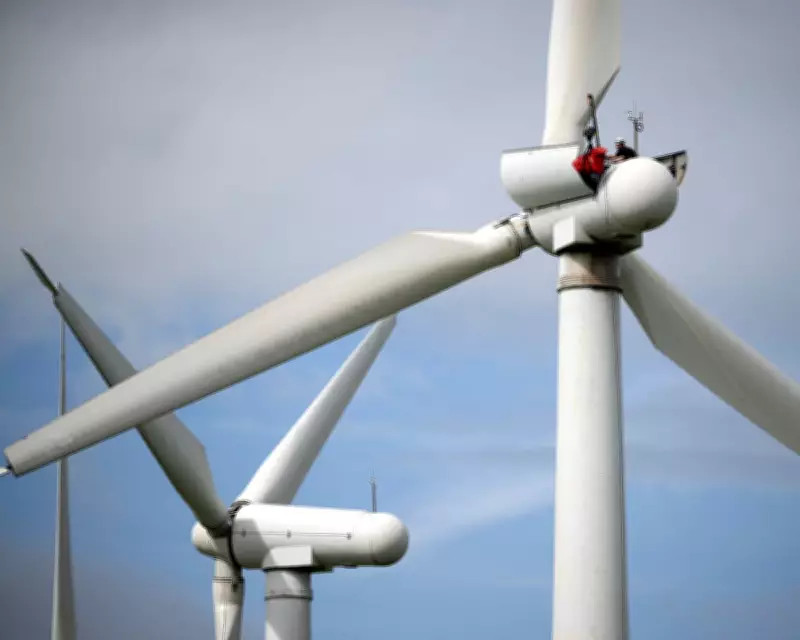
The UK government has taken a significant step towards its clean energy goals by awarding contracts to 28 new onshore windfarms, marking the largest expansion in England in a decade. This move comes after ministers doubled the funding available to developers, part of a broader initiative to create a virtually zero-carbon power grid by 2030. In total, 190 green energy projects have received support, including a record number of solar schemes, as Labour aims to transform the nation's electricity system.
Major Boost for Renewable Energy
Among the contracts awarded is the substantial Imerys project near St Austell in Cornwall, which represents the biggest onshore windfarm in England over the past ten years. This development follows Labour's decision to lift a de facto ban on new onshore windfarms after returning to power in 2024. The government's latest auction, described as make-or-break for its 2030 target, has also provided subsidy contracts to four tidal power projects, further diversifying the renewable energy mix.
Financial Details and Market Impact
Under the new contracts, solar farms will receive £65.23 per megawatt hour (MWh) in 2024 prices, while onshore windfarms will earn £72.24/MWh. These support prices are more than 50% cheaper than the cost of building and operating new gas power plants, according to Energy Secretary Ed Miliband. The pricing mechanism includes top-up payments from household energy bills if wholesale market prices fall below these levels, with refunds to bill payers if prices exceed them.

In comparison, offshore windfarms have been offered higher subsidies, with standard fixed projects earning between £89.49/MWh and £91.20/MWh, and floating windfarms receiving £216.49/MWh. The government estimates that the combined renewable energy contracts will supply enough electricity to power the equivalent of 16 million UK homes, building on recent awards to offshore windfarms expected to power 12 million homes by the end of the decade.
Strategic Goals and Political Context
Ed Miliband emphasized the strategic importance of this initiative, stating that backing solar and onshore wind at scale will drive down energy bills and reduce dependence on fossil fuels controlled by petrostates. He highlighted the move as a way to take back control of the UK's energy supply and usher in an era of energy abundance and independence. The contracts were announced just over three weeks after similar subsidies were awarded to offshore wind projects, underscoring the government's accelerated timeline for green energy deployment.
This development aligns with Labour's broader pledge to invest up to £1 billion in community green energy schemes, as part of efforts to foster local involvement and support in the transition to renewable sources. The government's approach aims not only to meet environmental targets but also to stimulate economic growth through job creation and innovation in the renewable sector.