Orkney's Wildlife Revival: Stoat Eradication Yields Remarkable Results
Comprehensive efforts to eliminate invasive stoats from the Orkney Islands have triggered a spectacular resurgence in native wildlife populations, according to a newly released monitoring report. The ambitious conservation initiative, which began in 2019, has delivered unprecedented benefits for the indigenous Orkney vole and two of Britain's rarest birds of prey.
Record-Breaking Vole Activity Signals Ecological Recovery
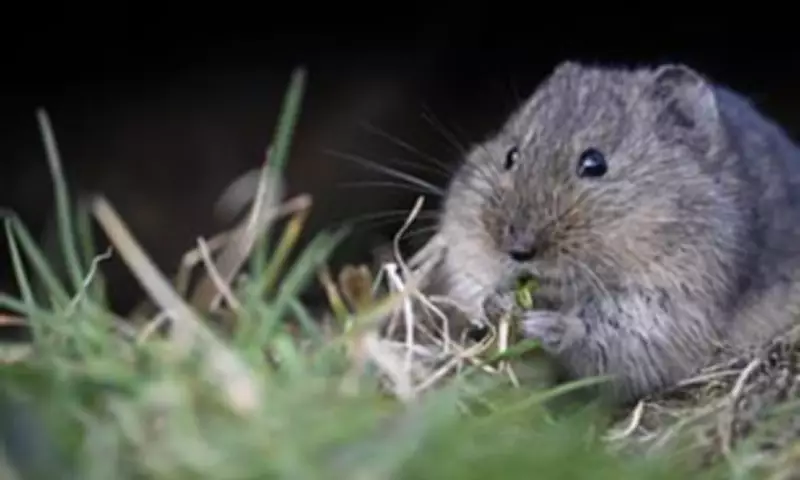
Spring 2025 witnessed vole activity reaching its highest levels since systematic surveys commenced six years ago. Across 22 designated sites on Mainland Orkney and the connected South Isles, tell-tale signs of voles—including distinctive droppings and characteristic grass clippings—were detected in approximately one-third of the 1,082 small survey squares examined. This represents a dramatic improvement from previous years when stoat predation threatened to decimate the unique vole population.
The Orkney vole exists nowhere else on Earth, making its preservation particularly crucial. Autumn monitoring further confirmed the species' robust recovery, with activity levels remaining consistently high throughout the year. Conservation experts attribute this positive trend directly to the systematic removal of stoats, which were first observed on the islands in 2010 and posed an existential threat to native wildlife.

Rare Birds of Prey Experience Breeding Success
The ecological benefits have extended dramatically to avian species that depend on voles as their primary food source. Hen harriers, classified as one of the United Kingdom's most threatened birds of prey, recorded their most successful breeding season since 2012. Volunteers from the Orkney Raptor Group documented breeding attempts at 74 separate locations on islands where stoats were previously established.
Despite challenging weather conditions that caused significant chick losses during a critical developmental period, nearly 60 chicks successfully fledged from monitored nests. This represents a vital contribution to the UK's total hen harrier population, which numbers approximately 650 breeding pairs. The strong correlation between vole abundance and breeding success underscores the interconnectedness of Orkney's ecosystem.
Short-Eared Owls Also Show Promising Increase
Monitoring data reveals similarly encouraging trends for short-eared owls, though these birds present greater challenges for comprehensive observation. During the 2025 breeding season, researchers confirmed the presence of short-eared owls at 55 sites on islands affected by stoats. Definite breeding was recorded at 16 locations, with nests identified at an additional six sites.
These figures demonstrate a steady upward trajectory in short-eared owl breeding sites since the stoat removal programme was initiated. Like hen harriers, these owls rely heavily on Orkney voles to nourish themselves and their offspring, making the vole recovery essential for their continued presence on the islands.
Unprecedented Conservation Effort Transforms Landscape
The Orkney Native Wildlife Project—a collaborative partnership between RSPB Scotland, NatureScot, and Orkney Islands Council—has implemented what is believed to be the largest eradication of stoats ever attempted in an inhabited landscape worldwide. Since 2019, more than 8,500 stoats have been humanely removed using specialized traps.
The project employs innovative techniques including specially trained detection dogs to track remaining stoats, alongside rigorous biosecurity measures designed to prevent the predators from spreading to currently stoat-free islands. This comprehensive approach aims to protect multiple vulnerable species, including curlews—ground-nesting birds with nationally significant populations on Orkney.

Conservation Leaders Hail Transformational Impact
Matt Marsh, monitoring officer for the Orkney Native Wildlife Project, expressed enthusiasm about the documented progress. 'It's fantastic to see the continued positive impact that removing stoats from Orkney is having on our native wildlife,' he stated. 'Hen harriers are one of the most fascinating species we monitor, as well as being one of the rarest birds of prey in the UK, so it's excellent to see that their numbers are increasing.'
Marsh emphasized the particular significance of the vole recovery: 'Orkney voles are found nowhere else in the world and are the species that is probably most threatened by the arrival of stoats, so to see historically high rates of vole activity is very encouraging.'
Anne McCall, director of RSPB Scotland, highlighted the broader implications of the project's success. 'The Orkney Native Wildlife Project is showing that we can halt and reverse species declines if we take action to address the threats wildlife is facing,' she explained. 'Invasive non-native predators are a significant threat to much of the iconic wildlife found on Scotland's islands. To give species like the Orkney vole their best chance, removing invasive non-native species like stoats from islands is essential.'
Broader Context of Island Conservation Success
This achievement represents the latest in a series of successful invasive species eradication projects across British islands. Recently, conservationists announced the complete removal of feral ferrets from Rathlin Island off the Northern Irish coast, protecting thousands of breeding seabirds and other rare avian species. These parallel successes demonstrate that targeted, scientifically informed interventions can produce transformative ecological outcomes even in complex inhabited landscapes.
The Orkney project's documented results provide compelling evidence that dedicated conservation efforts can restore delicate ecological balances, offering hope for other regions grappling with similar challenges posed by invasive species.