Louisiana's Coastal Defence: 30,000 Trees Planted to Combat Storm Surges
In the wetlands of coastal southeast Louisiana, conservation groups are concluding a significant four-year initiative that has seen the planting of 30,000 trees. This ambitious project aims to reinforce the region's natural defences against increasingly severe storms, which have been exacerbated by climate change and historical environmental degradation.
Restoring a Natural Barrier
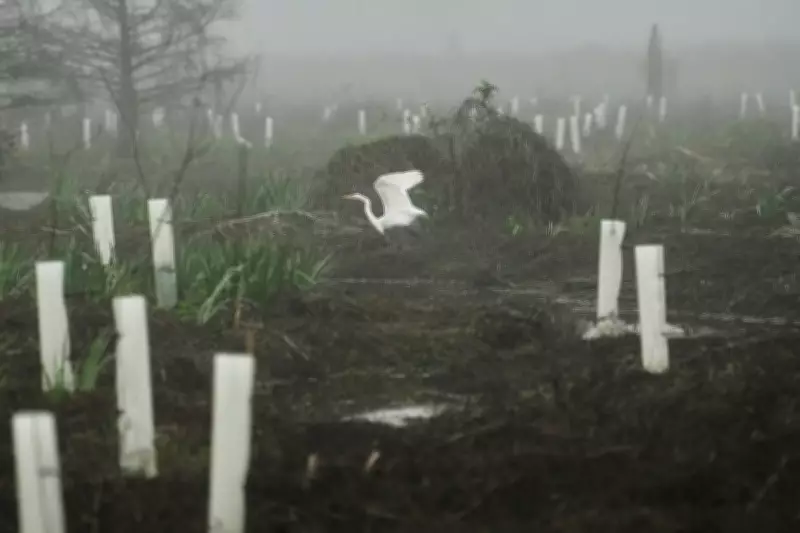
Across the calm waters behind a pumping station near Lake Borgne, hundreds of saplings stand prominently in the mist, each wrapped in protective white plastic cylinders. To access this and similar remote sites, organisers have transported dozens of volunteers weekly via airboats, equipped with a trailer full of supplies, rubber boots in various sizes, and bins of snacks to reward a hard day's labour.
The ultimate vision is to see 30,000 fully matured trees, including bald cypress and water tupelo, thriving at these locations. These native species are intended to restore the wetland's natural barrier, transforming it back into the protective forest it once was. The roots of these trees will help stabilise the eroding land around New Orleans as it continues to subside below sea level, create vital habitats for wildlife, and provide a buffer against storm surges.

The Legacy of Hurricane Katrina
Much of this natural protection was obliterated by Hurricane Katrina in 2005, a catastrophic event that resulted in over 1,000 fatalities and caused more than $100 billion in damages. In the aftermath, numerous efforts have been undertaken to rehabilitate the landscape. As this extensive project, led by local environmental groups, nears completion, organisers are reflecting on the ecological foundations they have helped establish—a more resilient ecosystem starkly different from the degraded marshes they initially encountered.
"We're one part of a larger movement to resist this sort of 'doomerism' mindset, and to show that recovery is possible," explained Christina Lehew, executive director of Common Ground Relief, one of the participating organisations. "When we use our imaginations to envision the past and the vast amount of wetlands landscapes that we have lost, we know that likely we'll never return to that pristine image of the past. But we can gain something back."
Historical Context and Collaborative Efforts
In other areas around New Orleans, cypress trees planted years ago now tower over dense thickets rich with native flora, illustrating what could have been and what restoration aims to reclaim. Prior to industrial logging, oil and gas extraction, and the construction of levees to control the Mississippi River, the Delta naturally fluctuated, with the river depositing sediment along the Gulf Coast. The plants that flourished in this ecosystem formed protective estuaries.
However, the Great Mississippi Flood of 1927 breached levees in numerous locations, causing hundreds of deaths and catastrophic damage across several states. This disaster prompted a new era of levee construction. By the mid-1960s, the U.S. Army Corps of Engineers had also built the Mississippi River–Gulf Outlet Canal (MRGO), a shipping channel that ultimately served as a conduit for Katrina's storm surge into New Orleans.
These engineering decisions amplified Katrina's destruction by allowing saltwater intrusion into freshwater ecosystems, poisoning many trees and leaving the city vulnerable to future hurricanes. In 2009, the MRGO was closed to prevent further saltwater intrusion, and environmental groups began reforestation efforts. Approximately five years ago, several organisations united as a collective to secure federal and state funding for a larger-scale project.
By distributing two substantial grants across diverse volunteer bases, employing various planting techniques in different areas, they are nearing the 30,000-tree target. Andrew Ferris, senior coordinator for the native plants program at the Coalition to Restore Coastal Louisiana, noted that his group has planted about 10,000 of its 15,000-tree quota and expects to finish by next year.

Overcoming Challenges and Inspiring Hope
"In our wildest dreams we never thought we'd be able to plant some of the areas that we are now planting," said Blaise Pezold, who began tree planting around 2009 and now serves as coastal and environmental program director for the Meraux Foundation, a partner organisation. "It was thought to be too low, too salty, Katrina messed it up too much, and we would have to focus on areas that were easier to get into."
The closure of the MRGO and subsequent reduction in salinity levels have enabled these efforts. "The Central Wetlands Reforestation Collective has kind of allowed us to be very adventurous in the sites we choose," Pezold added.
Healing and Rebuilding for the Future
For many organisers involved in Louisiana's restoration and recovery, this project has provided a means of coping with the trauma of natural disasters. Katrina struck the day after Ashe Burke's eighth birthday. "It still affects everybody that went through it, and ... it changed us all. I mean, we had our lives ripped out from underneath us in a day," said Burke, the wetlands restoration specialist for Common Ground Relief. "It still does hurt in some ways, you know? But we gotta keep going on and the sun rises in the morning."
Rollin Black, who works with the Center for Sustainable Engagement and Development, another partner organisation, emphasised the importance of imparting these lessons to the next generation. With family in New Orleans, he views environmental restoration as a proactive response to observed problems. Witnessing children participate is particularly heartening.
"That brings a little bit of joy to my heart that they're actually inspired by what we're doing. So maybe they could come back or maybe they have some reason to live in New Orleans," he remarked.