Federal Judge Overturns Trump Administration Halt on Massachusetts Offshore Wind Project
A federal judge has ruled that a major offshore wind project in Massachusetts can resume construction, delivering a significant victory to the renewable energy industry in its legal battle against the Trump administration.
On Tuesday, U.S. District Judge Brian Murphy in Boston halted the administration's stop work order for Vineyard Wind, citing potential economic losses from delays and the developers' likelihood of success on their legal claims.
Legal Challenges to National Security Suspension
Vineyard Wind represents one of five substantial offshore wind projects along the East Coast that the Trump administration suspended just before Christmas, citing unspecified national security concerns. This ruling marks the fourth such project to be allowed to proceed following court challenges.

Developers and state authorities have filed lawsuits seeking to block the administration's order, arguing that the national security justification lacks sufficient evidence to warrant halting nearly completed renewable energy infrastructure.
Prior to the Vineyard Wind hearing, federal judges had already permitted three other projects to restart construction:
- The Revolution Wind project serving Rhode Island and Connecticut, developed by Danish company Orsted
- The Empire Wind project for New York, developed by Norwegian company Equinor
- Coastal Virginia Offshore Wind for Virginia, developed by Dominion Energy Virginia
Judicial Reasoning and National Security Claims
According to Carl Tobias, a University of Richmond Law School professor monitoring the litigation, the three previous judges essentially concluded that the government failed to demonstrate that national security risks were sufficiently imminent to justify halting construction.
The Trump administration's announcement suspending construction did not provide specific details about its national security concerns. However, in court filings, Matthew Giacona, acting director of the Bureau of Ocean Energy Management, stated he reviewed classified documents in November discussing potential impacts on national security from operating offshore wind projects near early warning monitoring and radar systems.
Giacona determined that ongoing activities for the Vineyard Wind project did not adequately protect national security interests without potential mitigation measures. Given the project's advanced stage of completion, BOEM decided to allow partial operation during the suspension period while consulting with defense officials and project owners.
Project Significance and Economic Impact
Vineyard Wind represents a joint venture between Avangrid and Copenhagen Infrastructure Partners, situated approximately 15 miles south of Martha's Vineyard and Nantucket, Massachusetts. The project is reportedly 95% complete and already partially operational, capable of generating nearly 600 megawatts of power for the New England electric grid.
Before the suspension, developers anticipated completion by the end of March, with 62 turbines generating a total of 800 megawatts—sufficient clean electricity to power approximately 400,000 homes.
Massachusetts Attorney General Andrea Joy Campbell emphasized that completing this project remains essential for lowering energy costs, meeting rising demand, advancing climate goals, and sustaining thousands of well-paying jobs across the state.
Political Context and Industry Challenges
President Donald Trump has consistently targeted offshore wind development since returning to the White House, recently describing wind farms as financial losers that damage landscapes and harm bird populations. White House spokesperson Taylor Rogers defended the construction pause as necessary to protect national security, echoing Trump's characterization of wind energy as "the scam of the century."
Research from the Lawrence Berkeley National Laboratory indicates that states with substantial utility-scale wind and solar installations often benefit from lower electricity prices, supported by federal tax incentives. However, the same study notes that states with aggressive, binding renewable energy mandates have experienced price increases resulting from these policies.

While wind turbines, like all infrastructure, can pose risks to bird populations, conservation organizations such as the National Audubon Society argue that developers can manage these risks effectively, emphasizing that climate change represents a far greater threat to avian species.
Additional Controversies and Opposition
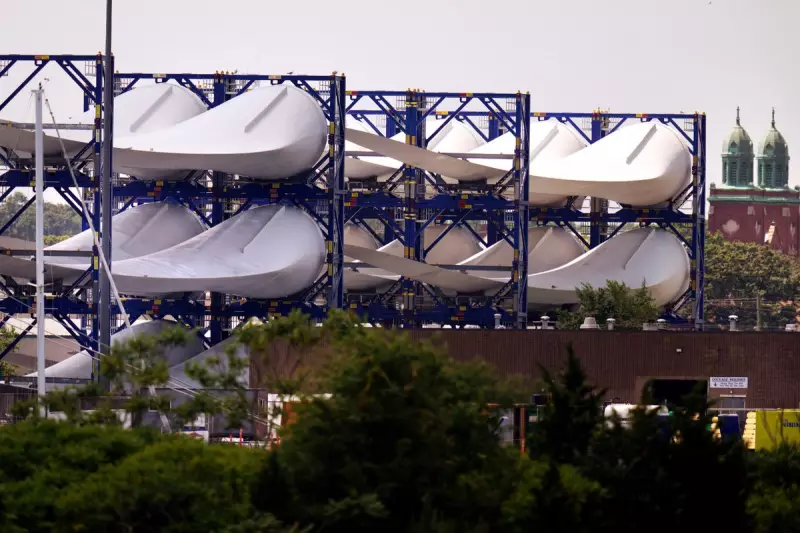
The Vineyard Wind project has faced additional criticism following a blade failure in July 2024, during peak tourist season. Fiberglass fragments from a broken blade washed onto Nantucket beaches, prompting manufacturer GE Vernova to agree to a $10.5 million settlement compensating affected island businesses.
Health and Human Services Secretary Robert F. Kennedy Jr. has specifically criticized the project due to this incident. Kennedy's family previously opposed an earlier failed wind project near their Cape Cod estate, adding historical context to his current objections.
Meanwhile, Orsted continues legal action regarding the administration's suspension of its Sunrise Wind project for New York—the fifth paused project—though no hearing has yet taken place for this particular challenge.
This series of court rulings represents a significant development for the offshore wind industry, potentially establishing important legal precedents regarding the balance between national security claims and renewable energy development as multiple projects approach completion along the Eastern seaboard.