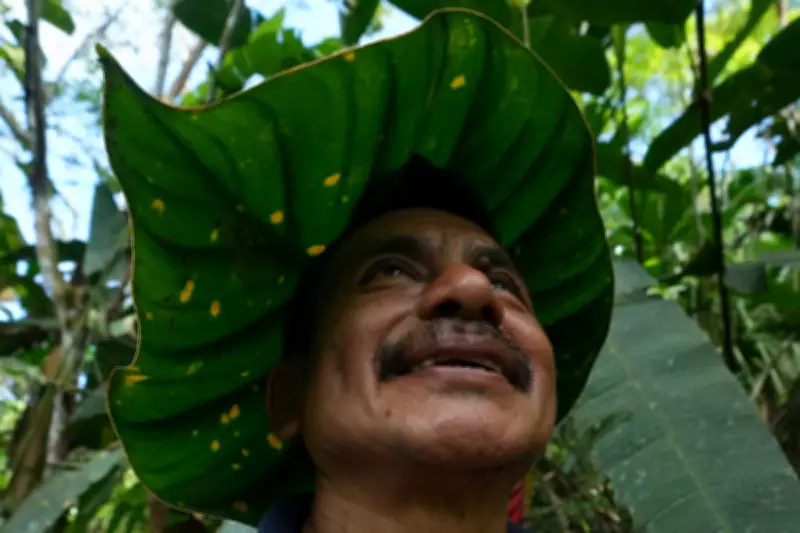
Seed Guardians of the Amazon: A Family's Solitary Fight to Save Endangered Plants
On a recent expedition deep into the Ecuadorian Amazon jungle, Ramón Pucha became acutely aware he was not alone. Fresh puma tracks now paralleled his own footprints along the muddy path. Undeterred by the potential danger, Pucha pressed forward, his focus entirely on the precious cargo he carried—seeds from some of the world's most critically endangered plant species.
A Passionate Mission in the Heart of the Rainforest
Pucha, aged 51, and his family have devoted years to recreating their own fragment of jungle with rescued species on a 32-hectare farm named El Picaflor. This farm is located within the Indigenous Quichua community of Alto Ila, approximately 128 kilometers southeast of Ecuador's capital, Quito. "I have a profound passion for nature, for plants, for animals," Pucha explained, noting that his intense drive to protect the environment leads many in his community to consider him "crazy."
To salvage endangered plant species, Pucha embarks on solitary journeys into the dense jungle, often lasting up to five days at a time. He recounted that on multiple occasions, he has returned empty-handed. This failure is a direct consequence of climate change and severe droughts affecting the region, which have caused many large trees to cease producing seeds annually.

The Family's Collaborative Conservation Effort
Once the seeds safely reach home, Pucha's wife, Marlene Chiluisa, assumes responsibility. She meticulously plants them in suitable soil and compost, nurturing them until they grow into robust plants ready for replanting in the rainforest. The family extends their efforts beyond their farm by selling or gifting a percentage of these plants to neighbors who are equally committed to forest regeneration.
Their 21-year-old son, Jhoel, has embraced his role as the family's successor. An expert botanist, he navigates the forest with ease, identifying plants by their common, traditional, and scientific names. Jhoel also serves as a guide, transporting visitors across the turbulent Ila River in a precarious craft constructed from wooden planks lashed to a buoy.
Facing Isolation and Governmental Challenges
Despite their unwavering dedication, the family's struggle remains a solitary endeavor. "Nobody provides us with any incentive—not the government, not foundations, not anyone," lamented Chiluisa. Ecuador's Ministry of Agriculture and Livestock acknowledges the importance of their work, describing El Picaflor as a "living laboratory" and a vital seed bank in an area devastated by 50 years of relentless logging.
However, Ecuador's environmental reputation is now at risk. Although it was the first country to enshrine the "rights of nature" in its constitution, environmentalists and Indigenous groups warn that President Daniel Noboa's decision to merge the Ministry of Environment with the Ministry of Energy and Mines threatens the very landscape the Pucha family is fighting to preserve.
'That Is My Legacy'
As Pucha strolls across the property, once barren pastureland, he pauses to observe the plants, detailing the unique purpose of each one. His eyes brighten as he gestures toward a small, growing tree—a type of fine wood now rare in the area, which will reach maturity in 100 years. Though he knows he will never see it fully grown, his commitment to his mission remains steadfast.
"That is my legacy for my children and for humanity," he declares, emphasizing that these species are essential to the Amazon's survival. They serve as medicine for humans and a food source for animals, which naturally aid in replanting the forest, ensuring its continuity for future generations.