Africa's Solar Market Surges as Global Growth Slows
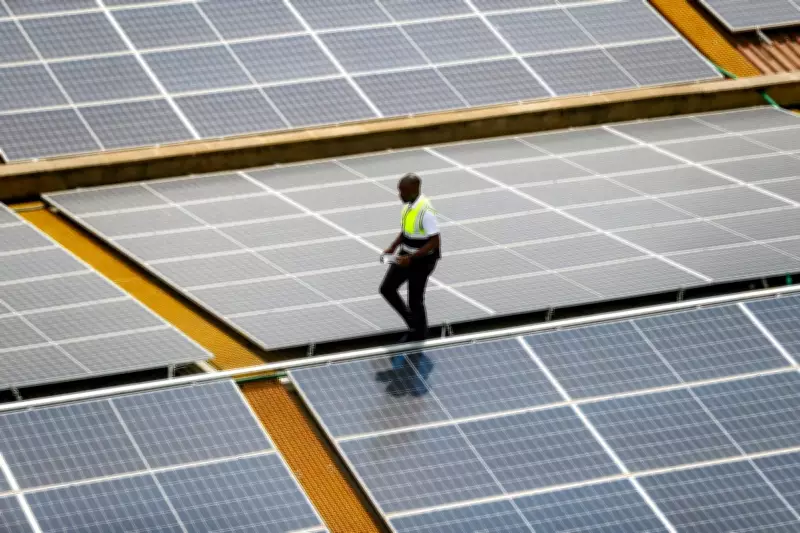
A new industry report reveals that Africa has become the world's fastest-growing solar market, defying a global slowdown in renewable energy expansion. The continent's solar installed capacity expanded by 17% in 2025, significantly outpacing many traditional markets. This growth comes as global solar power capacity increased by 23% to 618 gigawatts, slowing from a 44% surge in 2024.
Chinese Investment Fuels African Green Transition
The Africa Solar Industry Association report highlights that imports of Chinese-made solar panels, which surged by 60%, have been instrumental in driving this expansion. Cynthia Angweya-Muhati, acting CEO of the Kenya Renewable Energy Association, emphasized that "Chinese companies are the main drivers in Africa's green transition", noting their aggressive investment in building robust supply chains across the continent's energy ecosystem.
Despite this progress, there remains a significant gap between equipment shipped and operational capacity. Since 2017, nearly 64 gigawatts peak of solar equipment has been delivered to Africa, yet only 23.4 GWp is currently functioning. A gigawatt peak represents one billion watts of maximum power output under ideal conditions.

Policy Shifts and Diversifying Markets
John Van Zuylen, CEO of the Africa Solar Industry Association, attributes Africa's solar growth to changing policies and enabling conditions across multiple nations. "Solar energy has moved beyond a handful of early adopters to become a broader continental priority," he stated during the Inter Solar Africa summit in Nairobi. "What we are seeing is not temporary. It is policies aligning with market dynamics."
The solar market landscape in Africa is diversifying rapidly. While South Africa historically dominated solar imports, accounting for roughly half of all panels shipped to the continent, its share has now slipped below one-third as demand surges elsewhere. In 2025, twenty African nations set new annual records for solar imports, with twenty-five countries importing at least 100 megawatts of capacity.
- Nigeria has overtaken Egypt as Africa's second-largest solar importer
- Algeria's solar imports soared more than thirty-fold year-on-year
- Zambia and Botswana also experienced significant import surges
- At least twenty-three African countries now generate over 5% of their electricity from solar energy
Falling Costs and Storage Breakthroughs
The report notes that declining prices for both solar panels and batteries, primarily sourced from China, have made solar energy increasingly accessible. This enables households and businesses to rely on solar-plus-battery systems for round-the-clock electricity. Battery storage costs in Africa dropped to $112 per kilowatt-hour in 2025, down from an average of $144 in 2023, thanks to improved technology that makes storage systems more flexible and durable.
Van Zuylen emphasized that "this ever-decreasing price of storage has game-changing implications for Africa, which has a dire need for stable and baseload power." In Nigeria, the gradual removal of diesel subsidies over the past two years has further accelerated solar adoption by making diesel increasingly expensive and nudging consumers toward renewable alternatives.
Local Manufacturing and Job Creation
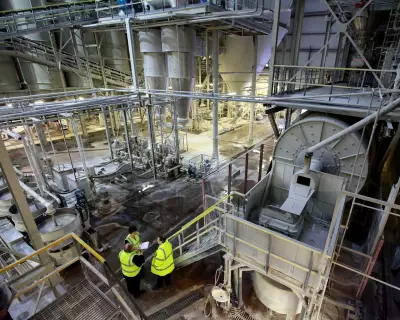
As Africa develops its own manufacturing capacity, the industry looks to China for technology transfer to reduce dependence on imported equipment. Nigeria announced plans in September for a 1 GW solar panel factory, which would be West Africa's largest. Similar facilities are under construction in Egypt, South Africa, and Ethiopia.
The solar boom is creating employment opportunities beyond manufacturing. "The solar jobs boom is occurring in services including installation, maintenance, distribution and financing," Van Zuylen explained, noting that thousands of small and medium enterprises are emerging to meet rising demand.

Policy Challenges and Investor Uncertainty
Despite the growth, significant challenges remain. Unlike regions such as the Middle East with clear long-term energy roadmaps, many African markets lack consistent policy signals. Solar firms operating across the continent cite unpredictable tax regimes, shifting import duties, and unclear energy plans as factors undermining investor confidence.
Amos Wemanya, senior renewable energy analyst at Powershift Africa, summarized the issue: "The problem is not the opportunity. It's visibility. If a government announces a plan, companies need to trust that it will remain in place." This policy uncertainty continues to pose a substantial barrier to sustained solar expansion across Africa.