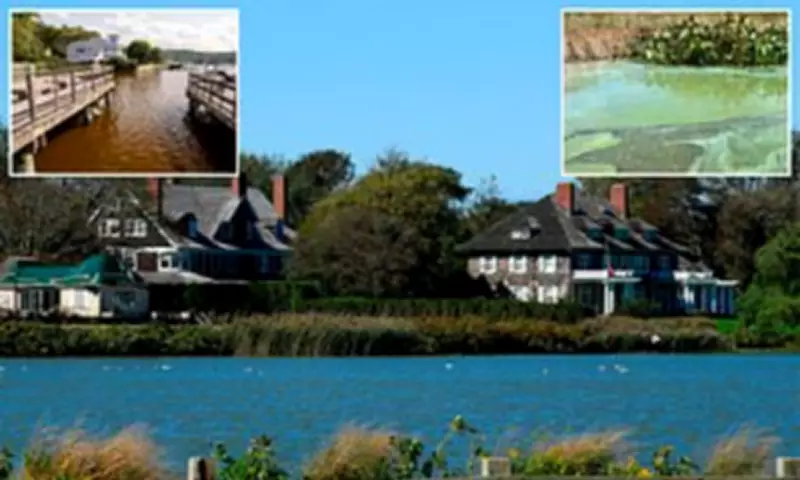
A deadly bacterium that destroys flesh has been identified in waters along Long Island, New York's coastline, including notable 'hotspots' in the Hamptons. Recent research conducted by Stony Brook University on Long Island has uncovered concentrations of Vibrio vulnificus in Sagaponack Pond in Southampton, Mecox Bay in Water Mill and Bridgehampton, and Georgica Pond on the western boundary of East Hampton Village and Wainscott.
Expert Warnings and Risks
Dr. Christopher Gobler, an ecologist at the School of Marine and Atmospheric Sciences, stated during a press conference: 'Bacteria known as Vibrio vulnificus, also referred to by the CDC as a flesh-eating bacteria, is present and poses a risk in our waters. It is a very serious infection that enters through open wounds. Individuals infected with this bacterium face a 20 percent chance of death within just 48 hours following infection.'
In addition to the bacteria, toxic algae have been detected in dozens of bays and ponds across Long Island, contaminating shellfish and endangering those who consume them. Dr. Gobler cautioned residents and tourists: 'If someone is immunocompromised, or elderly and has open wounds during the summer, they may want to avoid entering the water.'

Prevalence and Transmission
According to the CDC, Vibrio causes approximately 80,000 illnesses annually in the United States. Vibrio vulnificus erodes skin tissues, causing them to shrivel, turn black, and die—a condition known as necrotizing fasciitis. This requires extensive surgery to remove dead skin or amputation to save the patient's life.
The bacterium typically inhabits waters off the Gulf Coast but has gradually migrated northward. It thrives in coastal and brackish waters (a mix of fresh and saltwater) and can infect swimmers through open wounds or individuals who consume raw or undercooked seafood, such as oysters. Health experts warn that the bug can cause severe stomach illness, dangerous wound infections, and, in extreme cases, life-threatening blood poisoning.
Environmental Factors
Experts attribute the bacterium's steady spread to warming waters. Vibrio thrives in temperatures between 68°F and 95°F (20°C to 35°C). As global temperatures rise and ocean waters warm, Vibrio is expanding northward and lingering longer on coasts. Intensifying storms and flooding also wash the bacteria into freshwater, increasing risks for swimmers and seafood consumers.
On average, Vibrio kills 20 percent of its victims, but this figure jumps to at least 30 percent among those with compromised immune systems. In severe cases involving sepsis or necrotizing fasciitis, the mortality risk climbs to 70 percent. Approximately 80 percent of infections result from contact with seawater, while 20 percent stem from consuming raw seafood.
Historical Data and Complications
A review of CDC data from 1988 to 2018 revealed an eightfold increase in Vibrio wound infections on the East Coast, rising from about 10 to over 80 cases per year. Even when not fatal, Vibrio can cause lifelong complications. Once it enters a wound, the bacterium rapidly multiplies and releases toxins that destroy tissue and blood vessels. The infection can penetrate deeper skin layers, muscle, and the bloodstream within hours, leading to blisters, open sores, and discoloration from red to purple to black. Blood pressure drops, and fever sets in. If the bacteria enter the bloodstream, they cause sepsis—a life-threatening condition that ravages organs until they fail. Urgent medical intervention is essential, including antibiotics, emergency surgery to remove dead tissue, and possibly amputation.