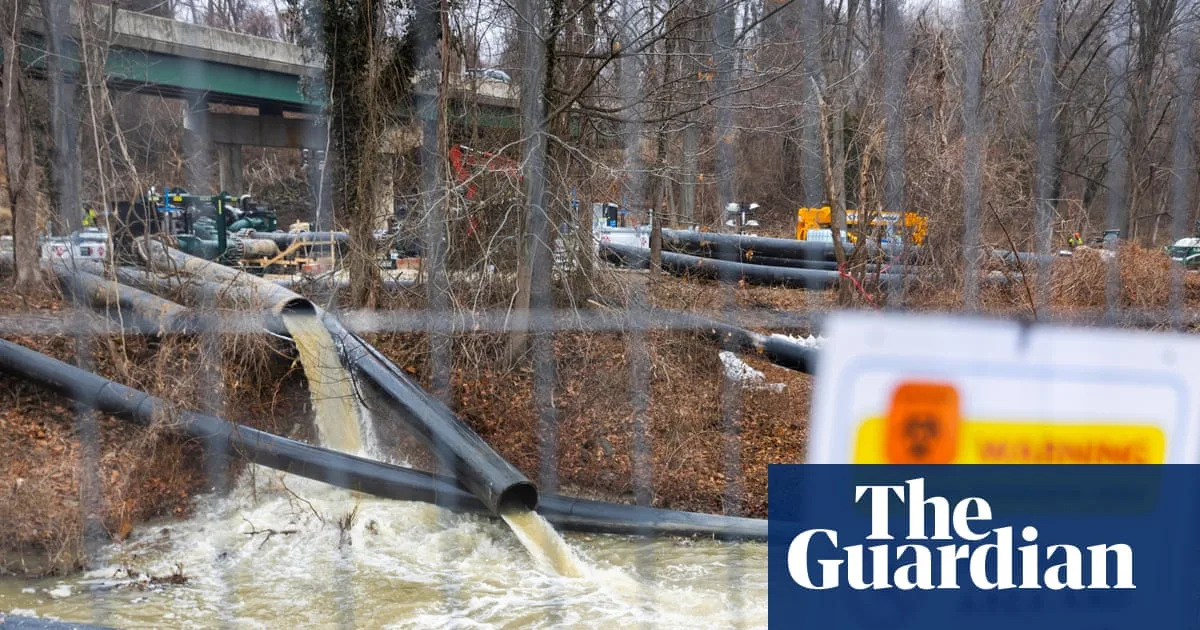
Donald Trump has approved a federal emergency declaration following a major sewage spill into the Potomac River, after millions of gallons of raw sewage leaked from a ruptured pipe. The declaration authorises the Federal Emergency Management Agency (Fema) to coordinate disaster relief efforts in Washington DC and surrounding areas of Maryland and Virginia.
More than 243 million gallons of untreated wastewater have poured into the river since the 72-inch Potomac Interceptor pipe broke last month, in what is described as one of the largest sewage spills in US history. A temporary bypass has been installed, but the leak has caused hazardous levels of E. coli bacteria, prompting environmental concerns and recreational advisories.
Local officials have been feuding over responsibility. Washington Mayor Muriel Bowser declared a local public emergency and requested a major disaster declaration. Maryland officials noted that the pipe, though in Maryland, is owned by DC Water and regulated by the US Environmental Protection Agency, and the break occurred within a national park. Trump has blamed state and local leaders, while Maryland's governor accused the Trump administration of failing to act for weeks.
The emergency declaration allows Fema to mobilise support for cleanup and recovery, aiming to protect public health and safety. The spill has raised questions about infrastructure maintenance ahead of the US's 250th anniversary celebrations in the capital this summer.