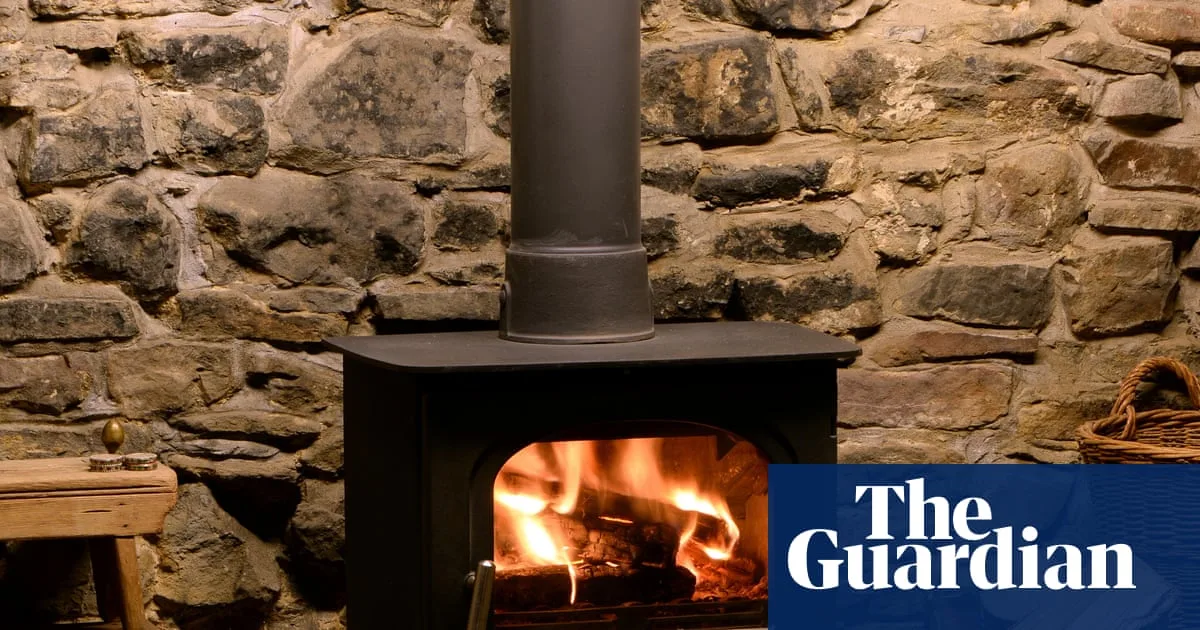
New wood burning stoves sold in the United Kingdom will soon be required to display cigarette-style health warnings under fresh government proposals aimed at tackling air pollution. The plans mandate that both stoves and firewood must carry prominent labels outlining the specific health harms associated with the pollution they generate, including heightened risks of asthma and lung cancer.
Stricter Emissions Limits Proposed
Alongside the warning labels, ministers have announced plans to dramatically cut the legal limit for smoke emitted from new wood burners by 80 per cent. The proposed new standard would reduce permissible emissions from the current 6 grams per hour to just 1 gram per hour. However, this long-awaited measure would apply exclusively to newly manufactured appliances, with government consultation findings indicating that approximately 70 per cent of wood burners already meet this stricter threshold.
Ministerial Justification for Action
Air Quality Minister Emma Hardy emphasised the government's determination to address what she described as a significant public health challenge. "Dirty air robs people of their health and costs our NHS millions each year to treat lung conditions and asthma," she stated. "We are determined to clean up our air. By limiting emission levels and introducing new labels as outlined in our consultation, families will be able to make better, healthier choices when heating their homes."
Limited Impact on Overall Pollution
Despite these measures, the tighter restrictions are projected to reduce annual toxic emissions from wood burning across the UK by just 10 per cent over the coming decade. Environmental campaigners have criticised this modest reduction, arguing that the new proposals "don't go far enough" to address what remains one of the country's leading sources of air pollution.
Pollution from domestic wood burning currently produces approximately the same quantity of fine particulate matter as all road traffic combined. According to the World Health Organisation, these fine particles represent the most dangerous air pollutant for human health, with log-burning stoves and fires in UK homes linked to an estimated 2,500 premature deaths annually.
Proposed Warning Label Content
The suggested health warning that would appear on new appliances reads: "Please be aware that this appliance emits air pollution into and around your home which can harm your health. Burning in the home leads to air pollution which has a negative impact on the health of you and your family."
Scientific Evidence of Health Harms
Recent research has revealed the extensive health consequences associated with wood burning pollution. Beyond premature mortality, these pollutants are responsible for approximately 3,700 cases of diabetes and 1,500 cases of asthma annually in the UK.
Wood burning releases a complex chemical mixture of fine particulate matter (PM2.5) and other gases that can penetrate deep into the lungs and enter the bloodstream. This exposure is directly linked to increased risks of heart disease, lung conditions, and mortality. Breathing these invisible particulates has even been associated with atherosclerosis, where plaque builds up in arteries, narrowing them and restricting blood flow while elevating risks of heart attacks and strokes.
International Context and Urban Impact
A new study from Northwestern University in the United States has highlighted the disproportionate impact of residential wood burning in urban and suburban areas. Despite only 2 per cent of American households relying on wood for heating, this activity accounts for more than a fifth of wintertime particulate exposure. The researchers estimated that pollution specifically from wood burning is associated with around 8,600 premature deaths annually in the US.
Study lead author Kyan Shlipak, a mechanical engineering expert, explained: "Our results suggest that the impact of residential wood burning are primarily an urban and suburban phenomenon. This finding underscores the public health relevance of this pollution. While a lot of emissions from residential wood burning comes from the suburbs, pollutants emitted into the air don't typically stay put. When this pollution is transported over densely populated cities, more people are exposed."
Enforcement Challenges and Implementation Timeline
Current regulations already require households in Smoke Control Areas, which cover most major UK cities, to use only approved fuels and low-emission stoves. Breaches can result in £1,000 fines, yet enforcement remains limited. Last year, only 24 fines were issued despite more than 15,190 complaints, with no prosecutions for illegal wood burning recorded during this period.
The proposed new emissions limit is not expected to come into force for at least three years after the legislation is passed. This delay has drawn criticism from medical professionals concerned about ongoing health risks.
Medical Community Concerns
Dr Alice Wilson, a paediatric registrar and Royal College of Paediatrics and Child Health clinical fellow, warned the Daily Mail that postponing action poses serious health dangers. "Air pollution exposure at every stage of the human lifecycle, from gestation right through to adulthood, adversely impacts health," she stated. "RCPCH feels strongly that more must be done to phase out the use of wood-burners and raise public awareness of the health harms they cause. Governments and local authorities must act to protect the most vulnerable, who have the least power and resources to control their environments."
Currently, wood burners are used in approximately 12 per cent of UK households, though more than 90 per cent of these homes rely primarily on other heating sources. The government's consultation last year also proposed tighter controls in certain areas that would limit fuel types to "smokeless" varieties that don't release smoke, potentially amounting to a ban on older appliances and possibly wood-burning stoves altogether in specific locations.