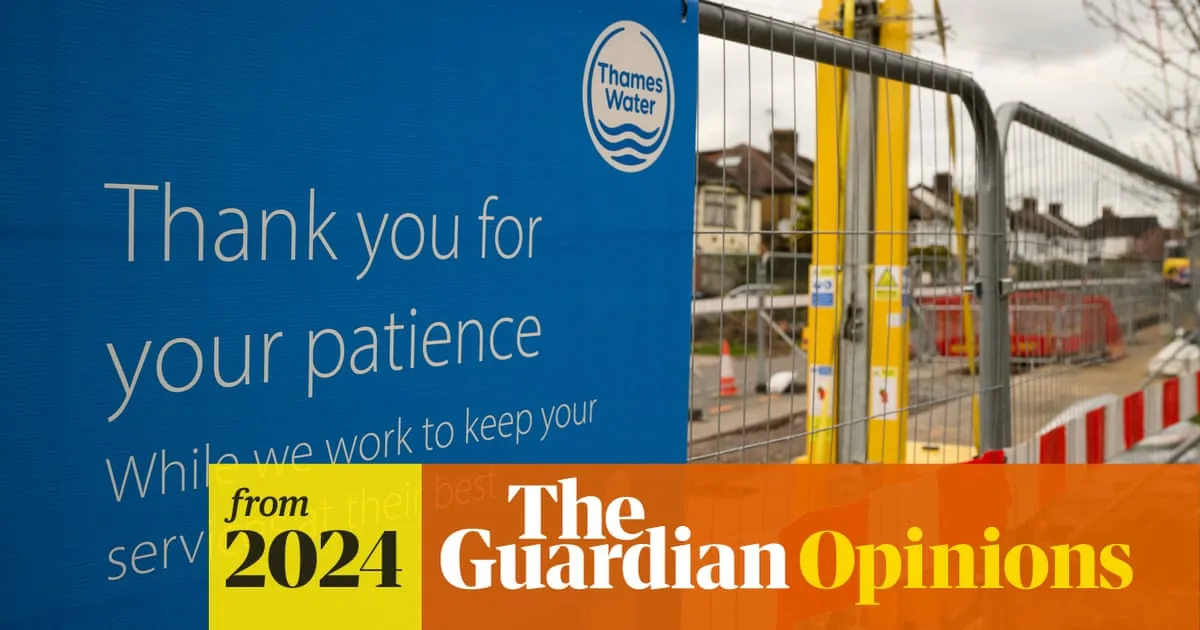
England's experiment with privatised water services has failed, according to a Guardian editorial, which argues that the system is an international oddity. Ninety per cent of countries run state-owned water operations, and England is the only European nation to have sold its water resources to private owners, now mostly sovereign wealth, infrastructure and pension funds. The decision to privatise a natural monopoly defied Thatcherite logic, as there was never any possibility of competition to raise standards.
The result has been a series of sinecures for large firms and their executives, protected from competition by legal rights over scarce water resources. The editorial highlights bonuses paid to bosses of Severn Trent and South West Water's parent company despite sewage dumping, and notes that private water monopolies, which began debt-free, borrowed £64bn over 30 years and paid over £78bn in dividends. Investment in infrastructure has been neglected, with firms abstracting water from rivers and aquifers instead of fixing leaky pipes or building new reservoirs.
With warnings that global heating could dry parts of Britain, seven out of ten people support public ownership. The industry regulator Ofwat will soon decide on investment plans and how to spread an estimated £100bn cost between shareholders and customers. Labour is urged to go beyond toughening regulation, especially as Thames Water, the UK's largest water company, faces collapse with £18bn debt and seeks a £750m cash injection. Contingency plans for nationalisation exist.

The editorial points to the Netherlands as a model, where public sector water operators are funded by a state-owned bank, resulting in less than a quarter of England's leakage. Experts say public ownership could cut bills. With Welsh Water operating as a not-for-profit and Scottish water in public hands, the editorial argues England should emulate European success rather than persist with a failed privatisation system based on ideology.