Hawaii Lawmakers Weigh Tough Measures to Tackle Feral Chicken Crisis
Residents in Hawaii, fed up with the incessant crowing and aggressive pecking of wild chickens, could soon be permitted to kill the feral birds under new legislation being considered by state lawmakers. The proposals aim to address growing complaints about noise, mess, and expanding flocks that have plagued communities for years.
Early Morning Crowing and Daily Disruptions
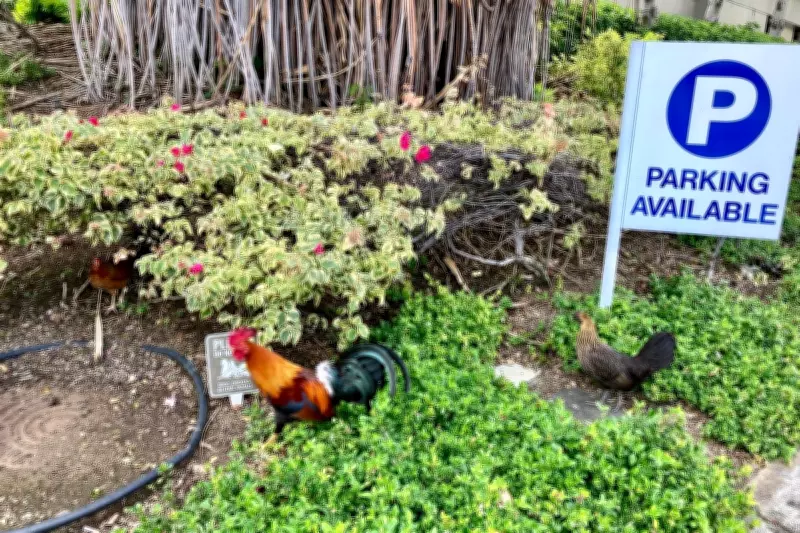
For Mason Aiona, a retiree living in Honolulu, the problem begins long before sunrise. Roosters start crowing as early as 3 a.m., but the constant squawking, feather-flapping, and chickens digging holes in his yard are what truly disrupt his day. He frequently scolds people who feed the birds at a park near his home, where roosters, hens, and chicks waddle on the narrow road.
"It's a big problem," Aiona said. "And they're multiplying." His experience is echoed across the state, where feral chickens have become a pervasive issue. Honolulu has spent thousands of dollars on trapping programs with limited success, prompting lawmakers to explore more drastic solutions.

Legislative Proposals and Cultural Conflicts
State legislators are now evaluating bills that would designate feral chickens as a "controllable pest" on public land in Honolulu, impose fines for feeding or releasing them in parks, and allow residents to kill the birds. However, this approach faces opposition from cultural advocates like Kealoha Pisciotta, who notes that some chickens descend from those brought by early Polynesian voyagers and hold cultural significance.
"The moa is very significant," Pisciotta said, using the Hawaiian word for chicken. "They were on our voyaging, came with us." The Hawaiian Humane Society also opposes lethal methods unless all other strategies are exhausted, highlighting the complex balance between nuisance control and cultural preservation.
Aggressive Behavior and Public Safety Concerns
Representative Scot Matayoshi, a Democrat from Kaneohe, drafted chicken control legislation after hearing from an elementary school teacher about birds harassing pupils. "The children were afraid of them, and they would kind of more aggressively go after the children for food," Matayoshi explained. Representative Jackson Sayama, who introduced the chicken-killing bill, argued that current removal methods are insufficient, leaving residents with limited options.
"If you want to go old-school, just break the chicken's neck, that's perfectly fine," Sayama said, emphasizing that lethal measures would be at the resident's discretion. Past attempts to pass chicken eradication bills have failed, and ideas like chicken birth control have been discussed but not implemented.
Growing Flocks and Ineffective Solutions
Aiona, who has lived in his Honolulu home for over 30 years, recalls that wild chickens only appeared in his neighborhood about a decade ago, with numbers surging during the COVID-19 pandemic. He once caught a chicken by hand and relocated it, but found the effort futile. The city's trapping program, which costs private property owners $375 for a weeklong service plus additional fees, caught over 1,300 chickens last year, yet complaints increased by 51% in 2025, according to spokesperson Harold Nedd.
Wild chickens are unlikely to provide a cheap dinner due to tough meat and disease risks. Aiona's neighbor uses a leaf blower to shoo them away, while Aiona himself relies on an electric blower with limited range. Tired of confronting park-goers who feed the birds, Aiona offers the chickens for free to anyone willing to take them, though he doesn't recommend eating them.
As Hawaii grapples with this fowl problem, lawmakers are under pressure to find effective solutions that balance public complaints with cultural and ethical considerations, making the debate over feral chicken control a heated issue across the islands.