House Republicans Vote to Overturn Two-Decade Mining Moratorium Near Boundary Waters
Congressional Republicans have taken a significant step toward lifting a 20-year prohibition on mining activities adjacent to Minnesota's Boundary Waters Canoe Area Wilderness. This move, which passed the House of Representatives on Wednesday, aims to reverse a Biden-era environmental protection measure that has barred mineral extraction in the region since 2023.
Resolution Advances Amid Environmental Concerns
The resolution, introduced by Republican Representative Pete Stauber of Duluth, now proceeds to the Senate for consideration. Should it gain approval there, it would be presented to President Donald Trump for his signature. This legislative push coincides with renewed interest from Twin Metals Minnesota LLC, a subsidiary of Chilean mining giant Antofagasta Minerals, in developing a copper, nickel, and cobalt mine within the Superior National Forest.
Environmental advocates have voiced strong opposition, warning that mining operations could severely damage the watershed and ecosystem of this cherished wilderness area. Jackie Feinberg, the Sierra Club's national lands conservation campaign manager, stated, "This push by the Trump administration and their Congressional allies to allow toxic mining in the Boundary Waters watershed puts this fragile ecosystem at risk, and is a clear giveaway to corporate polluters."

The Boundary Waters: A Pristine Wilderness Under Threat
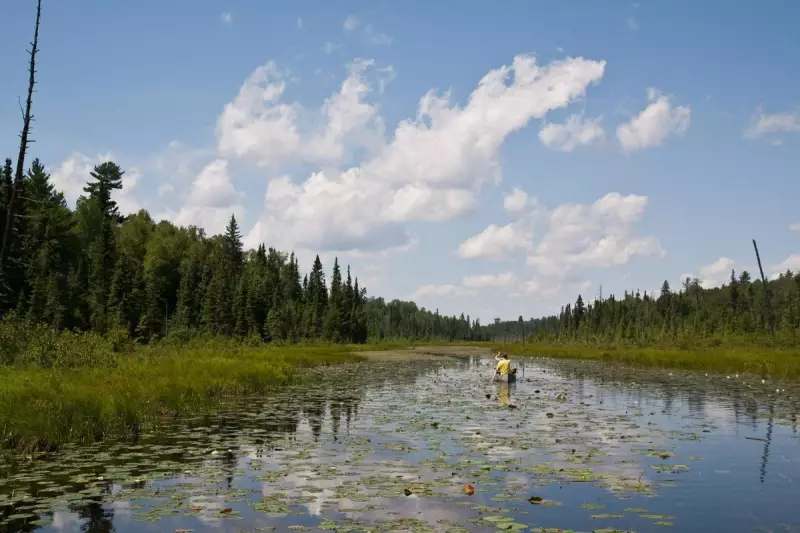
The Boundary Waters Canoe Area Wilderness encompasses approximately 150 miles of remote woods, lakes, and swamps along the Canadian border in northeastern Minnesota. This vast region remains largely untouched by human development, with strict regulations prohibiting logging, limiting motorised boats, and restricting aircraft altitude to preserve its natural serenity.
Between 2020 and 2024, the U.S. Forest Service issued around 776,000 visitor permits, highlighting its popularity among campers, hikers, kayakers, and canoeists. The area sits atop the Duluth Complex, a geological formation rich in copper, nickel, lead, zinc, and precious metals, making it a target for mining interests.
Political Battle Over National Security vs. Environmental Protection
Republicans argue that lifting the ban is essential for national security, enabling the United States to compete with China and Russia in securing critical minerals. Representative Stauber emphasised this point on the House floor, declaring the moratorium "a dangerous, purely political decision" that jeopardises jobs and mineral security.
Democrats, however, counter that the wilderness area is too precious to risk contamination. Minnesota Democrat Betty McCollum asserted, "Some places are just too precious to mine," while critics noted that extracted minerals would likely be sold on international markets rather than retained for domestic use.
Legal and Procedural Controversies
The resolution was brought under the Congressional Review Act, which allows Congress to overturn certain federal agency actions. Democrats contend the move is procedurally flawed, arguing such resolutions must be filed within 60 days of a rule's implementation—not three years later—and cannot be used to erase public land protections. They warn that approval could set a dangerous precedent.
Republicans rebutted that the Biden administration failed to properly notify Congress of the 2023 ban, justifying their delayed action. The House approved the resolution via a voice vote, though Senate consideration remains uncertain.
This development follows the Trump administration's reinstatement of a 2017 legal opinion permitting Twin Metals to renew its forest leases, with Minnesota regulators approving exploratory mining plans in December. The outcome will significantly impact both environmental conservation and domestic mineral policy.