Dr Anthony Fauci Takes Stage as Blind Prophet in Oedipus Reading
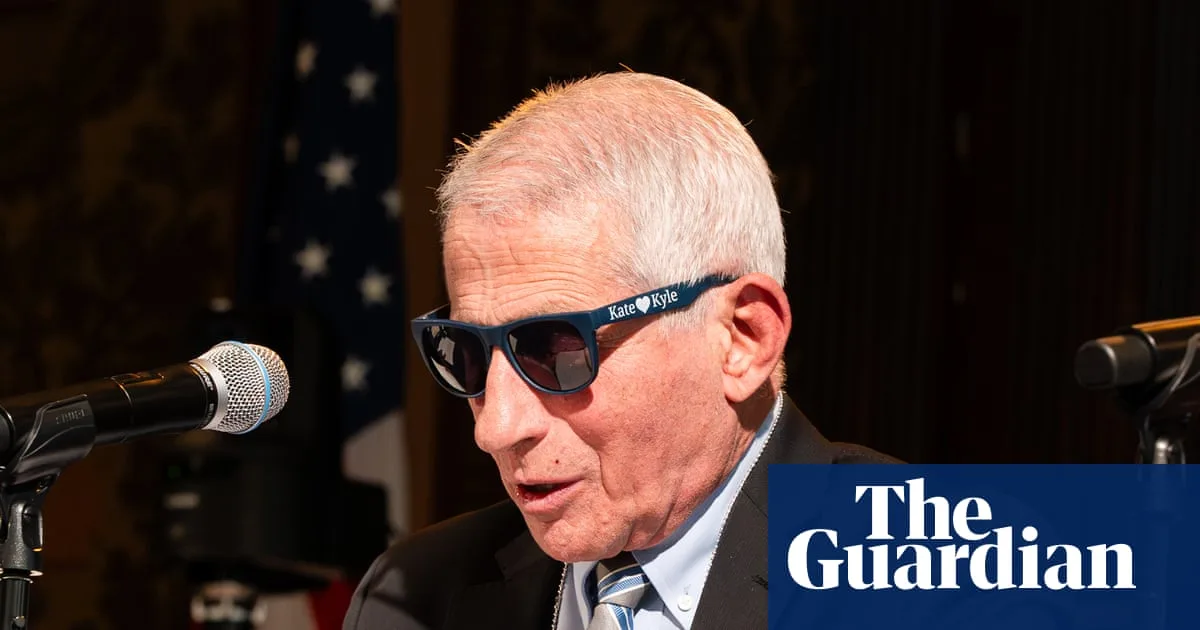
In a striking blend of classical theatre and contemporary activism, Dr Anthony Fauci made his theatrical debut playing the blind prophet Tiresias in a dramatic reading of Sophocles' Oedipus the King at Georgetown University in Washington DC. The event, held on Tuesday evening, saw the 85-year-old former chief medical adviser to President Joe Biden donning sunglasses to portray the seer who warns Oedipus of his tragic fate, drawing cheers from an audience of 700.
Star-Studded Cast for Ancient Tragedy
The reading featured Hollywood actor Jesse Eisenberg in the title role of Oedipus, alongside Senate Democratic minority leader Chuck Schumer, in a production organized by Theater of War Productions. This innovative company specializes in using ancient Greek dramas to provoke discussions about modern societal issues, having previously staged works in venues ranging from prisons to the Pentagon. For this performance, the focus was deliberately shifted to address the climate crisis during DC Climate Week.
The production argued that this 2,500-year-old play about a king who unknowingly kills his father and marries his mother contains powerful lessons for contemporary Washington. The narrative explores themes of prophecy denial, arrogant leadership, intergenerational curses, and a city devastated by pestilence and ecological collapse—elements that resonate strongly with current environmental challenges.
Fauci Draws Parallels Between Ancient Drama and Modern Denial
In an interview before the performance, Fauci, who studied Greek and Latin as a classics major at the College of the Holy Cross, explained the relevance of the tragedy. "The point of something that was so potentially horrifying like realizing that you killed your father, slept with your mother and fathered your own brothers and sisters is that he keeps going on and on, learning more and more about it, and he can't believe it when it's so obvious right in front of him," he told the Guardian.
Fauci continued, "When you see something that's potentially as destructive as climate change, it's right in front of you, you're seeing it, and then there's this constant denial about it. An unusual way to put that in the context of a Greek tragedy but it works." When asked to compare the play's themes to current political figures like health secretary Robert F Kennedy Jr, Fauci chuckled and declined, noting his preference to remain "under the radar" while continuing his medical teaching.
Eisenberg on Denial and Blind Leadership
Jesse Eisenberg, known for films such as The Social Network and Zombieland, described the play as a timeless philosophical argument personified. "You have a guy here who is in denial of his own fate and is slowly coming to terms with it and so, for me as an actor, it creates wonderful dramatic stakes but intellectually it also is a fascinating discussion around denial and fate and, more specifically here, blind leadership," he said.
Eisenberg added about Oedipus, "He won't listen to reason, he ignores evidence and demonises anybody who tries to contradict what he assumes and what he thinks. What's special about doing it with Dr Fauci, of course, is that it comes with all sorts of other resonance that can be quite allegorically potent."
Theater of War's Mission and Climate Focus
Founded in 2009 by Bryan Doerries and Phyllis Kaufman, Theater of War Productions has used ancient drama to address modern traumas including PTSD among military veterans, the plight of Ukrainian refugees, and racialized police violence. The Oedipus Project was originally developed during COVID-19 lockdowns to discuss public health and isolated trauma, but was reframed for this climate-focused event.
Artistic director Bryan Doerries explained, "At the centre of this play is a fundamental question about whether it's possible for us to wake up before it's too late and make a change, not just for ourselves, but for generations to come. The play portrays the human capacity for denial as seemingly limitless and our worst quality as a species."
Doerries added that the purpose is not to foster fatalism but to awaken audiences to the "fleeting and very narrow possibility of change before it's too late." He noted the particular resonance of casting Fauci, who spent decades warning US administrations about infectious diseases, as the prophet Tiresias. "One of the thrills of the scene is that he actually gets to tell Oedipus off and I never got to see Tony tell anybody off," Doerries remarked.
Audience Reactions and Climate Connections
Following the 75-minute reading in Georgetown's ornate Gaston Hall, the actors joined the audience for a town hall-style discussion facilitated by Doerries. Responses from both in-person attendees and global Zoom participants were immediate and reflective.
Megan Lu, an environmental sustainability student at Georgetown, drew direct parallels between Oedipus's treatment of Tiresias and modern attitudes toward climate scientists. "I feel like that's so reflective of what we're seeing with climate denial and the way in which a lot of people are objecting and dissing experts and scientists and scientific fact," she said.
Nathaniel Rich, a novelist and environmental academic joining from New Orleans via Zoom, highlighted the citizens' desperate search for scapegoats in the play. While it's easy to blame oil executives or denialist politicians, Rich noted that climate change leaves everyone with a "sickening feeling" of complicity. "We can't escape being part of the problem no matter how virtuous we are," he observed.
One audience member warned that the planet is hurtling toward worst-case scenarios but emphasized that humans retain the power to change course. "I believe the answer is we speak truth and we listen to those who deny it," he said, referencing political divisions in the United States.
The evening concluded on a hopeful note when a freshman student asserted, "I don't think what happened to Oedipus was inevitable. We are Oedipus before the wretched end, before the fall from grace. Oedipus's end of story is a potential bad ending and we're not there yet. We have a chance to fight for a better ending, to listen to those who are speaking the truth."
This unique theatrical event demonstrated how ancient Greek tragedy continues to provide powerful frameworks for examining contemporary crises, with Dr Anthony Fauci's casting adding particular symbolic weight to discussions about truth, denial, and leadership in the face of planetary emergency.