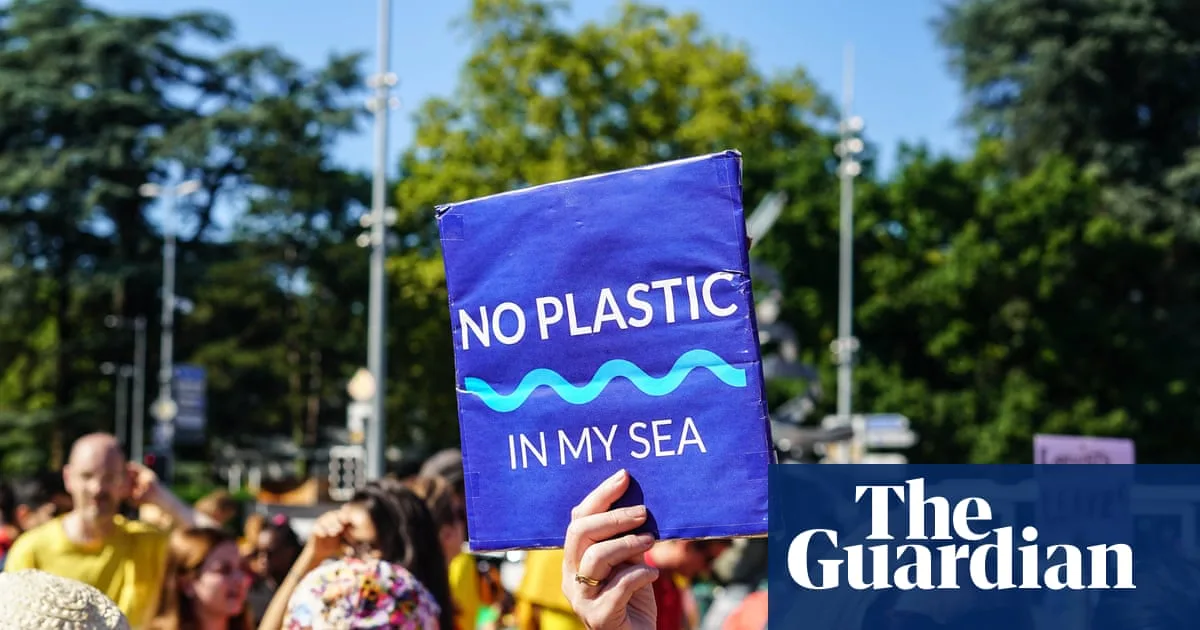
More than 200 industry lobbyists are attending the UN’s meeting to negotiate a global plastics treaty, raising concerns that efforts to curb plastic production may be undermined. The 234 lobbyists from oil, petrochemical and plastics industries outnumber the combined delegations of all 27 EU member states, and far exceed the number of scientists and Indigenous peoples present at the Geneva talks.
The analysis, from the Centre for International Environmental Law (Ciel), also found 19 lobbyists sit on the national delegations of Egypt, Kazakhstan, China, Iran, Chile and the Dominican Republic. “Fossil fuel companies are central to plastic production, as over 99% of plastics are derived from chemicals sourced from fossil fuels,” said Ximena Banegas, Ciel’s global plastics and petrochemicals campaigner. “After decades of obstruction in the climate negotiations, why would anyone think that they would suddenly show up in good faith in the plastics treaty talks?”
The figure was revealed on day three of a two-week resumed meeting to achieve an agreement on runaway plastic production and waste. Negotiations stalled at what was supposed to be the fifth and final round of talks in Busan, South Korea, in December last year, leading to the current round in Switzerland. Tensions have flared around key aspects, including calls for a production limit on plastics, managing harmful chemicals, and financing implementation.
On one side is a cohort of more than 100 nations seeking an ambitious treaty with global targets to reduce plastic production. On the other is a small group of oil and plastic-producing states including Russia, Saudi Arabia and Iran – the so-called “like-minded group” – that reject production limits and want the treaty to focus on downstream waste measures. Three days into negotiations, these camps appear further entrenched, with the United States seemingly siding with the industry-friendly group.
“They’re basically going full Maga,” said a source close to the talks, noting coordination with Saudi Arabia and Russia. Before the meeting, the US reportedly circulated a memo openly taking a stance against production cuts, despite having supported them last year. The source also noted that the US delegation met with industry alone before the Geneva talks, unlike previous consultations with environmental NGOs and scientists.
The International Council of Chemical Associations (ICCA) claimed they had 136 representatives present, arguing they are “significantly outnumbered by the more than 1,500 NGO participants.” However, civil society groups say this is a false comparison, as lobbyists have more power, with several on government delegations able to sculpt treaty text, and others having privileged access through industry-sponsored side events.