Methane Theory Could Finally Solve Bermuda Triangle's Centuries-Old Mystery
Methane Theory May Explain Bermuda Triangle Disappearances

A compelling new scientific theory may finally unravel the enduring mystery of why the Bermuda Triangle has been associated with numerous unexplained disappearances of vessels and aircraft over centuries. Researchers have long hypothesised that unusual environmental conditions, including rare methane gas releases from the seabed, could have temporarily disrupted buoyancy and engine functions in the region.

The Methane Hypothesis Explained

According to Ronald Kapper of the educational platform 'What If Science,' this natural phenomenon may have been active historically but has since diminished, potentially accounting for the notable decline in reported incidents within the area in recent decades. The theory deliberately avoids supernatural explanations such as alien interventions, mystical portals, or ancient curses, instead focusing on tangible natural forces that could have briefly generated perilous conditions.

Some scientific voices speculate that the Bermuda Triangle might have experienced clusters of accidents due to these unique transient conditions. If validated, this explanation could resolve centuries of speculation while preserving the region's legendary mystique. Although gaining traction on digital forums and social media platforms, experts caution that concrete evidence remains limited and the hypothesis requires further investigation.

Official Perspectives and Historical Context

The US Coast Guard has consistently emphasised that there is no officially recognised geographic hazard specific to the Bermuda Triangle, suggesting many incidents may have been exaggerated or inaccurately reported. Researchers propose that underwater gas emissions could have reduced water density, compromising ship buoyancy, and potentially affecting low-flying aircraft through atmospheric interference.

Kapper notes that similar methane-related hazards occur in other oceanic regions globally. However, if the Bermuda Triangle experienced a temporary 'active field' of such emissions, it could logically explain the concentration of disappearances documented during specific historical periods. 'More speculative perspectives suggest something even more unusual: that the Triangle was briefly influenced by a natural phenomenon that has since ceased to exist,' he elaborated for What If Science, which explores complex scientific theories through hypothetical scenarios.

'Not extraterrestrials or dimensional portals, but rare combinations of environmental forces. Methane gas released from the ocean floor, for instance, has been proposed as a hazard capable of disrupting both buoyancy and mechanical systems. While evidence remains contested, such releases are documented in other areas. If an active field once existed beneath the Triangle and subsequently quietened, it could account for both the rise and fall in incident reports.'

Skepticism and Alternative Theories

Other experts maintain a more cautious stance. Nigel Watson, author of 'Portraits of Alien Encounters Revisited,' commented: 'Some believe it represents a doorway to different dimensions permitting UFO transit, while others attribute events to odd magnetic anomalies and energy fields. We must consider multiple possibilities, acknowledging that many Bermuda Triangle events have been sensationalised and that similar mystery triangles exist worldwide. Certainly, it's intriguing how we seek and 'discover' peculiar phenomena within triangular patterns!'

Historical Fascination and Notable Cases

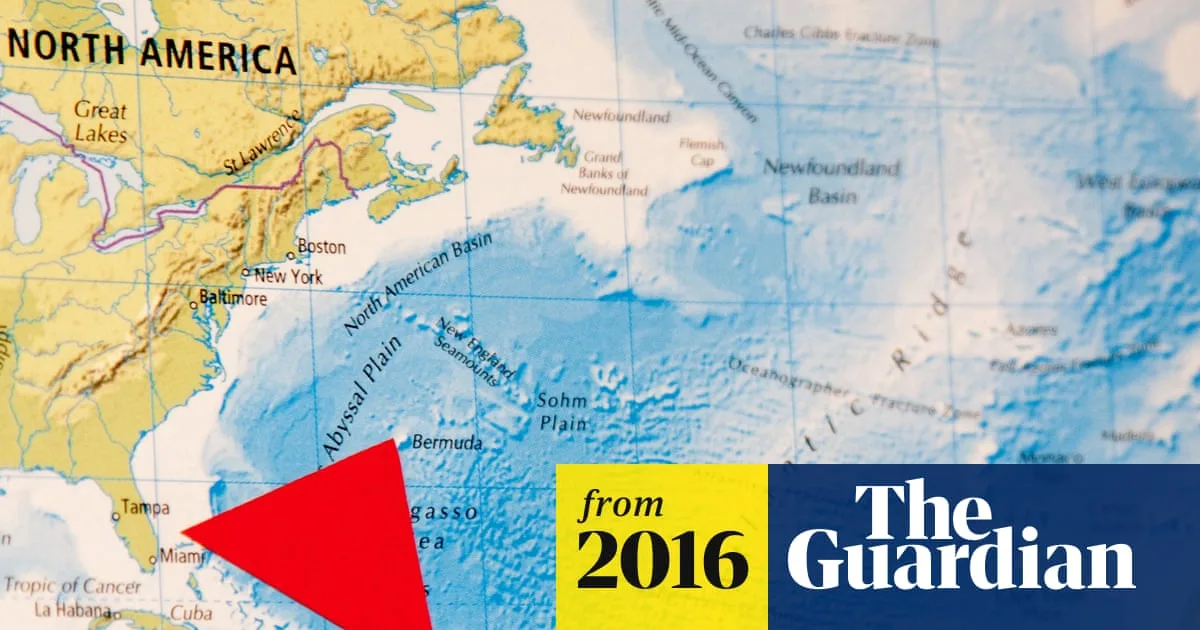
The Bermuda Triangle has captivated public imagination for over five centuries, dating back to Christopher Columbus's 1492 voyage reports of strange luminous phenomena. Paranormal enthusiasts have frequently suggested the area is cursed or connected to alien activity, temporal rifts, or lost civilisations. The region is loosely defined as a triangular area spanning approximately 500,000 square miles in the western North Atlantic, typically connecting Miami, Florida, Bermuda, and San Juan, Puerto Rico.

Charles Berlitz's influential 1974 book 'The Bermuda Triangle' popularised the notion that over 1,000 lives were lost, with aircraft and ships vanishing without trace. Notable unsolved cases include the mysterious sinking of the USS Cyclops in 1918 with all 306 crew members aboard. Theories about this tragedy have ranged from manganese explosions and mutiny to giant octopus attacks or German submarine strikes, which German naval authorities denied. Scientific explanations have proposed natural causes like cargo instability or mechanical failures.

Other proposed explanations for Bermuda Triangle incidents have included rogue waves, unusual magnetic fields, and extreme meteorological events. Nevertheless, insurers like Lloyds of London alongside the US Coast Guard assert there is no substantive evidence that the area is uniquely hazardous, maintaining that many reported disappearances have been overstated or misattributed.

A Grounded Resolution to Enduring Mystery

Despite official skepticism, the Triangle continues to fascinate both the public and research communities. The new methane theory offers a potentially grounded, scientifically plausible explanation for centuries of enigmatic occurrences, bridging the gap between legend and observable natural phenomena. As investigations continue, this hypothesis represents a significant step toward demystifying one of the world's most enduring maritime puzzles while acknowledging the complex interplay between environmental factors and human perception.




