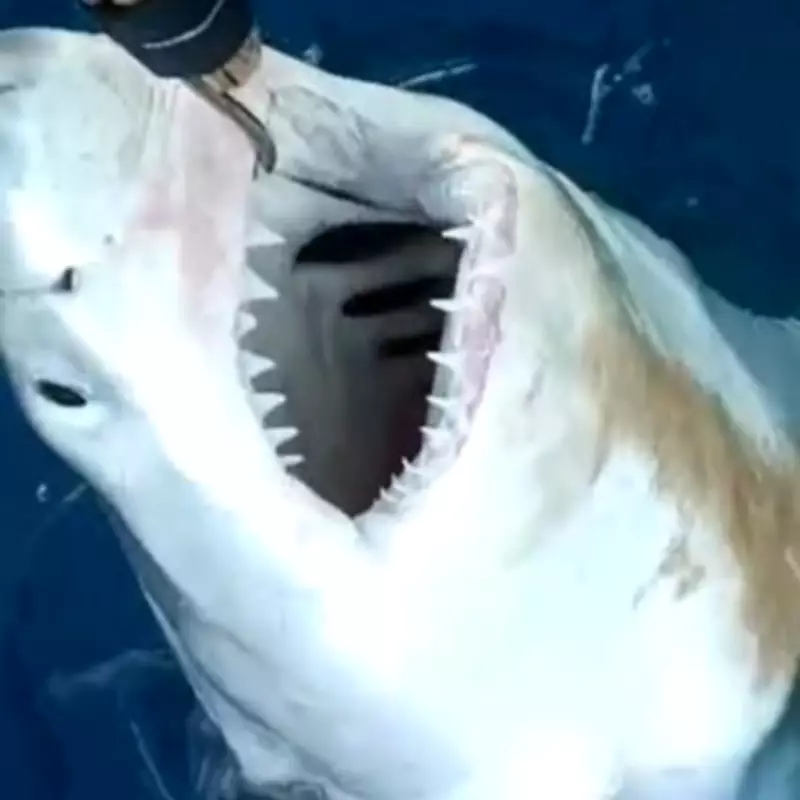
The discovery of a juvenile great white shark off the eastern coast of Spain has prompted marine scientists to reconsider long-held beliefs about the species' presence in the Mediterranean Sea. This significant find suggests that great white sharks may be actively breeding in the region once more, challenging previous assumptions that they had largely vanished from these waters.
An Unexpected Catch Raises Scientific Questions
Fishermen operating near Spain's eastern coastline recently made an unexpected and remarkable catch: a juvenile great white shark measuring approximately 210 centimeters in length and weighing between 80 and 90 kilograms. This incidental capture has provided researchers with crucial evidence that contradicts earlier theories about the species' Mediterranean status.
The juvenile shark's presence is particularly significant because it indicates potential breeding activity within the Mediterranean basin. According to Dr. José Carlos Báez, lead researcher of the subsequent study, "Determining the presence of juvenile individuals is of particular importance. The occurrence of juvenile specimens raises the question whether active reproduction may be occurring in the region."

Historical Review Reveals Persistent Presence
Following this discovery, scientists conducted an extensive review of historical records spanning from 1862 to 2023. Their findings, published in the open-access journal Acta Ichthyologica et Piscatoria, suggest that while Mediterranean great white sharks constitute what researchers describe as a "ghost" population, they have not completely disappeared from the region as previously believed.
The species was previously thought to have disappeared from the Mediterranean other than occasional individuals roaming from other seas. This new evidence indicates that populations could potentially be native to the Mediterranean Sea, though sightings remain exceptionally rare events that underscore the species' vulnerability in these waters.
Conservation Implications for a Vulnerable Species
The great white shark is currently listed as Vulnerable on the IUCN Red List, with global numbers continuing to decline. This Mediterranean discovery carries significant implications for conservation efforts targeting this apex predator.
Researchers emphasize that long-term monitoring programs are essential to understanding the biology and ecology of great white sharks in the Mediterranean. They advocate for combining occasional sightings with modern tracking techniques to develop effective conservation strategies that could help protect this crucial marine species.
Ecological Importance of Apex Predators
Dr. Báez highlights the fundamental ecological role these large marine animals play: "The main idea I want to convey to the public is that these large marine animals have a fundamental role in marine ecosystems. As highly migratory pelagic species, they redistribute energy and nutrients across vast distances."
Great white sharks serve as nature's scavengers by consuming carrion, which helps maintain clean and balanced ecosystems. Even in death, their descent to the seafloor provides critical nourishment for deep-sea communities, creating a vital ecological cycle that supports marine biodiversity throughout the water column.
While this discovery offers hope for the species' continued presence in the Mediterranean, scientists caution that much remains unknown about their population dynamics, breeding patterns, and long-term survival prospects in the region. The juvenile shark's capture represents both a scientific opportunity and a conservation imperative for better understanding and protecting these magnificent predators in Mediterranean waters.