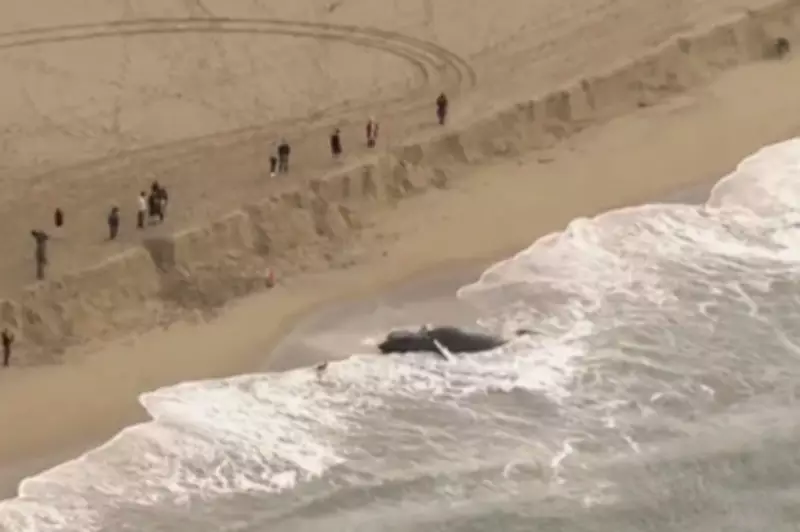
A deceased humpback whale, weighing an estimated 11 tons, has washed ashore on a popular beach in California, leading authorities to issue stern warnings to the public to maintain a safe distance from the colossal carcass. The incident occurred on Wednesday afternoon at Newport Beach, located approximately 45 miles south of Los Angeles, drawing significant attention from locals and officials alike.
Massive Carcass Poses Significant Safety Hazards
The whale, measuring 29 feet in length, is classified as a subadult and presents a substantial public safety concern due to its immense size and the unpredictable ocean conditions. According to the Pacific Marine Mammal Center, stormy weather and strong winds have prevented immediate removal efforts, exacerbating the risks associated with the beached mammal.
The stormy ocean conditions and rising tide make the whale a public safety concern, as the large body could roll onto bystanders who are too close, the center stated in an official release. Newport Beach Lifeguard Chief Brian O'Rourke emphasized the dangers, noting that the carcass could shift unexpectedly in the surf, potentially causing injury or even crushing individuals who venture too near.

Legal Protections and Environmental Considerations
In addition to safety issues, humpback whales are protected under the Marine Mammal Protection Act of 1972, which mandates that the public maintain a distance of at least 100 yards or 300 feet at all times. Authorities have reinforced this by advising people to stay at least 200 feet away from the current site to avoid any legal or physical repercussions.
Officials are exploring various disposal options, including the possibility of higher tides or an approaching storm system pulling the whale back out to sea. If natural removal fails, crews may need to section the animal for hauling away, as allowing it to decay on the beach could lead to numerous environmental and public health problems.
Investigation into the Whale's Death Underway
The cause of the whale's death remains unknown at this time. Staff from the Pacific Marine Mammal Center are scheduled to conduct a preliminary assessment followed by a necropsy to determine the factors leading to this tragic event. Michael Milstein, a spokesman for the National Oceanic and Atmospheric Administration, confirmed that these procedures are part of the standard protocol for such incidents.
Plans for the whale's removal are currently on hold as officials monitor ocean conditions and weather patterns. The salvage operation has been hampered by extreme weather in the outer waters, making it too hazardous to attempt towing the carcass away at present.
Humpback whale sightings are common along the California coast, but this event highlights the challenges and dangers associated with marine mammal strandings. The community is urged to heed official warnings and avoid the area until the situation is fully resolved to ensure everyone's safety and compliance with environmental regulations.