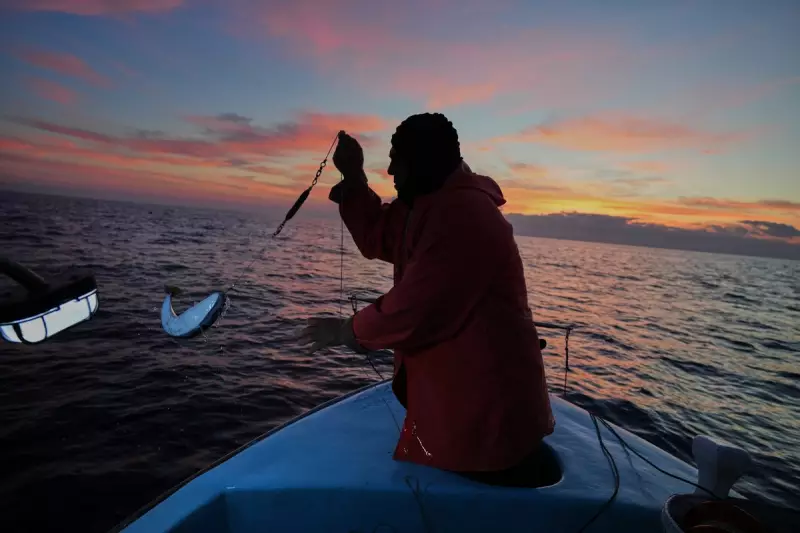
Veteran Cypriot fishermen are tackling a dangerous marine invasion by turning the threat into a menu item. They are now catching and serving the venomous lionfish, an invasive species decimating native stocks in the warming Mediterranean.
A Warming Sea Opens the Floodgates
For fishermen like Photis Gaitanos, who has worked the waters off Larnaca for 40 years, the catch has dramatically changed. Where local staples like sea bream and red mullet were once abundant, invasive species from the Red Sea now dominate. Experts point to climate change as the primary culprit, with the Mediterranean warming about 20% faster than the global average.
This environmental shift, coupled with an expanded Suez Canal, has "opened the floodgates" to Indo-Pacific species. The lionfish, with its striking stripes and venomous barbs, threatens indigenous fish and the livelihoods of Cyprus's 150 professional fishermen. Its spread is so severe that models predict it could swarm the entire Mediterranean by the century's end.

Another destructive arrival is the silver-cheeked toadfish, a net-wrecking, toxin-producing species with no natural predators in Cypriot waters. Its population has exploded, causing further damage to catches and gear.
The Heavy Toll on a Traditional Livelihood
The impact on the fishing industry is severe and tangible. Catches have diminished while costs have soared due to constant repairs to nets shredded by the powerful toadfish. Mr Gaitanos laments that it has been over two years since he last caught a red mullet, a consumer favourite.
"Our income, especially since these two foreign species appeared, has become worse every year," he stated. "It is now a major problem affecting the future of fishing." European Union Fisheries Commissioner Costas Kadis, himself a Cypriot, confirmed that native biodiversity faces heightened competition and pressure, with serious implications for local ecosystems and industries.
In response, EU-funded programmes have been enacted. A 2024 scheme pays fishermen €4.73 (£4.13) per kilogram to catch toxic toadfish, which are then incinerated. Another project, RELIONMED, employs scuba divers to cull lionfish around critical habitats like wrecks and reefs, though this is seen as a temporary measure, not a permanent fix.
Eating the Problem: A Culinary Solution
The most promising strategy, however, may be a culinary one. A concerted campaign is underway to rebrand the lionfish as a taverna delicacy, once its poisonous spines are carefully removed. The EU's #TasteTheOcean social media campaign, launched in 2021, has enlisted top chefs and influencers to promote invasive species as a tasty alternative.
In Cyprus, the effort is gaining traction. Renowned chef Stavris Georgiou has created his own lionfish recipe, and tavernas are slowly adding it to their famed meze menus. A significant selling point is price: at Larnaca's harbour fish market, lionfish costs less than half the price of popular fish like sea bass.
Stephanos Mentonis, 54, who runs a popular fish tavern in Larnaca, now features lionfish to introduce it to patrons. "When they try it, it’s not any less tasty than any other fish," he says, describing its meat as fluffy and tender. Commissioner Kadis champions this approach: "By incorporating invasive species such as lionfish into our diet, we can turn this challenge into an opportunity for the fisheries sector and at the same time help limit the environmental threat."
For fishermen like Photis Gaitanos, such initiatives offer a glimmer of hope in a battle where the waters, and the challenges, are constantly rising.