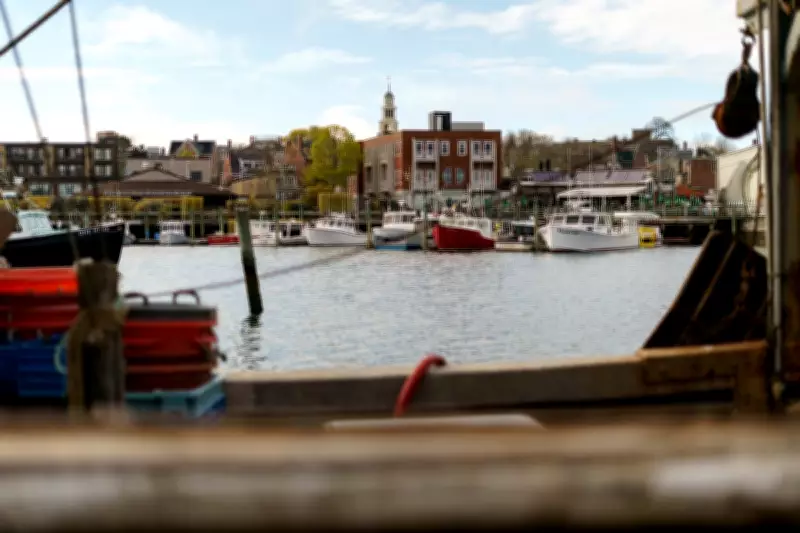
The United States Coast Guard has initiated a large-scale, round-the-clock search and rescue operation for a commercial fishing vessel that is presumed to have sunk off the coast of Massachusetts. The 72-foot boat, named the Lily Jean, issued a distress signal early on Friday morning while positioned approximately 25 miles from the historic port of Gloucester.
Desperate Search Amid Treacherous Conditions
Rescue teams are confronting severe operational challenges, battling howling winds and frigid temperatures as they scour the Atlantic waters for any sign of survivors. Following the initial alert, Coast Guard personnel quickly located a debris field in the vicinity and made the grim discovery of one body in the water. The vessel was carrying a crew of seven individuals at the time of its disappearance.
Coast Guard Commitment and Operational Details
Coast Guard Commander Timothy Jones, who is coordinating the ongoing efforts, affirmed the service's unwavering commitment to the search. "We will continue to search throughout the night with the cutter, hoping to find additional folks as we continue," Commander Jones stated. He provided initial context, indicating the Lily Jean was "coming back in full of fish" and may have encountered mechanical issues with its fishing gear, necessitating a return to port for repairs.

Despite the dire circumstances, Commander Jones emphasised that rescue teams are "always hoping to find" survivors. However, Sector Boston Commander Jamie Frederick offered a sobering perspective on the immense difficulty of such maritime searches after a vessel has gone down, likening the task to searching for "a coconut in the ocean."
The Lily Jean and Its Crew
The missing vessel and its captain, Gus Sanfilippo, are familiar figures to some. They were featured in a 2012 episode of the History Channel television show Nor'Easter Men. Sanfilippo is described as a fifth-generation commercial fisherman operating out of Gloucester, primarily fishing the Georges Bank. The show depicted the crew enduring dangerous weather conditions during extended trips of up to ten days at sea, targeting species like haddock, lobster, and flounder.
A Community Steeped in Maritime History and Tragedy
Gloucester, often described as America's oldest working seaport with over 400 years of fishing heritage, is no stranger to maritime loss. The city, also the base for the reality TV series Wicked Tuna, has witnessed several tragedies. These include the infamous loss of the FV Andrea Gail in 1991, which inspired the book and film The Perfect Storm, and the sinking of the Emmy Rose in 2020, which claimed four lives.
Republican State Senator Bruce Tarr, who confirmed the seven individuals aboard, grew emotional while speaking about his friend, Captain Sanfilippo. "He's a person that has a big smile, and he gives you a warm embrace when he sees you," Tarr said. "He is very, very skilled at what he does." Tarr expressed difficulty comprehending the vessel's fate but predicted the tight-knit community would rally with characteristic strength in the face of tragedy.
Vito Giacalone, head of the Gloucester Fishing Community Preservation Fund, knew Sanfilippo from his early fishing days and described him as a hard worker from a fishing family. "He did well for himself. I was proud of him," Giacalone shared, highlighting their close personal connection. "I feel a sense of loss. A lot of us do."
The Perils of Commercial Fishing
Deep-sea fishing in New England is inherently hazardous, with risks amplified during winter by high waves, freezing temperatures, and volatile weather. Commercial fishing is consistently ranked among the world's most dangerous professions.
"Commercial fishing is a really tough living to begin with, and it's as safe as the elements and all of the things allow it to be," Giacalone noted, adding that Sanfilippo was a "very seasoned experienced fisherman."
Everett Sawyer, a 55-year-old childhood friend of the captain, said he is still processing the news. Having lived near the Atlantic for decades, Sawyer revealed he has known 25 people lost at sea. "Things happen very quickly when you're out on the ocean," he cautioned, noting how cold conditions can rapidly escalate dangers.

Steve Ouellette, an attorney working with Gloucester fishermen, echoed the sentiment, calling it a "tough life" and acknowledging that one is "never ready for it when a boat with a crew goes down."
Official Responses and Search Assets
The National Oceanic and Atmospheric Administration (NOAA) confirmed a fishery observer was aboard the Lily Jean. These observers collect data for regulatory purposes. "We are deeply saddened by the tragedy. NOAA Fisheries is committed to the safety and well-being of observers," said spokesperson Sean McNally.
The Coast Guard search involves multiple assets, including an MH-60 Jayhawk helicopter crew, a small boat team, and the Coast Guard Cutter Thunder Bay. Commander Jones stated the cutter would remain on scene overnight, with a fixed-wing aircraft joining the search at first light.
At the time of the distress signal, the National Weather Service reported sea conditions with winds around 27 mph and waves approximately four feet high. The air temperature was a bitter 12 degrees Fahrenheit, with water temperatures near 39 degrees.
Community and Political Reaction
Gloucester Council President Tony Gross, a retired fisherman, stood at the city's harbour with other officials, calling the event a "huge tragedy for this community." He described the families of the crew as "devastated," likely caught between "half full of hope and half full of dread."
Massachusetts Governor Maura Healey issued a statement expressing she was "heartbroken" by the news. "I am praying for the crew, and my heart goes out to their loved ones and all Gloucester fishing families during this awful time," Healey said. "Fishermen and fishing vessels are core to the history, economy and culture of Gloucester and Cape Ann, and this tragedy is felt all across the state."
Council President Gross speculated on a potential cause, suggesting conditions were "fishable" but that ice buildup on the vessel's superstructure could have occurred rapidly, potentially destabilising the boat. "That is what people are thinking right now, that there was ice buildup and that made the boat unstable," he said.