US Coast Guard Launches Formal Investigation Into Gloucester Fishing Vessel Tragedy
The US Coast Guard has officially identified all seven individuals who perished when the commercial fishing vessel Lily Jean sank in the frigid waters off Gloucester, Massachusetts, and has now commenced a comprehensive formal investigation into the maritime disaster. Authorities confirmed on Monday that no mayday call was issued from the 72-foot vessel before it went down approximately 25 miles off the historic Cape Ann peninsula, with the search for survivors being suspended on Saturday after covering about 1,000 square miles.
Victims Identified in Heartbreaking Maritime Loss
In a solemn announcement, the Coast Guard revealed the names of those lost in the tragedy. The vessel was captained by Accursio “Gus” Sanfilippo, a fifth-generation commercial fisherman well-known in the Gloucester community. The crew consisted of Paul Beal Sr., Paul Beal Jr., John Rousanidis, Freeman Short, and Sean Therrien. Also aboard was Jada Samitt, a fisheries observer for the National Oceanic and Atmospheric Administration (NOAA) who was assigned to collect data from the vessel's catch. The Coast Guard and NOAA confirmed that there were no survivors from the incident.
Formal Investigation Procedures Initiated
The Coast Guard has launched what it describes as a district-level formal investigation, which involves an investigating officer gathering evidence and testimony using established rules and procedures. This type of thorough investigation is typically reserved for incidents of significant regional importance or those that may reveal broader issues with specific vessel classes or technical concerns. The investigation aims to determine the precise circumstances that led to the sinking of the Lily Jean and to identify any potential safety improvements that could prevent similar tragedies in future.

Search Efforts and Challenging Conditions
Search and rescue missions were initiated early Friday after authorities received an alert from the vessel's emergency beacon, which activates upon contact with water. Over a 24-hour period, crews utilizing aircraft, cutters, and small boats combed a vast area of the Atlantic Ocean. Searchers discovered a debris field near the alert's origin point, along with a body in the water and an empty life raft. However, Jamie Frederick, the Coast Guard’s Sector Boston commander, explained that icy temperatures, stormy conditions with 7- to 10-foot seas, freezing ocean spray, and an approaching nor'easter made nighttime search operations exceptionally difficult. After consultation between coordinators and on-scene commanders, the Coast Guard determined on Saturday that all reasonable search efforts had been exhausted.
Gloucester's Fishing Community Mourns Latest Tragedy
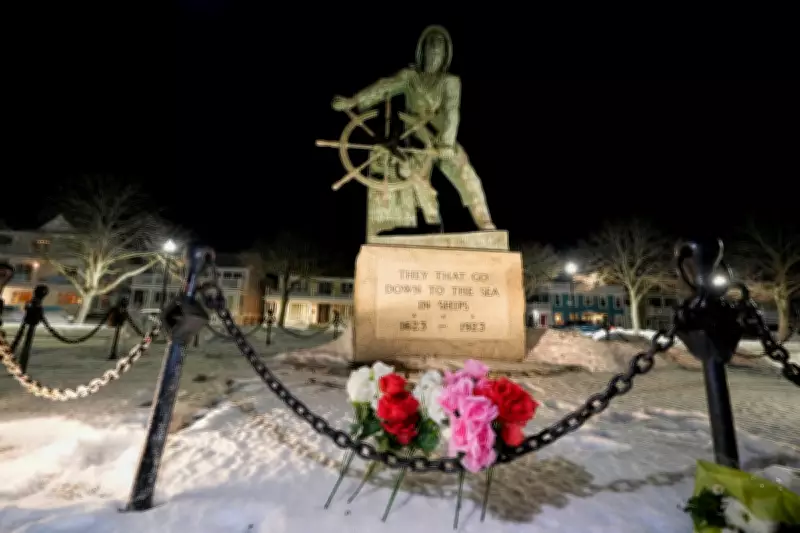
The sinking represents yet another maritime tragedy for Gloucester, a city with 400 years of fishing history that has inspired both literature and cinema, most notably the book and film The Perfect Storm. Paul Lundberg, Gloucester's mayor, announced that the names of those lost on the Lily Jean would be added to the city's memorial honouring thousands of fishermen lost at sea. Vito Giacalone, head of the Gloucester Fishing Community Preservation Fund, spoke emotionally about his relationship with Captain Sanfilippo, describing him as a younger brother and expressing devastation at the loss of such character-driven individuals.
NOAA Responds to Observer's Loss
The National Oceanic and Atmospheric Administration released a statement expressing deepest sympathies to the family of observer Jada Samitt, the families of the six fishermen, and the broader NOAA observer community. The agency noted that fishery observers like Samitt play a crucial role in gathering data that informs government regulations. In response to the tragedy and adverse weather conditions in the Northeast, NOAA Fisheries announced that observer deployments would be suspended until after midnight Wednesday.

Inherent Dangers of Commercial Fishing Highlighted
The incident has starkly highlighted the perilous nature of commercial fishing, particularly in New England's winter conditions where high waves, frigid temperatures, and unpredictable weather create especially hazardous environments. Everett Sawyer, a 55-year-old childhood friend of Captain Sanfilippo, noted that he has personally known 25 people lost at sea and emphasised how quickly situations can deteriorate on the ocean. Commercial fishing is frequently cited as one of the world's most dangerous occupations, and this tragedy serves as a sombre reminder of the risks faced by those who work in this vital industry.
The Coast Guard's investigation continues as the Gloucester community mourns and reflects on this profound loss within their close-knit fishing community.