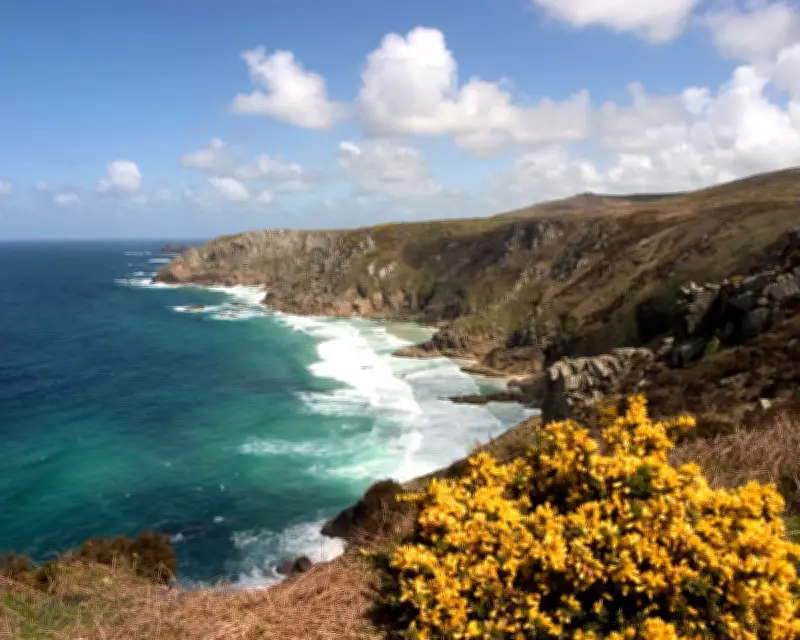
On the 10th of March 1951, a sharp frost gave way to a brilliant sunrise over Trevean Cliff in Penwith, along the north coast of Cornwall. The sun climbed into a clear blue sky and shone almost without interruption throughout the entire day, casting its warm rays across this western extremity of England.
A Tranquil Walk Towards the Sea
In the afternoon, as we ventured down several miles of narrow, steep-banked lanes heading towards the sea, a million midges danced in the warm, sunny air before us. The only sounds to break the serene silence were the drowsy song of a yellow-hammer, the distant cries of gulls, and the gentle hum of two telegraph wires that connected a lonely farm to the rest of the world.
Finding Solace in a Wooded Nook
Before reaching the bay of tumbled rocks and grey sand, we discovered a pleasant spot at the top of a coomb. There, on the edge of an oak wood, we sat in dappled sunlight, listening to the birds singing and feeling comfortable in the knowledge that spring was beginning to touch this tranquil corner of Cornwall.

From time to time, we heard the mournful mewing of a buzzard soaring high above us. Whenever that noble, broad-winged bird sailed too near to a rookery on the far side of the coomb, a great clamour of indignation arose as the rooks drove the buzzard away.
Observations from the Cliff Top
From the cliff tip, more than a hundred feet above the calm but gently heaving sea, we watched a seal fishing in the broken surf above a reef of rocks. The scene was picturesque, yet it underscored the lingering winter feel of the landscape.
The Paradox of Golden Gorse and Wintry Look
Everywhere, the gorse is golden, painting the hillsides with vibrant yellow blooms. However, Cornwall in the main still wears a distinctly wintry look, as there are as yet few early spring flowers to be found.
One has to search diligently for primroses, violets, and celandines, and only once or twice have I discovered red campion and wild strawberry flowers. It seems that the excessive and chilly winter rains have been more exacting and damaging to the flora than were the severe frosts of several winters ago.
This 1951 account captures a moment of seasonal transition, where the promise of spring is hinted at by the gorse's gold, but the full bloom of the season remains elusive, held back by the lingering effects of a harsh winter.