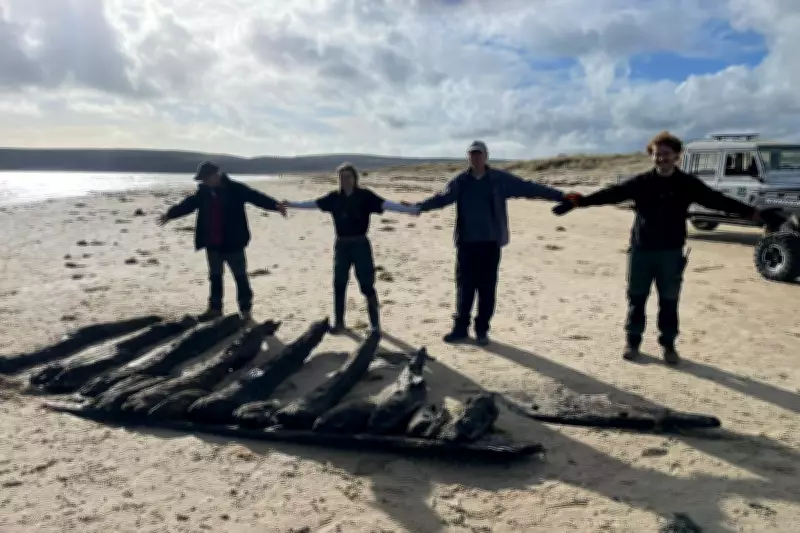
In a remarkable discovery following the recent severe weather, timbers believed to be from a historic 17th-century shipwreck have washed up on Studland Beach in the United Kingdom. The find, which occurred last month, is linked to the aftermath of Storm Chandra, which battered the coastline with powerful winds and waves.
Connection to the Swash Channel Wreck
The ship parts, measuring approximately six metres in length, are thought to be a section of the Swash Channel wreck. This vessel was first discovered in the 1990s near Poole Harbour, a site that has since been granted protected status due to its historical significance.
Historical Origins and Identification
Marine archaeologists from Bournemouth University have identified the timbers, suggesting they could be a previously missing hull section of the ship. Historical records indicate that the wreck is likely of Dutch or German origin, with strong evidence pointing to it being 'The Fame', a Dutch merchant ship that ran aground and sank in 1631.

To confirm the timbers' origin, dendrochronology testing will be conducted. This scientific method analyzes tree-ring patterns to date wood accurately, providing crucial insights into the ship's history and construction.
Preservation and Future Display
If the timbers are confirmed to be from the protected Swash Channel wreck, they will be added to the collection at Poole Museum. This addition would enhance public access to this piece of maritime history, allowing visitors to learn more about the ship's story and the era it represents.
The discovery highlights the ongoing impact of storms on coastal archaeology, as severe weather can uncover or displace historical artifacts. It also underscores the importance of marine conservation efforts to protect such sites from further damage or looting.
Local authorities and heritage organizations are monitoring the situation closely, ensuring that the timbers are handled with care and preserved for future generations. This find serves as a reminder of the rich maritime heritage lying beneath UK waters, waiting to be rediscovered.