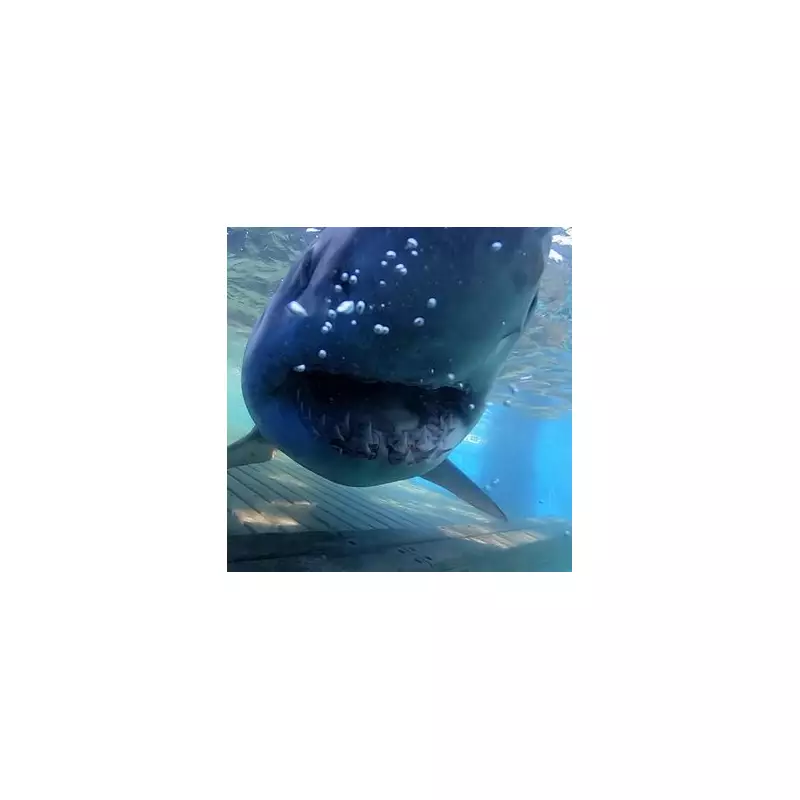
A colossal great white shark, whose unexpected journey is rewriting scientific textbooks, is now moving towards a major tourist destination on the US coast.
Tracking a Marine Giant
The 14-foot predator, named Breton, has been under the watchful eye of scientists from the marine research organisation OCEARCH since he was first tagged in September 2020. The initial goal was to uncover the elusive mating grounds of great whites. Breton recently signalled his position off Cape Hatteras, North Carolina, on December 28, and data shows he is continuing a southward trajectory towards the east coast of Florida.
This follows earlier signals from Daytona Beach, Florida in January 2025 and from off the coast of Nova Scotia, Canada, back in 2020. When first tagged, Breton measured 13ft 3in and weighed over 1,400 pounds. Researchers now estimate he has grown to over 14 feet.

A Migration Pattern That Flips Science Upside Down
The tracking data has delivered a major surprise. Instead of following the expected route along the north-eastern US coast—where great whites are thought to gather to feed on seals—Breton has repeatedly ventured far offshore. Chris Fischer, founder and expedition leader of OCEARCH, stated this behaviour has "completely flipped upside down" previous assumptions about East Coast great white distribution.
"When he migrates down south and north, he often loops way offshore and does not go along any portion of the north-eastern United States," Fischer explained. "We're seeing more and more of these animals that are in the south-eastern United States are just not part of the white sharks that go to New England."
Unlocking the Mystery of Shark Reproduction
This unusual path could prove to be a significant breakthrough in understanding shark reproduction. As a large, fully mature male, Breton is an ideal subject for studying how these apex predators congregate to mate—a mystery that has baffled marine scientists for years.
Fischer expressed excitement about the potential clues Breton's winter location may provide. "Hopefully, he'll be giving us a tip, and we'll see his track colliding with other mature males and mature females in the same region in the coming months," he said. "That would be an enormous piece of data to be able to gather."
The current understanding, based on OCEARCH's research, is that the population spends summer and autumn in Atlantic Canada before migrating to the south-eastern US for winter and spring, conspicuously avoiding traditional New England feeding areas. All eyes are now on Breton's next move as scientists await further pings that could reveal one of the ocean's best-kept secrets.