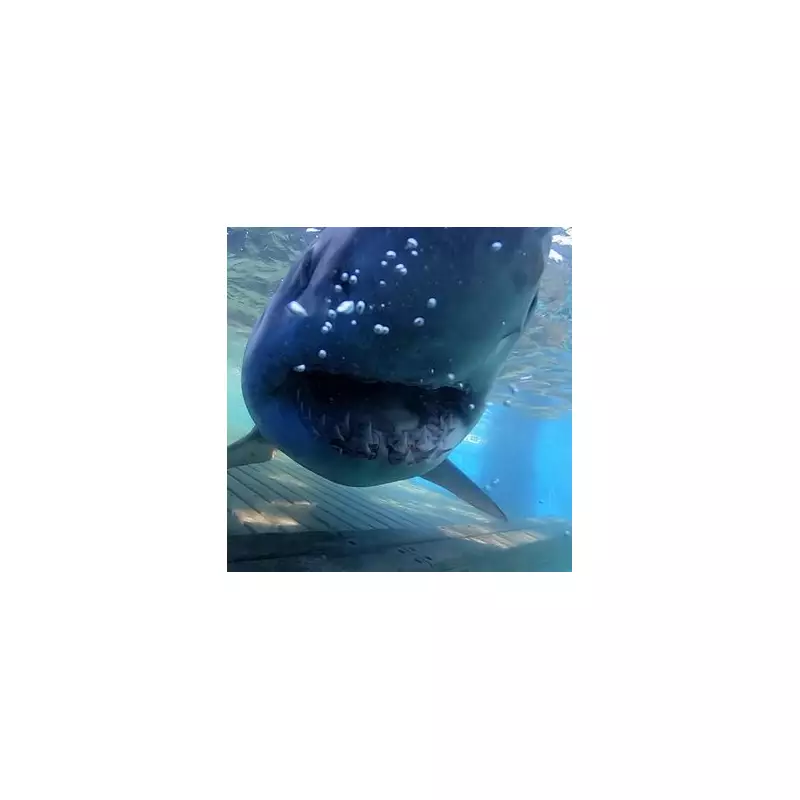
A gigantic great white shark, whose unexpected journey is rewriting scientific textbooks, is currently moving towards a popular tourist coastline, challenging everything experts thought they knew about these predators.
Tracking a Marine Giant
The colossal shark, named Breton, is a 14-foot-plus male that has been closely monitored by scientists from the marine research organisation OCEARCH since he was first tagged in September 2020. The initial goal was to locate the elusive mating grounds of great whites.
His latest confirmed location was a ping received off Cape Hatteras, North Carolina, on December 28. This signal shows he is continuing a southward trajectory along the eastern seaboard, heading in the direction of Florida's east coast. This follows a previous ping from Daytona Beach, Florida, in January 2025.

A Route That Rewrites the Rules
The tracking data has delivered a major surprise. Instead of sticking to the well-documented route along the north-eastern US coast—where sharks are believed to gather to feed on seal populations—Breton has repeatedly ventured far offshore.
Chris Fischer, OCEARCH's founder and expedition leader, stated this behaviour has completely flipped upside down previous assumptions about where East Coast great white sharks live and feed. When he migrates down south and north, he often loops way offshore and does not go along any portion of the north-eastern United States, Fischer explained.
The evidence suggests a new pattern: Atlantic Canada serves as the primary summer and autumn range, while the winter and spring months are spent in the south-eastern United States, bypassing traditional New England feeding grounds entirely.
Unlocking the Mystery of Shark Reproduction
This unusual migration could be the key to a long-standing marine mystery. As a large, mature male, Breton is an ideal subject for studying how these apex predators congregate to mate.
Scientists are now eagerly watching his winter movements, hoping his location will reveal where mature great whites meet. That could be a tip toward where big mature animals are coming together to potentially give us clues on their reproductive cycle, Fischer said, expressing hope that Breton's track will soon intersect with other mature sharks.
Since being tagged at 13ft 3in and over 1,400 pounds, Breton has grown significantly and is now estimated to be well over 14 feet long. His continued journey promises to provide an enormous piece of data that could revolutionise our understanding of great white shark life cycles and conservation needs.