
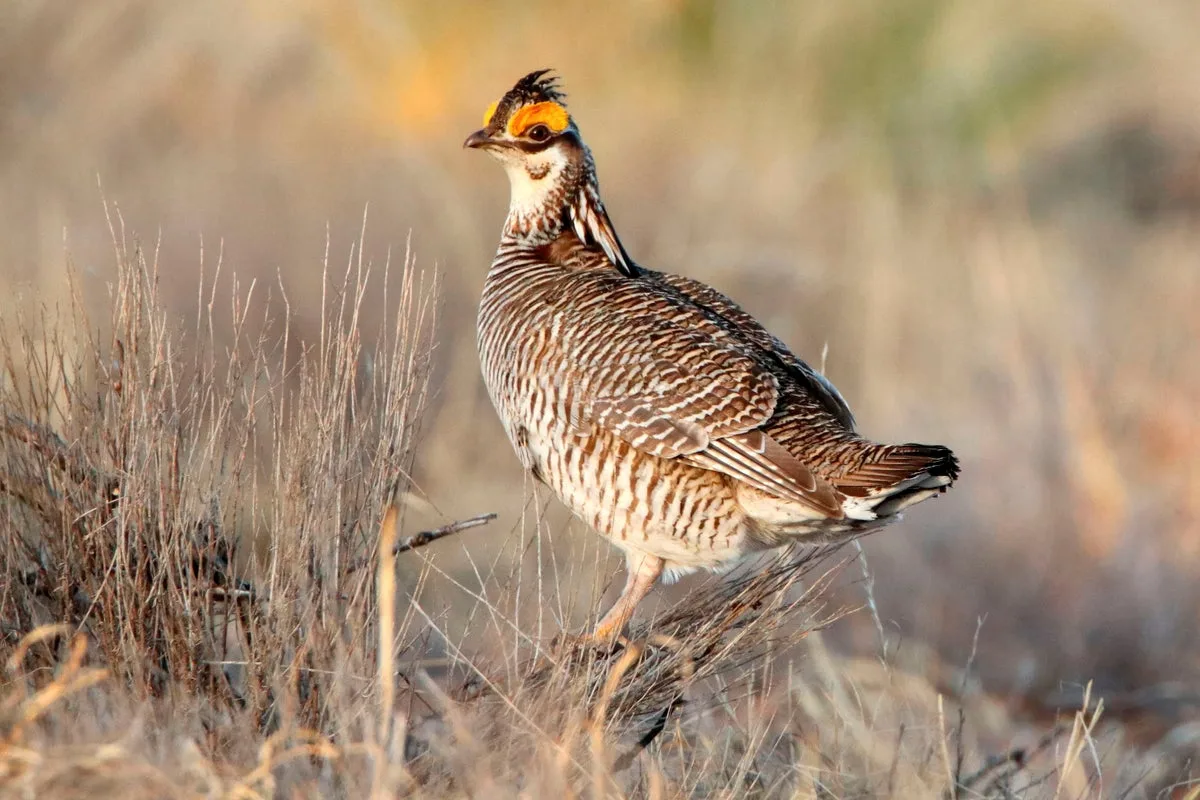
The U.S. Fish and Wildlife Service has formally removed the lesser prairie chicken from the list of protected species, ending safeguards for the ground-dwelling bird celebrated for its elaborate mating dances. The decision, confirmed on Thursday, follows a court ruling that sided with three states and representatives of the beef and petroleum industries, who argued the species had been listed improperly.
The move reverses a Biden-era classification that had designated the bird as threatened in parts of Colorado, Kansas, Oklahoma and Texas, and as endangered in a distinct population segment in New Mexico and Texas. The agency conceded it lacked justification for dividing the species into two separate population groups, a reversal that was granted by a federal judge in Midland, Texas, last August.
Once numbering in the millions, the crow-sized bird has seen its population fall to roughly 30,000 due to habitat loss from energy and agricultural development. Wildlife watchers prize the males' springtime displays, which involve warbling, clucking and stomping to attract mates. Native American tribes incorporate similar flamboyant movements into some of their dances.
The species has a turbulent legal history, having first been listed as threatened in 2014, then delisted in 2015 after a successful challenge by petroleum developers. It was relisted in 2022, prompting a lawsuit from Kansas, Oklahoma and Texas, alongside groups such as the Permian Basin Petroleum Association and the National Cattlemen's Beef Association. After President Donald Trump returned to office, the Fish and Wildlife Service reevaluated the bird and agreed with the plaintiffs.
Texas officials welcomed the delisting, with Land Commissioner Dawn Buckingham saying it "will ensure American oil and gas production in the Permian Basin remains robust and our economy steadfast." However, environmental groups criticised the move. Jason Rylander, legal director at the Center for Biological Diversity's Climate Law Institute, said: "It's shameful that the Trump administration sees fit to sacrifice these magnificent birds for oil and gas industry profit. Lesser prairie chickens may be lost forever without Endangered Species Act protections."




