Europe's Climate Denial Crisis Amidst Record Flooding and Extreme Weather
Europe's Climate Denial Crisis Amidst Record Flooding

Europe's Climate Denial Crisis Amidst Record Flooding and Extreme Weather

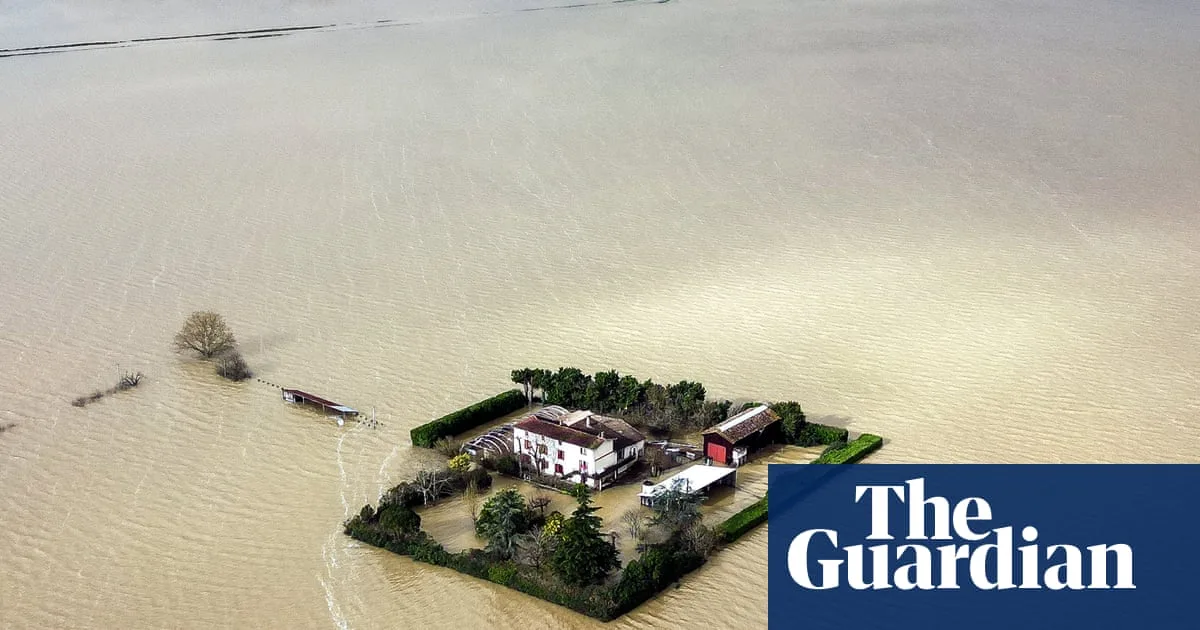
The village of Couthures-sur-Garonne in south-western France found itself submerged under flood waters from the Garonne River on Thursday, a stark visual representation of Europe's escalating climate emergency. This scene has become increasingly common across the continent as weather extremes intensify, yet paradoxically, voices calling for the rolling back of environmental regulations have grown louder and more influential.

Tragic Consequences of Climate Breakdown

In the quiet week between Christmas and New Year, two Spanish men in their early fifties—childhood friends Francisco Zea Bravo and Antonio Morales Serrano—went to a restaurant in Málaga and never returned home. The mathematics teacher, active in his local book club and rock band, and the popular cafe owner were driving back to Alhaurín el Grande when heavy rains transformed the typically tranquil Fahala River into what the mayor later described as an "uncontrollable torrent." Police discovered their overturned van the following day, with their bodies recovered after an agonizing search operation.

"We are accustomed to some flooding events, but not many," explained Conchi Navarro, headteacher of Los Montecillos secondary school where Zea Bravo was scheduled to succeed her upon retirement. "Since December, these borrasca low-pressure storms have arrived one after another in relentless succession."

The quiet fallout from a broken climate system—a book club missing a member, a rock band without its bassist, a cafe lacking its pastry chef—has echoed throughout western Europe for weeks. Back-to-back storms that battered Spain have claimed at least sixteen lives in neighboring Portugal. French soils have reached unprecedented saturation levels, with meteorological services issuing flood alerts demanding "absolute vigilance." Parts of the United Kingdom have broken historical records for consecutive rainy days without interruption.

Europe's New Weather Reality

This represents Europe's emerging climate reality: submerged in winter, parched in summer. Yet even as weather extremes worsen dramatically, denialist voices have gained significant traction and political influence across the continent.

"We are moving toward planetary self-destruction," stated Navarro, who at sixty years old has witnessed climate change effects firsthand. "This is not something 'they' told me about—it is something I have personally observed. How can anyone possibly claim this is merely an invention?"

Global Climate Policy Retreat

The answer, particularly in the United States, emerges with breathtaking ease. President Donald Trump has escalated his attacks on climate policy in recent weeks—withdrawing from the Paris Agreement once more and repealing foundational findings that underpin pollution controls—while promoting his "drill, baby, drill" policy globally. Chris Wright, the US energy secretary and former fracking executive, has pressured European nations to roll back methane standards and sustainability regulations that could potentially threaten American exports of liquefied natural gas. On Wednesday, he urged International Energy Agency analysts to "drop the climate" from their modeling frameworks entirely.

European Climate Denial Evolution

Even within Europe, where polls consistently demonstrate overwhelming public acceptance of climate science and support for halting planet-heating pollution, a quiet yet deadly form of denial has emerged. Far-right political parties have gained substantial ground across the continent, frequently making opposition to climate policy—often aided by fossil fuel-funded think tanks like the Heartland Institute—their second priority after immigration. Centrist leaders, alarmed by their electoral success and anxious to placate polluting industries, are rolling back environmental regulations with a vigor that has surprised even seasoned lobbyists.

This month, ahead of a meeting in Antwerp between European Commission President Ursula von der Leyen and business leaders, the European Union's carbon pricing mechanism—the cornerstone of its pollution-reduction efforts—found itself targeted by the powerful chemical industry.

Unprecedented Storm Frequency

Meanwhile, evacuation alerts continue illuminating mobile phones across Europe as rivers burst their banks, with new storm systems developing before waters from previous events have receded. Meteorologists named the storms Alice, Benjamin, and Claudia when the season commenced in southern Europe during October and November. David, Emilia, and Francis brought exceptionally wet December conditions. January witnessed five storms striking in rapid succession—Goretti, Harry, Ingrid, Joseph, and Kristin—while February experienced an equal number within its first two weeks alone: Leonardo, Martha, Nils, Oriana, and Pedro.

The current storm season stands just one event shy of the record seventeen that impacted Europe during the 2023-24 season, with forecasters progressing through the alphabet's second half in significantly less time than previous years.

Scientific Explanations and Governmental Failures

The storms lashing the Iberian Peninsula and relentless rains inundating the United Kingdom result from a southward shift in the jet stream—a conveyor belt of fast-moving air—coinciding with high pressure over northern Europe that blocks weather systems in place. Global heating amplifies damage as warmer air retains increased moisture. When water pounds already saturated soils that haven't had adequate drying time, flood risks increase exponentially.

Scientists express frustration that European governments remain in denial regarding the threat's true scale. Christophe Cassou, climate scientist and research director at the French National Centre for Scientific Research, noted that French flooding events are unprecedented both in geographical extent and resulting from record cumulative rainfall since the year's beginning.

"What proves surprising is that authorities express surprise about such outcomes," Cassou observed. "We are not experiencing worst-case scenarios, but simply probable ones entirely within the range of expectations from climate simulations."

Spanish Flooding Catastrophe

In Spain, the consequences of such governmental negligence remain fresh in public memory. On October 29, 2024, Empar Puchades listened to a lunchtime press conference where Valencia's president claimed the storm hovering over the region would soon dissipate. The seventy-year-old former healthcare worker felt troubled nonetheless. Researching rainfall data on official meteorological platforms and conscious she lived on flat farmland within a highly urbanized region, she contacted a friend in an elevated village who warned about an "unimaginable flood" approaching.

Puchades dutifully alerted neighbors and asked her middle son to avoid night shift work, but he insisted on relieving a colleague and departed early instead. "Had my son left at his usual time, he would have been caught in the water's full force," she recalled.

The floods that evening killed 229 people in Valencia. The disaster ignited public fury toward authorities who delayed emergency alerts and underscored the harm fossil fuel pollution causes even wealthy nations. A Nature Communications study published Tuesday determined global heating increased rain intensity by twenty-one percent while expanding areas receiving over 180mm of rainfall by fifty-five percent.

When floods struck, Puchades grabbed her dog, ascended upstairs, and opened shutters to witness "a tongue of water—not very high, containing considerable debris, producing strange noises with unrecognizable smells" approaching her home. It advanced slowly initially, then rapidly. "I will always maintain that what struck me most was its incredible speed," she stated.

European Adaptation Deficiencies

Spain's lack of preparedness echoes Germany's experience three years earlier when climate breakdown-exacerbated rains killed 134 people in the Ahr valley following botched warnings. These disasters represent multiple examples prompting the European Union's scientific advisers to decry Europe's adaptation efforts to a hotter planet as "insufficient, largely incremental, and often arriving too late." In a Tuesday report, they instructed officials to prepare for a world 2.8-3.3°C hotter than preindustrial levels by 2100—double the warming limit world leaders pledged when signing the Paris Agreement in 2015—and to stress-test even hotter scenarios.

Maarten van Aalst, European Scientific Advisory Board on Climate Change member and Dutch meteorological agency head, noted climate risks would escalate rapidly under such scenarios but emphasized Europe retains choices about navigating those risks.

"Even with the relatively milder yet significant warming observed thus far, we already witness extreme events that surprise us and kill people who might have survived with better anticipation," van Aalst explained. "I hope we will not reach 3°C warming levels, but significant chances exist that the world at large will fail to meet its climate targets."

The Critical Temperature Threshold

Global temperatures creep closer to the critical 1.5°C threshold, with the planet having warmed approximately 1.4°C since preindustrial times. Few experts believe this goal remains achievable. As losses accumulate, climate scientists emphasize that "every fraction of a degree" of additional warming still matters profoundly.

Navarro, who previously turned to Zea Bravo for reassurance when school demands became overwhelming, stated she would remember his chatty character and calming presence. The school held a January memorial once term resumed, leaving students silent and motionless. After "terrible" initial weeks following the floods, recovery had begun, she added.

"Now we will await summer's inevitable fires," Navarro concluded grimly.




